What You Actually Need for RV Camping on Your First Trip
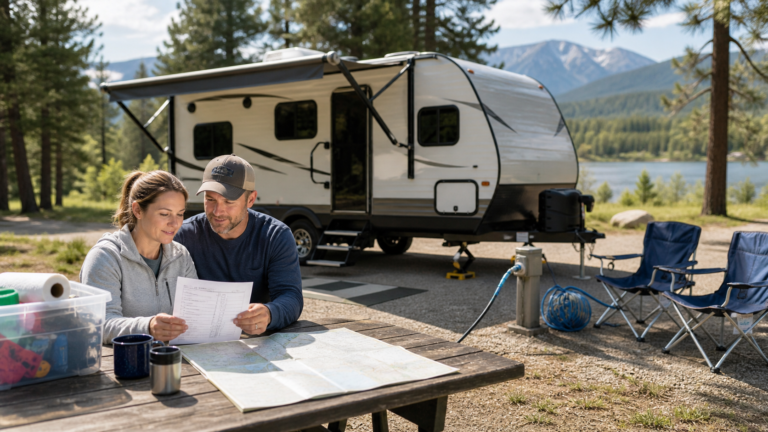
Your first RV trip does not require a garage full of gadgets. What you actually need for RV camping is a short list of practical basics that help you set up safely, sleep comfortably, cook simple meals, and handle the campground without feeling overwhelmed.
This guide focuses on first RV trip essentials and skips the gear that can wait until later. Whether you own your RV or are renting one for the first time, the goal is the same: bring the beginner RV camping gear that covers the basics, learn how your rig works, and keep the trip simple.
One important note before you buy anything: some RV starter gear may already come with your camper, rental, or tow vehicle. Check your owner’s manual, rental listing, or dealer walkthrough so you do not buy duplicates.
What You Actually Need for RV Camping
For a first trip, most of your needs fall into four categories: hookup gear, safety and setup gear, everyday living basics, and a few small supplies for cleanup and simple problems. You do not need to solve every possible camping situation before you leave. You just need enough to run the RV safely and stay comfortable for a weekend or short trip.
| Gear Item | Why You Need It | Beginner Note |
|---|---|---|
| Fresh water hose | Connects your RV to campground water | Use a hose meant for drinking water |
| Water pressure regulator | Helps protect the RV water system | Useful when campground pressure is unknown |
| Sewer hose kit | Lets you dump gray and black tanks | Check that fittings match your RV |
| Power cord and adapter | Connects the RV to shore power | Match the campground service to your RV requirements |
| Leveling blocks and wheel chocks | Help stabilize and level the RV | Level first, then secure the rig |
| Bedding and towels | Make the RV usable right away | Pack for the expected weather |
| Basic cookware and dishes | Lets you cook simple meals | Start with a small kitchen kit |
| Flashlight and first-aid kit | Cover basic safety and emergencies | Keep both easy to reach |
If you have these basics covered, you are already much closer to a smooth first trip than many beginners realize.
First RV Trip Essentials for Hookups and Campsite Setup
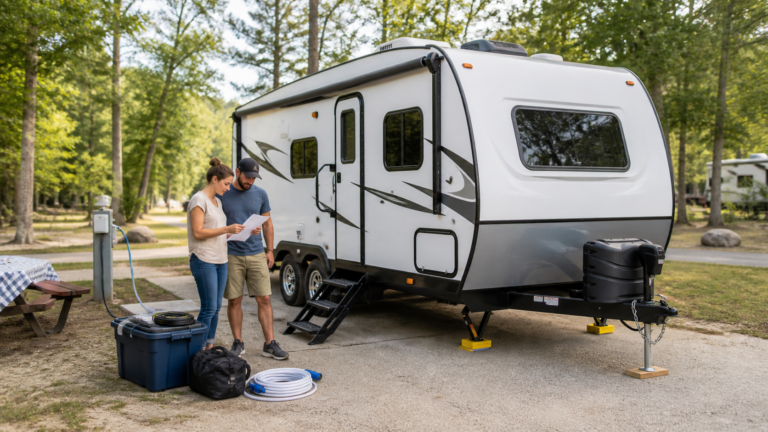
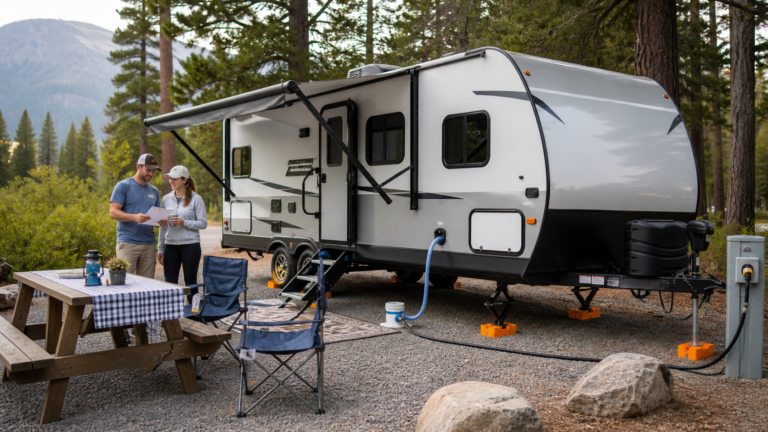
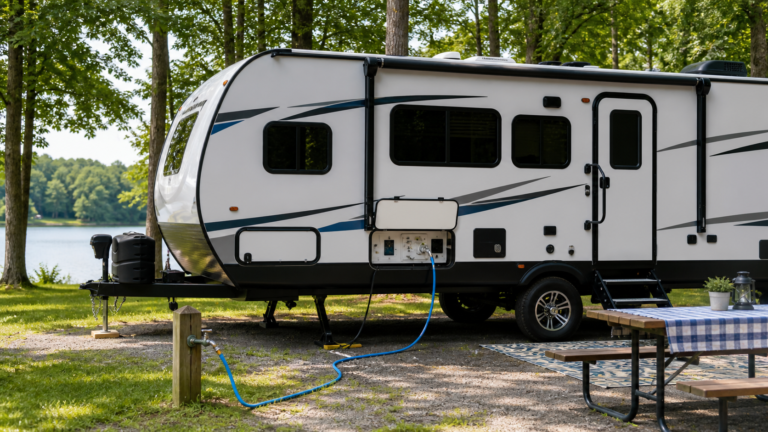
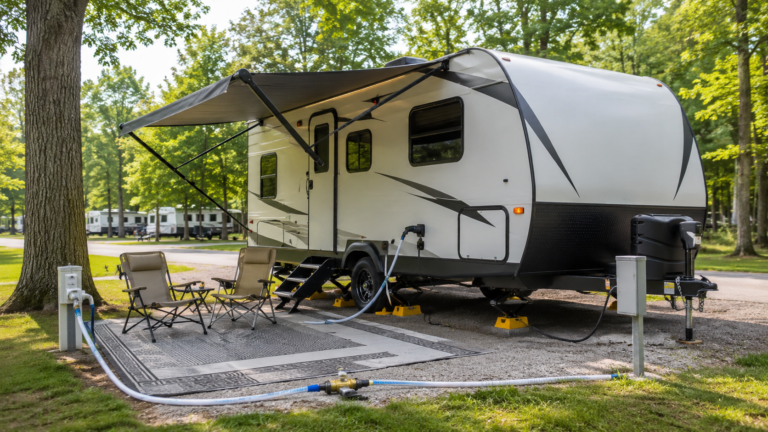
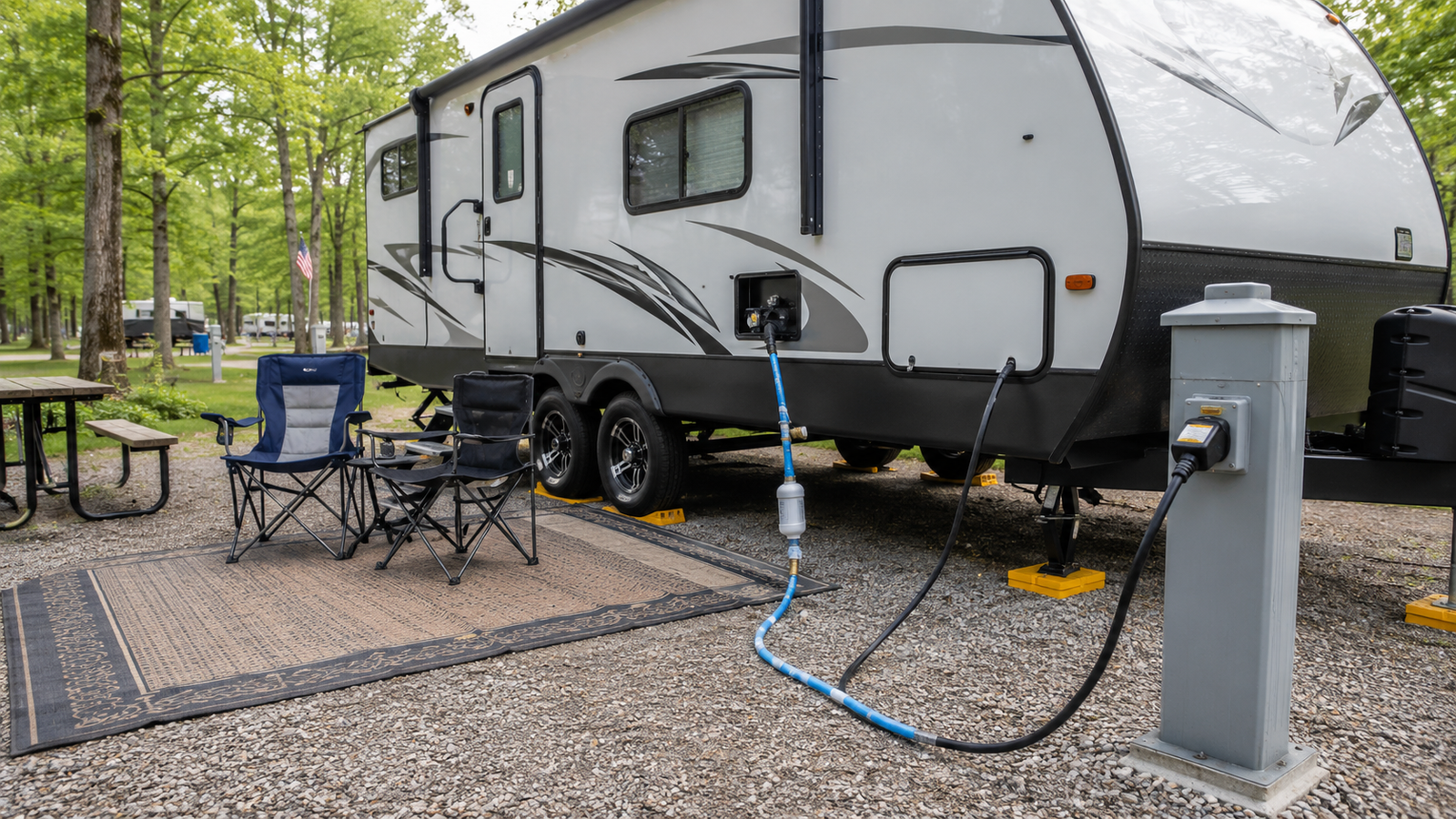
The most important first RV trip essentials are the items that help you connect water, power, and waste systems correctly. This is the gear that turns a parked RV into a usable campsite.
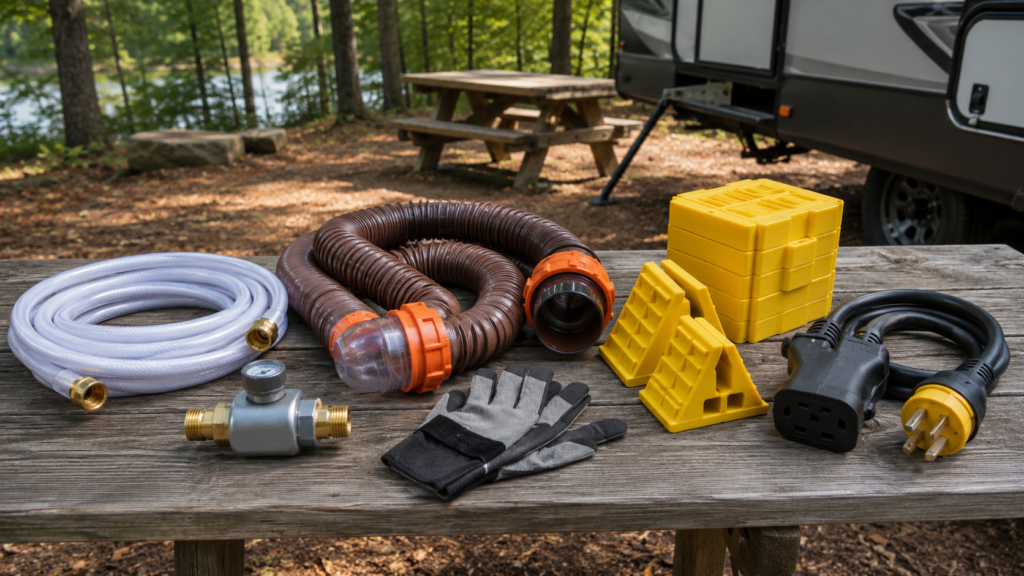
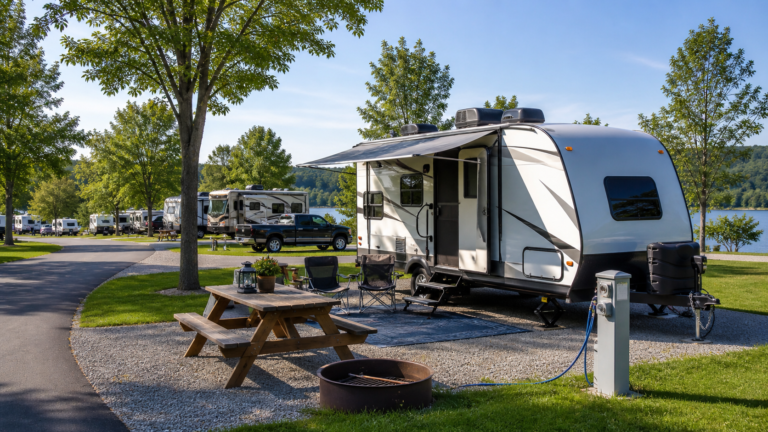
Shore power means the electricity provided by the campground pedestal. Full hookups usually means your site includes water, electric, and sewer. Partial hookups may include only some of those services. Always check your reservation details before you arrive so you know what your site actually offers.
- Fresh water hose: Use a hose intended for drinking water so your RV fresh water system stays separate from regular garden use.
- Water pressure regulator: This attaches at the spigot and helps protect your plumbing if campground water pressure is high.
- Sewer hose kit: You will need the hose itself plus any fittings your RV requires. Disposable gloves are also worth packing.
- Power cord and any needed adapter: Your RV may use 30-amp or 50-amp service. Check your manual or rental instructions before your trip.
- Leveling blocks: These help raise the low side of the RV when the site is uneven.
- Wheel chocks: These help keep the RV from rolling once it is parked.
- Bubble level or built-in level indicator: This helps you see whether the RV is sitting level enough for comfort and normal appliance operation.
Many beginners also choose to carry a surge protector or electrical protection device, especially when staying at unfamiliar campgrounds. If you do, make sure it matches your RV’s electrical service and follow the manufacturer’s instructions.
| Step | What to Do | Beginner Tip |
|---|---|---|
| 1 | Park and check site clearance | Look for trees, posts, hookups, and slide room space |
| 2 | Level the RV | Use blocks before extending stabilizers |
| 3 | Chock the wheels | Secure the RV before moving around inside |
| 4 | Connect power | Confirm the pedestal matches your RV requirements |
| 5 | Connect water | Add the pressure regulator before turning water on |
| 6 | Set up sewer if needed | Follow your manual and campground rules |
If your RV is a rental, ask exactly which hoses, cords, and adapters are included. This one step can save money and last-minute stress.
Beginner RV Camping Gear for Sleeping, Cooking, and Daily Living
Once the RV is set up, you still need the basics that make it livable. This is the beginner RV camping gear that matters most once you are parked: a simple bed setup, a functional kitchen, bathroom basics, and a few comfort items you will use every day.
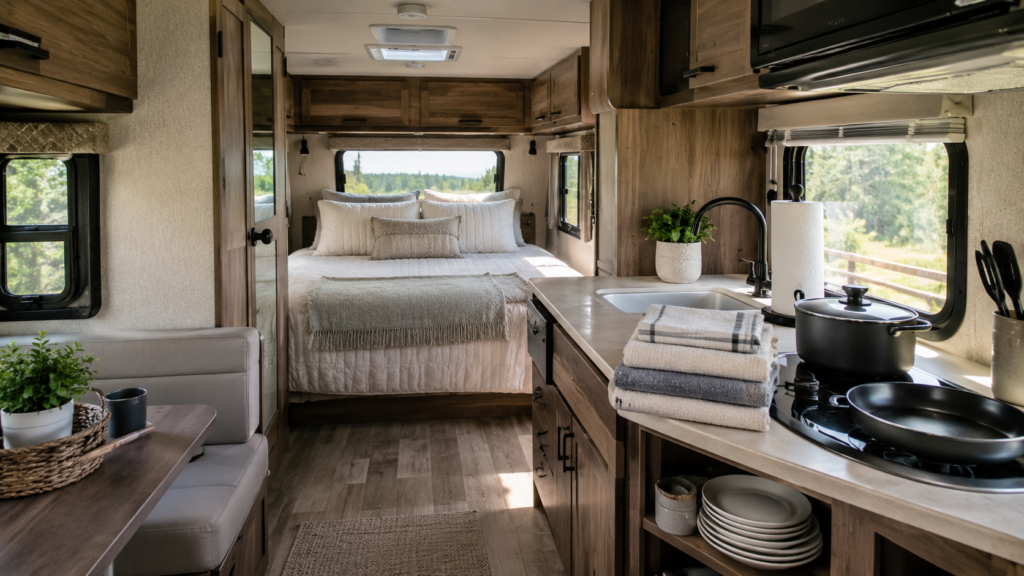
- Bedding: Sheets, blankets, and pillows that match the season. Nights can feel cooler than expected, even on short trips.
- Towels and toiletries: Bring them as if you were staying in a cabin, not a hotel.
- Basic cookware: A skillet, a pot, a cooking utensil, a sharp knife, and a cutting board handle most beginner meals.
- Dishes and cups: Keep it simple with enough for your group plus one or two extras.
- Dish soap, sponge, and drying towel: Small items, but you will notice quickly if you forget them.
- Trash bags and paper towels: These help keep a small RV space under control.
- Food storage containers or zip bags: Useful for leftovers and for keeping small pantries organized.
- Toilet paper approved for RV use if your manual recommends it: Check your manufacturer guidance so you use what is appropriate for your system.
- Charging cables and power strip if appropriate: Helpful for keeping phones and small devices charged, but do not overload outlets.
For your first trip, simple meals are the easiest win. Think sandwiches, pasta, tacos, grilled items, soup, breakfast burritos, or anything else that uses only a few ingredients and a small amount of cookware. You do not need a specialty coffee station, air fryer, or stack of kitchen gadgets to enjoy RV camping.
If you are traveling with kids, pack one small tote with daily-use items like wipes, snacks, water bottles, medicines, and a change of clothes. In a compact RV, convenience matters as much as the item itself.
RV Starter Gear for Safety, Cleanup, and Small Problems
Good RV starter gear is not always exciting, but it makes a big difference when something small goes wrong. A short safety and cleanup kit helps you handle normal first-trip issues without turning them into trip-ending problems.
- Flashlight or headlamp: Very helpful for late arrivals, dark hookups, or checking storage compartments.
- First-aid kit: Keep it stocked with the basics your household normally uses.
- Work gloves: Useful for sewer setup, leveling blocks, and other dirty tasks.
- Wet wipes or hand cleaner: Handy when water is not immediately available outside.
- Small toolkit: A screwdriver, pliers, and adjustable wrench cover many simple adjustments.
- Spare fuses if your RV uses them: Check your owner’s manual for the correct type.
- Duct tape and zip ties: Not for permanent repairs, but useful for temporary fixes until you can handle the issue properly.
- Cleaning supplies: A small broom, disinfecting wipes, and basic surface cleaner help a lot in a small space.
Also confirm that your smoke alarm, carbon monoxide detector, and fire extinguisher are present and working. Many RVs already include them, but do not assume everything is ready without checking.
If you are towing, make sure you also have any towing equipment required for your specific setup and that you understand how to use it correctly. For anything related to towing, brakes, propane, or electrical systems, follow your owner’s manual and manufacturer instructions rather than guessing.
What You Can Skip on Your First RV Trip
A common beginner mistake is buying too much gear before learning how you actually camp. The better approach is to cover the basics, take one or two trips, and then buy the items that solve real problems you ran into.
| Mistake | Better Beginner Habit | Why It Helps |
|---|---|---|
| Buying every gadget at once | Start with essentials only | Saves money and reduces clutter |
| Packing a full home kitchen | Bring a small meal kit | Makes setup and cleanup easier |
| Buying storage bins before using the RV | See how the cabinets work first | Helps you buy sizes that actually fit |
| Bringing extra hoses and cords you may not use | Match your gear to your campsite type | Keeps packing simpler |
| Overpacking clothes | Pack for the weather and trip length | Frees up valuable RV storage space |
Items that can usually wait include decorative campsite extras, duplicate kitchen tools, large outdoor rugs, specialty appliances, and “just in case” gear you do not yet know how to use. Many of those things may become useful later, but they are not what you actually need for RV camping right now.
Simple First RV Trip Checklist Before You Leave Home
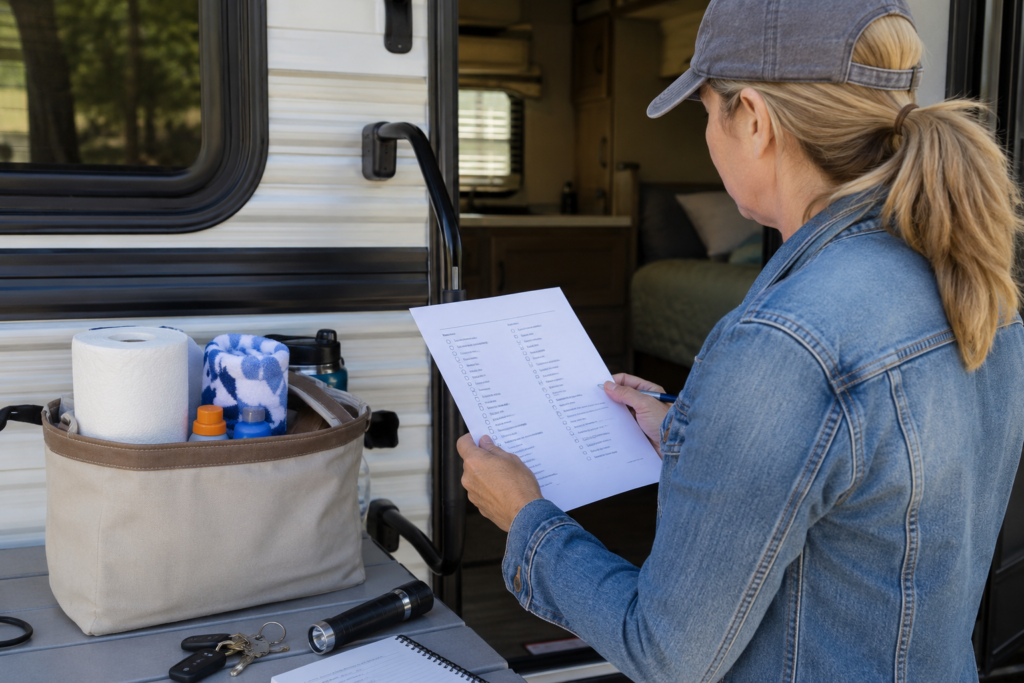
The easiest way to feel more confident is to use a short checklist before you pull out of the driveway. These first RV trip essentials are not just things to pack. They are also things to verify before your trip starts.
| Task | When to Do It | Why It Helps |
|---|---|---|
| Confirm campsite hookups and rules | Before packing | You bring the right cords, hoses, and adapters |
| Check what gear is already included | Before buying extras | You avoid duplicates |
| Test basic RV systems | A day or two before leaving | You catch issues while still at home |
| Pack medicines, documents, and chargers | Last items before departure | These are the easiest essentials to forget |
| Secure loose items inside the RV | Right before driving | Prevents shifting and breakage on the road |
| Arrive before dark if possible | When planning your route | Makes first-time setup easier |
- Review the route and fuel plan.
- Check the weather so you pack the right layers and gear.
- Make sure keys, reservation details, and campground contact information are easy to find.
- Verify that water, power, and waste gear are packed where you can reach them first.
- Do a final walk-around before you leave.
A calm, repeatable routine matters more than having a perfect setup. After your first trip, update your checklist based on what you used, what you forgot, and what you never touched.
FAQ
Do I need full hookups for my first RV trip?
No, but many beginners find full hookups easier because they simplify water, electric, and sewer use. If you want the least stressful first experience, a full-hookup campground is often a good starting point.
What is the most commonly forgotten beginner RV camping gear?
Water hoses, power adapters, wheel chocks, toiletries, towels, chargers, and simple kitchen items are easy to forget. A short checklist usually solves this problem fast.
Should I buy all my RV starter gear before the first trip?
No. Buy the basics first, then let real experience tell you what is worth adding. This keeps your setup simpler and helps you avoid spending money on gear you may never use.
What if I am renting an RV?
Ask exactly what is included, what you need to bring, and which systems you are expected to operate. Rental hosts often provide some essentials, but the list varies a lot.
What matters more than buying more gear?
Learning your RV’s basic systems matters more. Spend a little time understanding water, power, leveling, and tank use before your trip. That confidence is often more valuable than another shopping haul.
Related Beginner RV Articles
- RV Camping for Beginners: Everything You Need to Know Before Your First Trip
- How to Plan Your First RV Camping Trip Step by Step
- RV Hookups for Beginners: Water, Electric, and Sewer Explained
- RV Packing List for Beginners
- First-Time RV Camping Mistakes to Avoid
Final Thoughts
What you actually need for RV camping is usually much less than beginners expect. Focus on safe hookups, a few comfort basics, simple meals, and a short checklist you can trust. That approach keeps your first trip manageable and gives you a better sense of what gear is truly worth adding later.
The best first RV trip essentials are the ones that help you feel prepared without making the experience more complicated. Start small, follow your owner’s manual, check campground rules, and let your first trip teach you what comes next.