What You Actually Need for RV Camping: First RV Trip Essentials for Beginners
Your first RV trip does not need to feel like a giant shopping project. What you actually need for RV camping is a short list of practical basics that help you set up safely, sleep comfortably, make simple meals, and handle water, power, and waste without stress.
If you are planning your first getaway, this guide keeps the focus on true first RV trip essentials instead of extras you may never use. You will find beginner RV camping gear that makes a real difference, what can wait until later, and how to build a sensible RV starter gear list without overpacking. Because RV systems vary, always check your owner’s manual, rental orientation, and campground rules before your trip.
What you actually need for RV camping on a first trip
For most beginners, the must-haves fall into five simple categories: trip basics, leveling and safety gear, water and power hookup items, sewer essentials, and everyday comfort items for sleeping, cooking, and bathing. Once you cover those categories, you can enjoy your trip without feeling underprepared.
| Category | What to bring | Why it matters |
|---|---|---|
| Trip basics | Reservation details, ID, keys, wallet, phone chargers, medications | These are the easiest essentials to forget and the hardest to replace once you arrive. |
| Leveling and safety | Wheel chocks, leveling blocks if needed, flashlight, first-aid kit, work gloves | These help you park safely and handle setup with less stress. |
| Water and power | Potable water hose, water pressure regulator, power cord, any needed adapter | You need the right basics to connect to campground hookups correctly. |
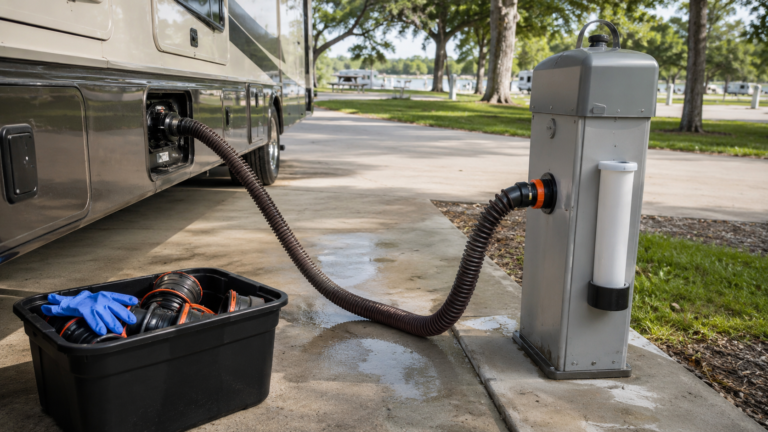
| Sewer basics | Sewer hose, gloves, separate storage for sewer gear | This keeps tank dumping simpler and more sanitary. |
| Kitchen and comfort | Basic cookware, plates, cups, utensils, bedding, towels, toiletries | You only need enough to cook simple meals and stay comfortable for the trip. |
Beginner RV camping gear that matters most
The best beginner RV camping gear is not flashy. It is the gear that helps you park, hook up, cook, and settle in with less confusion. A smart RV starter gear list should focus on setup, safety, and comfort before convenience upgrades.
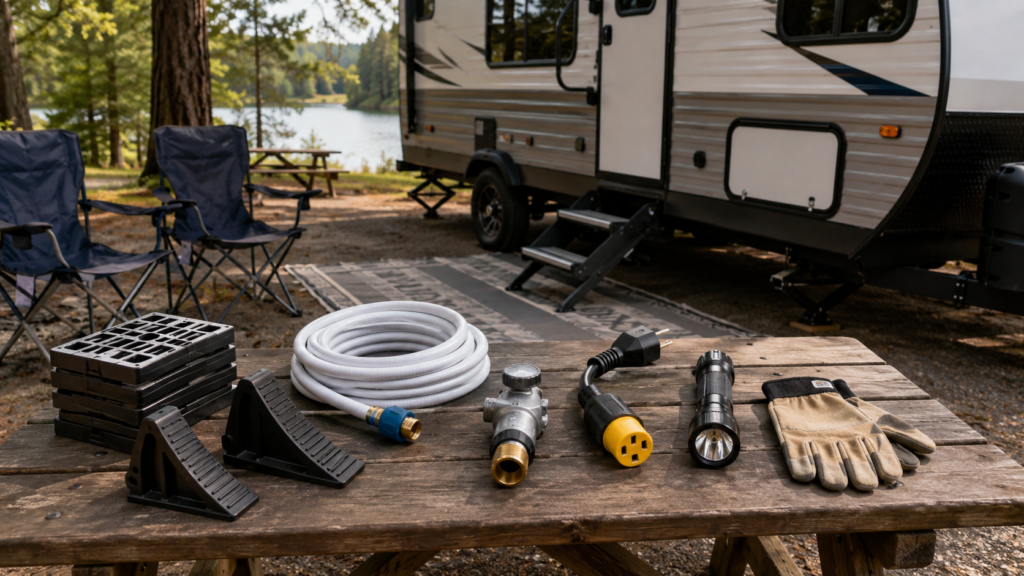
- Wheel chocks: These help keep a towable RV from moving during setup.
- Leveling blocks: Many campsites are not perfectly level, and these help you correct that before settling in.
- Potable water hose: Use a hose meant for drinking water, not a general garden hose.
- Water pressure regulator: This helps protect your RV plumbing when you connect to city water at a campground.
- Power cord and adapter if needed: Check the electrical service at your campsite and confirm what your RV uses before you leave home.
- Sewer hose and gloves: Keep these stored separately from your fresh-water gear.
- Flashlight or headlamp: One late arrival is enough to make this feel essential.
- Basic first-aid kit: Useful for minor cuts, scrapes, and everyday needs.
- Simple toolkit: A screwdriver, pliers, adjustable wrench, and spare fuses can solve small problems fast.
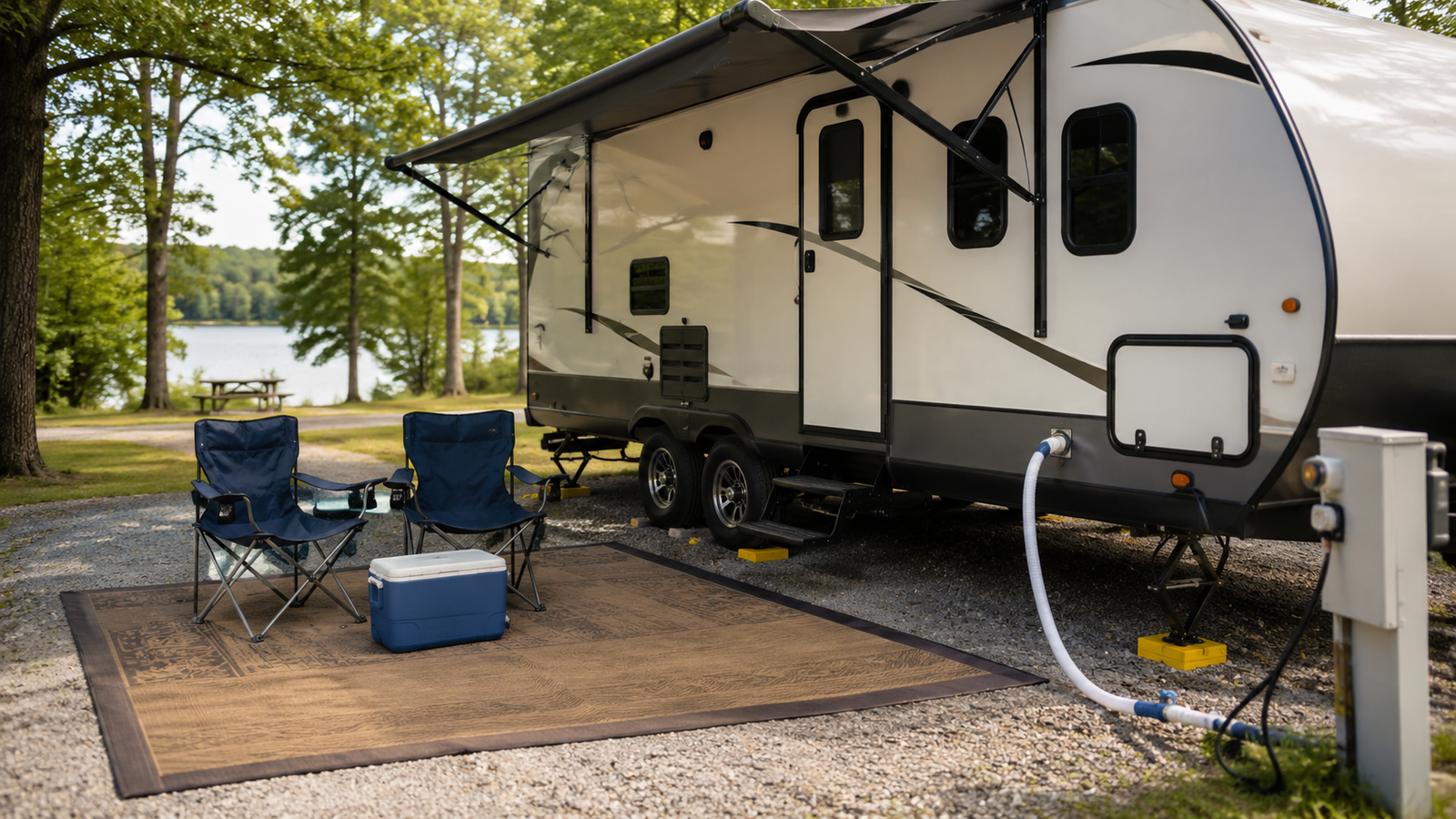
- Camp chairs: Not required for travel, but they make the campsite feel usable right away.
If your RV is a rental, check what is already included before buying anything. Some rentals provide hoses, power adapters, cookware, or camp chairs. That alone can shrink your first RV trip essentials list and save you money.
First RV trip essentials for water, power, and sewer
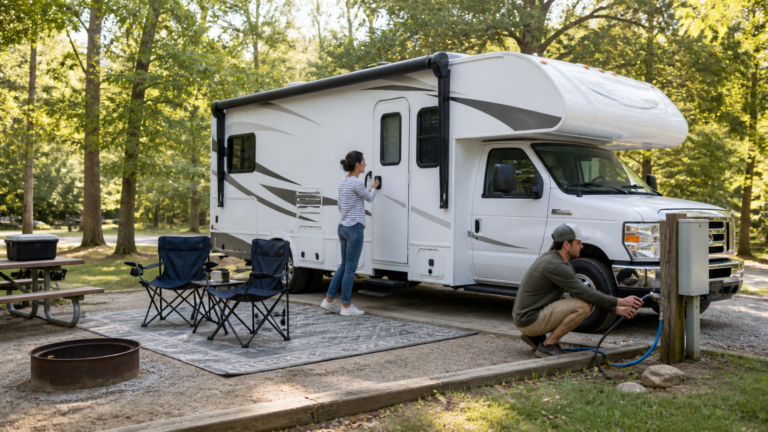
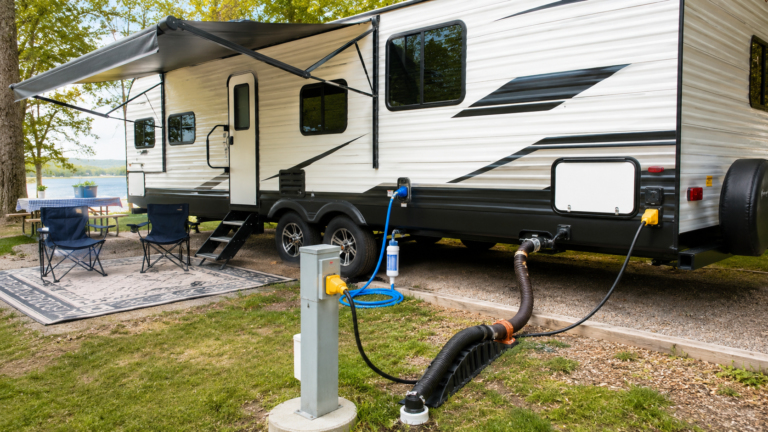
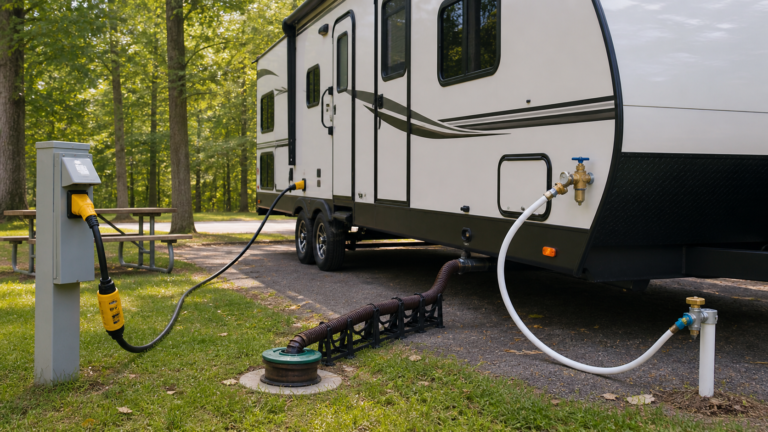
Utilities are where many first-time campers feel the most nervous, but the basics are manageable once you understand the terms. Shore power means campground electricity. City water means a pressurized water connection at your site. Your gray tank holds wastewater from sinks and showers, and your black tank holds toilet waste.
If your campsite has water hookups, bring a potable water hose and a water pressure regulator. If you will not be connected to city water, fill your fresh-water tank before leaving or near the campground so you have water for washing, toilet use, and simple cooking. Your exact fill process and monitor panel will vary by RV, so follow your manual or rental walkthrough.
For electricity, make sure you know what service your campsite offers and what your RV needs. Many beginner problems happen when people assume every site has the same hookup or forget an adapter. A quick check when booking can prevent a frustrating arrival.
For sewer, keep your system simple and clean. Bring the hose, gloves, and a storage method that keeps sewer items separate from anything used for drinking water or food. When it is time to dump, use the routine recommended for your specific RV. On many standard RV setups, beginners are taught to dump the black tank first and the gray tank second so the gray water helps rinse the hose.
- Know whether your campsite is full hookup, partial hookup, or no hookup.
- Practice identifying your fresh-water connection, city water connection, tank valves, and power cord before travel day.
- Label your storage bins so clean-water gear and sewer gear never get mixed.
- If anything about your plumbing or electrical system is unclear, stop and check your owner’s manual instead of guessing.
How to set up your campsite without feeling rushed
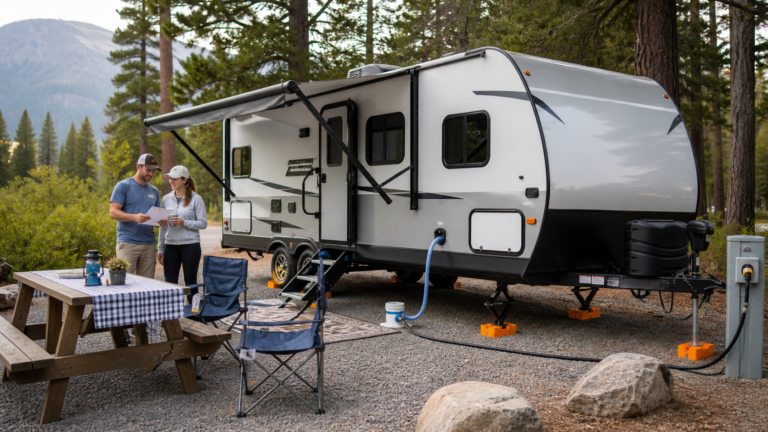
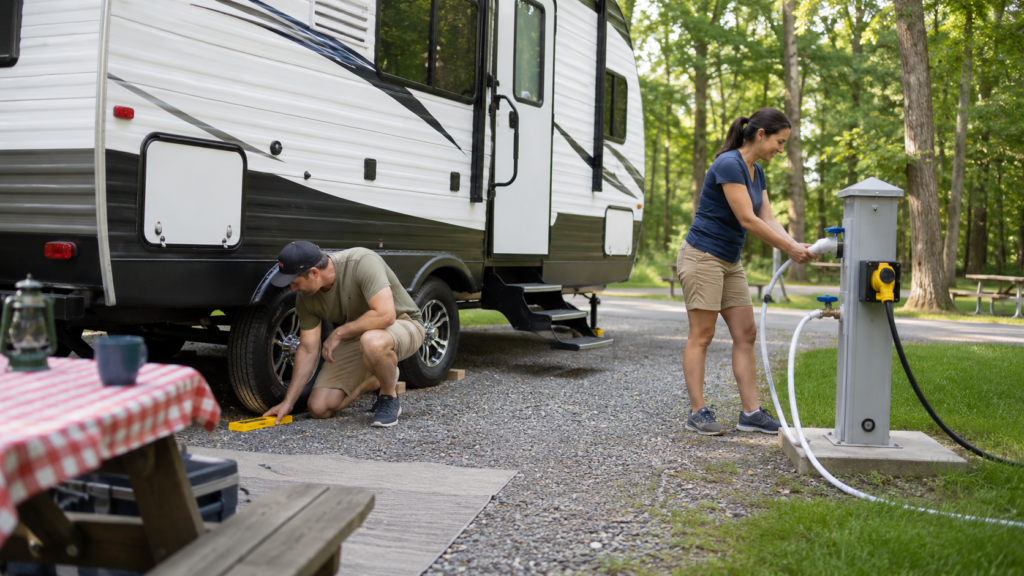
A calm setup routine matters more than extra gadgets. One of the most useful first RV trip essentials is simply knowing the order you will do things when you arrive. That prevents a lot of beginner stress, especially if you get to camp late or have people watching while you park.
| Step | What to do | Beginner tip |
|---|---|---|
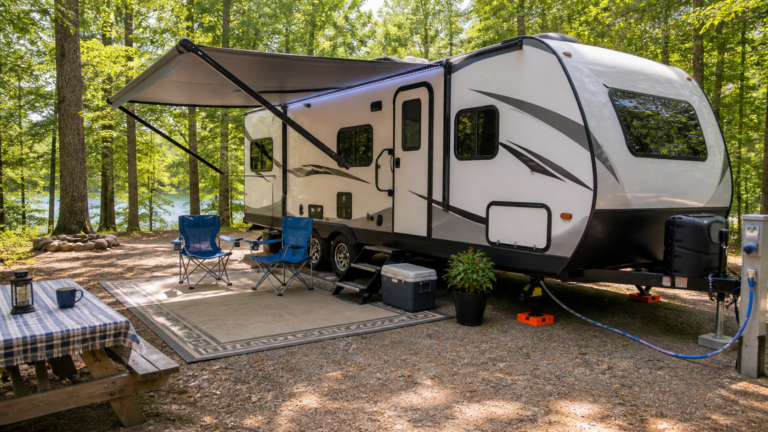
| 1 | Park and check the site | Look for slope, hookup location, and clearance for slides and awnings. |
| 2 | Level side to side if needed | Use leveling blocks before you fully settle into the site. |
| 3 | Chock the wheels on a towable RV | Do this before unhitching so the trailer stays put. |
| 4 | Level front to back if your RV requires it | Use the correct jack or leveling system for your RV type. |
| 5 | Connect electric and water | Go slowly and double-check each connection. |
| 6 | Handle slides and awning according to your manual | The sequence can vary by RV, so follow manufacturer instructions. |
| 7 | Stabilize if your RV has stabilizers | Stabilizers are for reducing movement, not leveling the RV. |
If you are towing a travel trailer or fifth wheel, do a short walk-around before and after setup. A two-minute check for chocks, cords, hoses, steps, and slide clearance can catch the mistakes that make a beginner feel frazzled.
Kitchen, sleeping, and bathroom basics you really will use
Many new campers overpack the inside of the RV. You do not need a full house kitchen, a dozen storage bins, or backup versions of everything. What you need is enough to eat, sleep, shower, and reset for the next day.
- Kitchen: one skillet, one pot, a cutting board, a knife, a spatula, can opener, dish soap, sponge, paper towels, and a few food containers.
- Meals: keep your first trip menu simple with easy breakfasts, sandwiches, grilled foods, pasta, tacos, or one-pan meals.
- Sleeping: bedding that fits your RV mattress, pillows, and one extra blanket in case temperatures change.
- Bathroom: toiletries, towels, and the toilet supplies your RV manual recommends.
- Comfort: a small fan can be helpful in warm weather, and extra layers are often more useful than fancy comfort upgrades.
If you are wondering what you actually need for RV camping inside the rig, think in terms of one weekend, not a full household move. Pack for the length of the trip, the weather, and the activities you already know you will do.
What can wait until after your first RV trip
Not every accessory belongs on a beginner shopping list. Some upgrades are great later, once you know how you camp and what actually bothers you. On a first trip, it is usually better to borrow, rent, or go without than to buy gear you may never use again.
- Decor items and non-essential storage accessories
- Duplicate kitchen gadgets
- Large outdoor rugs and patio extras you are not sure you want
- Specialty cooking gear for meals you may never make
- Complicated organization systems before you know your layout
- Premium upgrades when a basic version will work for now
A smart RV starter gear plan is to buy the basics first, take one short trip, and then make a list of what would have truly improved the experience. That is the fastest way to avoid wasted money and clutter.
Common beginner mistakes and better habits
| Mistake | Better beginner habit | Why it helps |
|---|---|---|
| Buying too much gear before one trip | Start with basic RV starter gear and add later | You save money and avoid clutter. |
| Assuming every campsite has the same hookups | Verify water, sewer, and electric before arrival | You pack the right gear and adapters. |
| Skipping an at-home walkthrough | Test lights, water, power, and storage before travel day | You learn your RV without campground pressure. |
| Rushing setup after dark | Aim for a daylight arrival when possible | Hookups and leveling are easier to see. |
| Using stabilizers like leveling tools | Level first, then stabilize | This protects equipment and improves comfort. |
| Mixing sewer gear with clean-water gear | Store each category separately | It keeps your setup cleaner and easier to manage. |
Simple packing checklist for your first RV weekend
Use this list as a practical starting point, then customize it for your RV, season, and destination.
- Documents and trip info: reservation confirmation, driver’s license, insurance info if needed, campground directions, emergency contacts
- Daily essentials: phone, charging cables, medications, sunglasses, weather-appropriate clothing, sturdy shoes
- RV setup gear: wheel chocks, leveling blocks, potable water hose, water pressure regulator, power cord, adapter if needed, gloves, flashlight
- Kitchen: food, drinks, cooking basics, utensils, plates, cups, dish supplies, trash bags
- Bathroom: towels, toiletries, hand soap, shower items, and toilet supplies appropriate for your RV
- Sleeping: sheets, blankets, pillows, sleepwear
- Outside: camp chairs, bug spray, sunscreen, small mat if you want one
- Safety: first-aid kit, spare batteries if needed, basic tools, owner’s manual or digital copy
FAQ about first RV trip essentials
Do I need every RV accessory people recommend online?
No. Many recommendation lists are built for long-term RV owners, not beginners taking a short first trip. Start with the basics for leveling, hookups, safety, meals, and sleep. Then upgrade based on real experience.
Should I fill my fresh-water tank before I leave?
It depends on your campground and your RV. If you will not be connected to city water, or you want backup water on hand, filling the fresh tank makes sense. If you are unsure, follow your owner’s manual or rental company instructions.
What is the most important beginner RV camping gear to buy first?
For most people, the top priorities are wheel chocks, leveling blocks if needed, a potable water hose, a water pressure regulator, power hookup basics, a sewer hose, a flashlight, and a small toolkit. Those items solve the most common first-trip problems.
What if my rental or used RV already came with some gear?
That can save you money, but check each item before you rely on it. Make sure hoses, cords, and adapters are present, clean, and in usable condition. It is still worth doing a full walkthrough so you know how each system works before you arrive at camp.
Related Beginner RV Articles
- RV Camping for Beginners: Everything You Need to Know Before Your First Trip
- How to Plan Your First RV Camping Trip Step by Step
- RV Hookups for Beginners: Water, Electric, and Sewer Explained
- How to Set Up an RV at a Campsite for the First Time
- RV Packing List for Beginners
- First-Time RV Camping Mistakes to Avoid
Final thoughts on what you actually need for RV camping
The best first RV trip essentials are the ones that make your trip safer, simpler, and more comfortable. That usually means basic hookup gear, a short comfort list, a clear setup routine, and enough kitchen and bathroom supplies to get through a weekend with confidence. You do not need to own every piece of beginner RV camping gear right away. Start with the true basics, learn your RV, and let your real camping habits shape what you buy next.