Essential RV Gear for Beginners: Must-Have Setup for Your First RV Trip
Buying essential RV gear for beginners can feel overwhelming fast. One list says you need every gadget on the market, while another skips items that actually make your first campground setup easier. This guide keeps things simple so you can focus on the must have RV gear that helps you park, hook up, sleep, cook, and handle small problems without stress.
If you are planning your first RV trip, think in categories instead of shopping for random items. Your first RV trip gear should cover campsite setup, water and sewer, power, safety, kitchen basics, and sleeping comfort. The goal is not to buy everything at once. The goal is to start with reliable basics, learn how your RV works, and add more beginner RV accessories only after you know what you will actually use.
What Counts as Essential RV Gear for Beginners?
For most beginners, essential gear means the items that make your RV usable and safe on a simple campground trip. That includes the tools to level and secure the RV, connect to water and power correctly, handle sewer tasks cleanly, cook a few easy meals, sleep comfortably, and deal with minor issues before they become big frustrations.
You do not need to start with advanced solar setups, decorative campsite extras, or specialty kitchen gadgets. If you are renting, ask the rental company what is already included before buying duplicates. Many rentals already come with some hoses, a power cord, or cookware, but you should never assume. Confirm what is supplied and what condition it is in.
| Category | What belongs here | Why it matters on a first trip |
|---|---|---|
| Setup gear | Leveling blocks, wheel chocks, gloves, flashlight | Helps you arrive, park, and settle in with less stress |
| Water and sewer | Drinking-water-safe hose, pressure regulator, sewer hose kit | Lets you use your RV systems correctly and more cleanly |
| Power | Power cord, correct adapter, surge protector or EMS | Protects your RV and makes hookups simpler |
| Safety | Fire extinguisher, first-aid kit, detector checks, basic tools | Prepares you for common beginner problems |
| Comfort | Bedding, cookware, dishes, food storage | Makes the RV practical for real overnight use |
Must-Have RV Gear for Campsite Setup
Your campsite setup gear should make arrival easier, not more complicated. A few well-chosen items can save you from awkward parking, unstable steps, or repeated trips in and out of storage compartments.
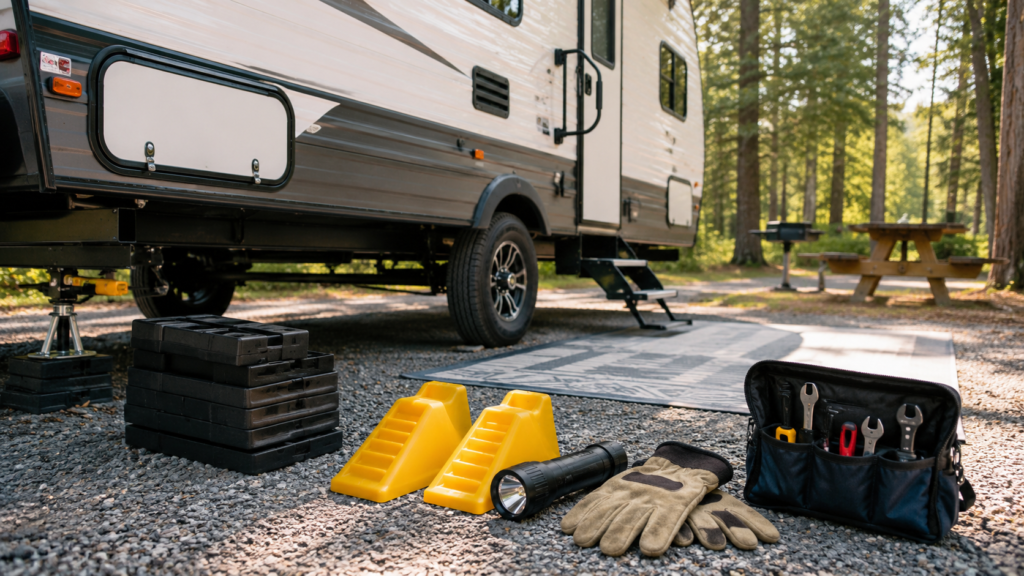
| Gear item | Why you need it | Beginner note |
|---|---|---|
| Leveling blocks | Help level the RV on uneven sites | Match the blocks to your RV type and leveling method |
| Wheel chocks | Help keep the RV from rolling while parked | Use them before unhitching or moving around the site |
| Work gloves | Keep utility tasks cleaner and easier | Keep one pair just for setup and dump-station jobs |
| Flashlight or headlamp | Makes late arrivals much easier | Store one near the entry door |
| Basic toolkit | Handles loose screws and small fixes | Start with a screwdriver, pliers, adjustable wrench, and spare fuses if your RV uses them |
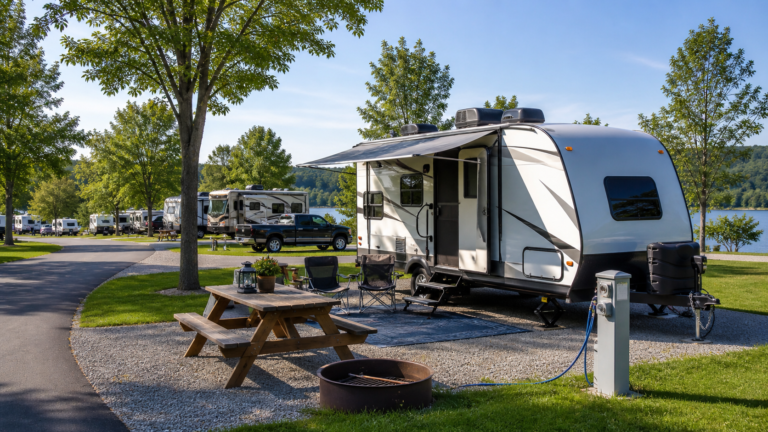
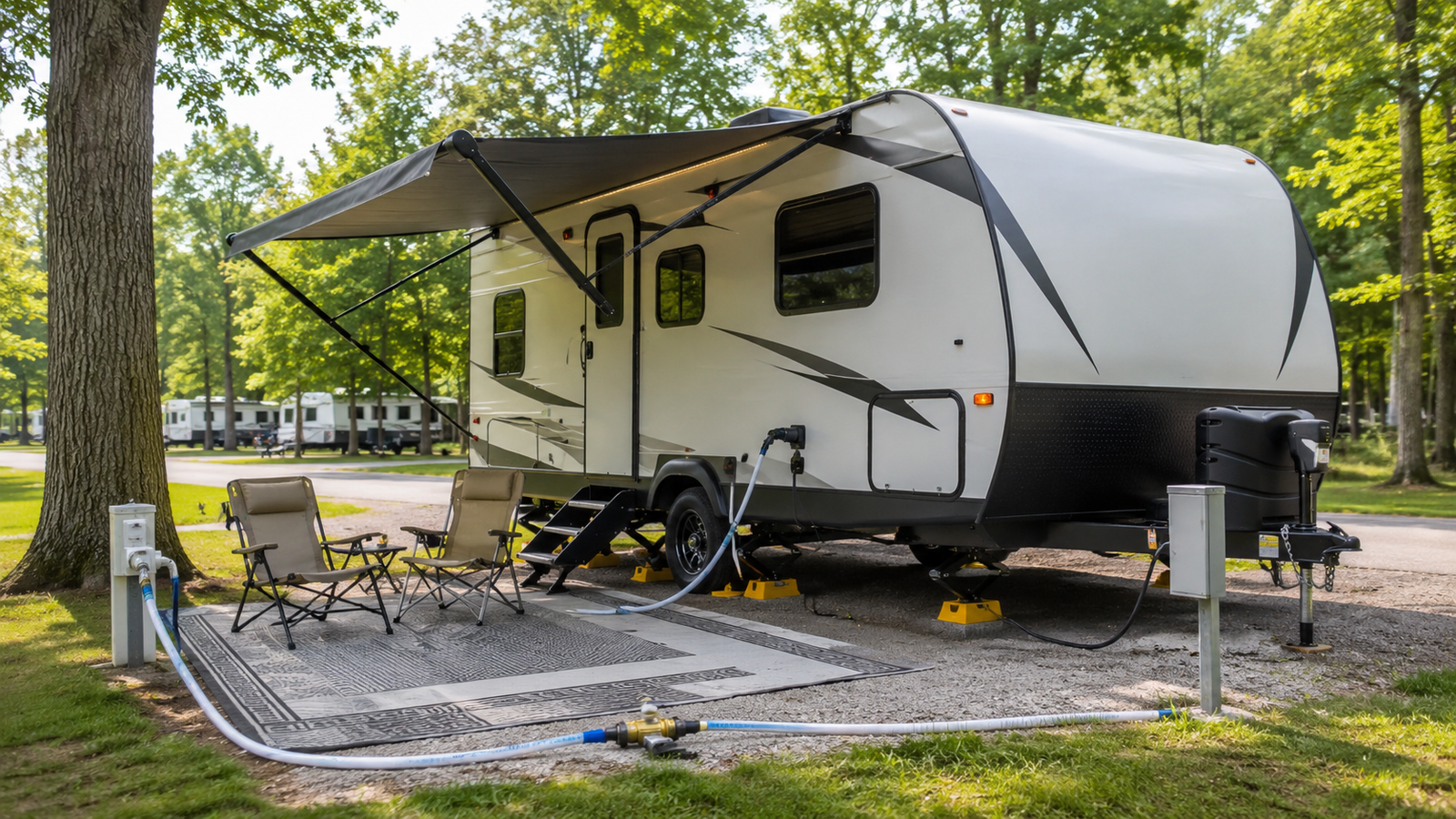
Your exact setup order can vary by RV type, campsite layout, and owner’s manual. As a simple beginner routine, park carefully, set the parking brake, use wheel chocks, level according to your RV’s instructions, then connect utilities. Campground rules and your manual should always win if they differ from a generic checklist.
- Park in the site and check your position before doing anything else.
- Set the parking brake and place wheel chocks.
- Level and stabilize the RV based on your RV type and manual.
- Connect power, then fresh water, then sewer if you have a full-hookup site and plan to use it.
- Bring out only the outdoor gear you actually need so the site stays easy to manage.
Water and Sewer Gear Beginners Should Pack
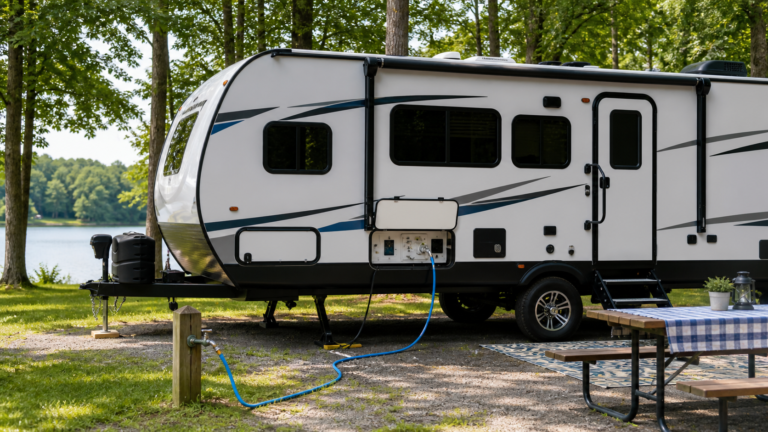
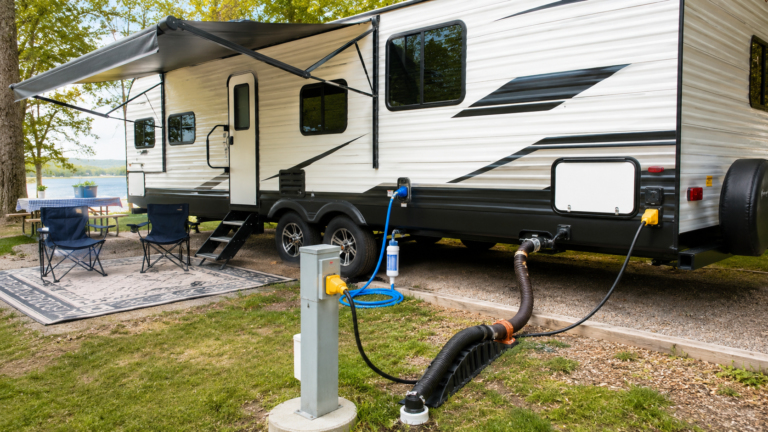
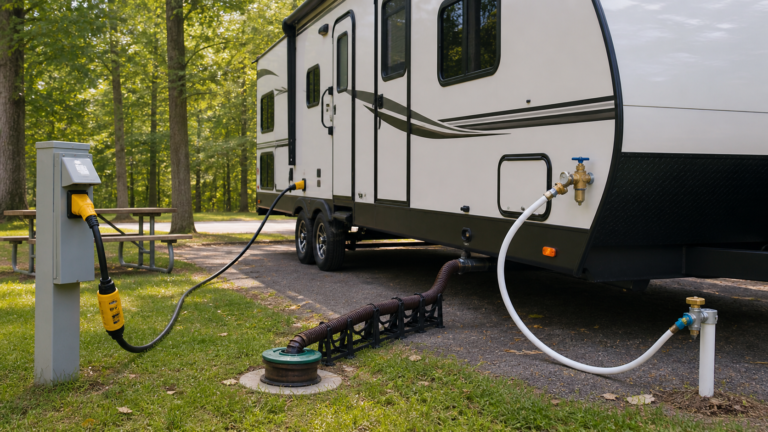
Water and sewer gear is some of the most important first RV trip gear because it affects comfort, sanitation, and confidence. This is also where beginner mistakes happen most often, so it is worth keeping your system simple and organized.
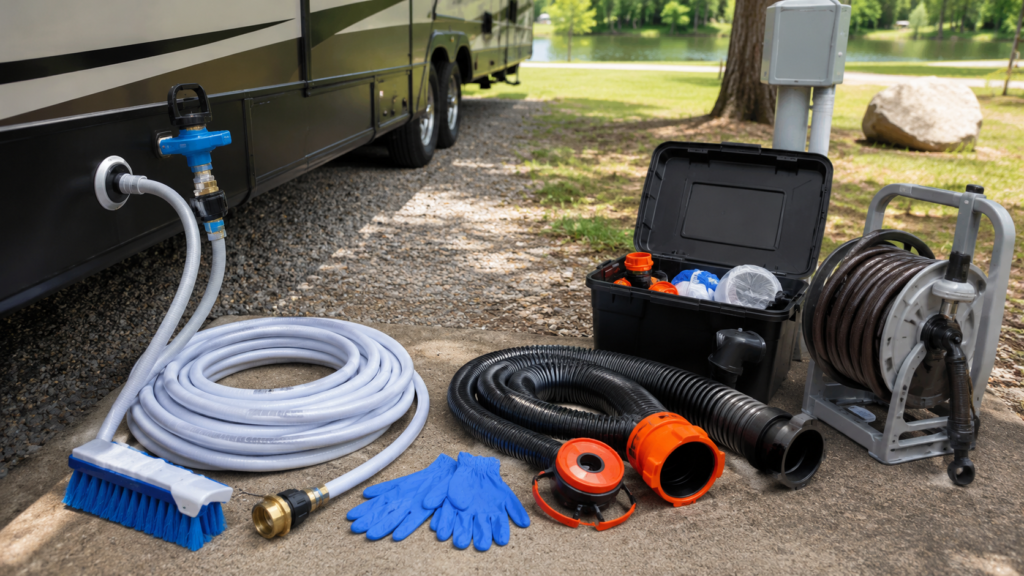
- A drinking-water-safe fresh water hose
- A water pressure regulator to help protect RV plumbing
- A water filter if you want an added layer between campground water and your RV
- A sewer hose kit with secure fittings
- Disposable gloves for sewer tasks
- A dedicated rinse hose if your setup or campground routine calls for one
- Tank treatment only if your RV system or owner’s manual recommends it
| Task | What to check | Why it helps |
|---|---|---|
| Fresh water hookup | Use a drinking-water-safe hose and pressure regulator | Helps protect water quality and plumbing |
| Sewer hookup | Use a proper sewer hose kit with secure fittings | Reduces leaks and confusion at the site |
| Tank flushing | Use a separate rinse hose if needed | Keeps fresh-water gear separate from sewer gear |
| Storage | Store potable-water items away from sewer items | Makes setup cleaner and more organized |
| Dumping | Dump only at an approved sewer hookup or dump station | Follows campground rules and basic sanitation |
A common beginner mistake is treating all hoses the same. Keep fresh-water gear completely separate from sewer gear, and never use your drinking-water hose for rinsing sewer equipment. If details vary for your RV or toilet system, follow the owner’s manual and the campground’s rules.
Power Gear and Lighting That Keep Your First Trip Simple
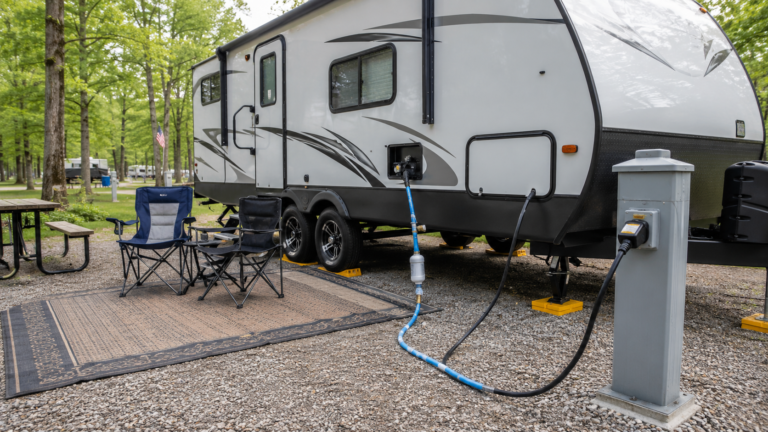
Many beginners assume power is just a cord and an outlet, but a few small details make a big difference. Good power gear helps protect your RV, makes campground hookups easier, and keeps you from improvising with the wrong adapter or an unsafe household extension cord.
- Your RV’s shore power cord in good condition
- The correct adapter for the campground service and your RV’s plug style
- A surge protector or electrical management system (EMS)
- A flashlight or headlamp for evening hookups
- Charging cables and a small power bank for phones and small devices
- A properly rated extension cord only if your RV setup and manufacturer instructions allow it
If your first trips are at full-hookup or electric sites, you probably do not need a generator or solar system right away. Those can be useful later, but they are not part of the must have RV gear for most campground beginners. Start with safe shore power habits first, then expand if your camping style changes.
Safety Gear and Roadside Basics
The best beginner RV accessories are often the unglamorous ones that solve real problems. Safety gear will not make your campsite look exciting, but it can protect you from common issues like small fires, bad hookups, dead detector batteries, or getting stuck without the right tool.
| Item | What to check | Why it matters |
|---|---|---|
| Fire extinguisher | Confirm it is present, easy to reach, and not expired | Helps with small emergencies near the kitchen or entry |
| First-aid kit | Restock basics before the trip | Handles minor cuts, burns, and common camp scrapes |
| Smoke, carbon monoxide, and propane detectors | Test them before leaving home | Important safety check in a small RV space |
| Tire gauge and roadside plan | Know your tire routine and who to call for help | Reduces panic if you have a road issue |
| Basic tools and spare fuses | Keep them in one easy-to-reach kit | Helps with small fixes that can interrupt a trip |
If you have a towable RV, make sure your lug wrench, jack, and spare tire setup match your rig. If you have a motorhome or rental, know the roadside assistance process before you leave. It is much easier to figure that out at home than on the shoulder of a highway.
Kitchen and Sleeping Gear That Earns Its Space
Your RV does not need a fully stocked home kitchen to work well. The best essential RV gear for beginners is compact, easy to store, and useful for simple meals and comfortable nights. Start with basics that serve multiple purposes and fit the space you actually have.
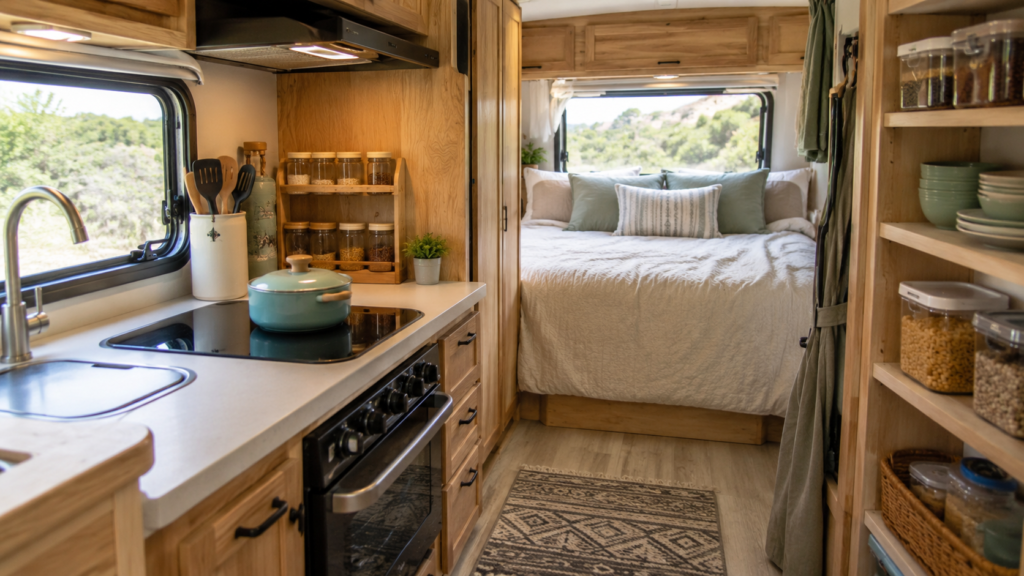
Kitchen basics
- A small skillet and one medium pot with a lid
- A spatula, tongs, can opener, sharp knife, and cutting board
- Plates, bowls, cups, and basic flatware for the number of travelers
- Dish soap, sponge, drying towel, and a small wash bin if that helps your routine
- Food storage containers and zip-top bags
- A simple coffee setup if that matters to your mornings
Sleep and comfort basics
- Fitted sheets that actually match your RV mattress size
- Pillows you already know are comfortable
- A blanket or comforter that fits the season
- A mattress topper if your RV mattress is thin or stiff
- A small fan for airflow if your RV runs warm at night
- Extra towels and one backup blanket for unexpected temperature changes
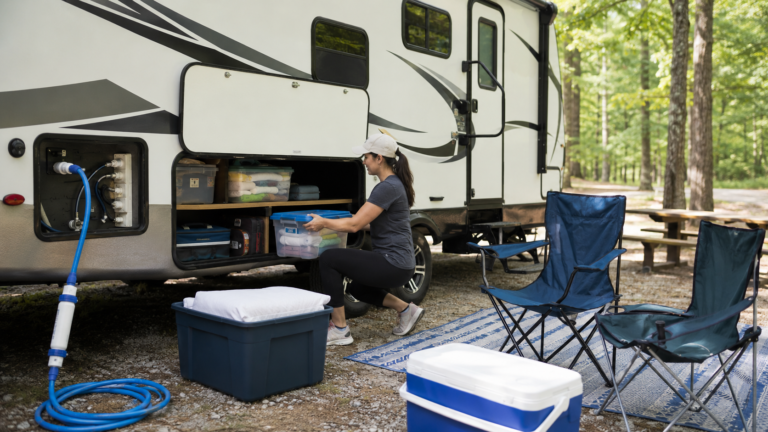
Less is usually more in a small RV. Compact cookware, stackable dishes, and soft-sided bins are often better beginner choices than large household items that rattle, slide, and take over every cabinet.
Beginner RV Accessories That Are Helpful but Not Urgent
Some beginner RV accessories are nice to have, but they are not required for a smooth first trip. Save these for later unless you already know they solve a specific problem for your RV style.
- Patio rug or outdoor mat upgrades
- Extra folding tables or outdoor storage cabinets
- Decorative lighting for the awning area
- Specialty coffee makers or countertop appliances
- Large solar setups or portable generators for trips that already have hookups
- Extra organizers for every cabinet before you know how you use the space
When in doubt, camp once before buying more. That one trip will show you whether you truly need more storage bins, a different coffee setup, or better outdoor seating. It is much easier to buy gear after you have used the RV than before.
Common First RV Trip Gear Mistakes to Avoid
Most first-trip gear mistakes come from overbuying, under-practicing, or assuming all RV setups work the same way. A few better habits can save money and make your early trips feel much calmer.
| Mistake | Better beginner habit | Why it matters |
|---|---|---|
| Buying gadgets before camping once | Start with must have RV gear and add later | Saves money and storage space |
| Packing full-size home cookware | Bring compact basics only | Reduces clutter, weight, and rattling |
| Using one hose for everything | Keep fresh-water and sewer gear separate | Creates a cleaner, safer routine |
| Assuming every campground is the same | Confirm hookups and amp service when booking | Helps you bring the right gear |
| Skipping a driveway test | Practice hookups and appliances at home first | Finds problems before travel day |
| Overpacking storage compartments | Pack light and secure loose items | Improves organization and reduces shifting in transit |
First RV Trip Gear Checklist
Use this checklist to keep your first RV trip gear focused on what matters most. Adjust it to your RV type, trip length, weather, and campground setup.
Setup and campsite gear
- Leveling blocks
- Wheel chocks
- Work gloves
- Flashlight or headlamp
- Basic toolkit
Water and sewer gear
- Drinking-water-safe hose
- Water pressure regulator
- Water filter if desired
- Sewer hose kit
- Disposable gloves
- Dedicated rinse hose if needed for your setup
Power and lighting
- Shore power cord
- Correct adapter
- Surge protector or EMS
- Phone chargers
- Power bank
- Flashlight batteries if your light needs them
Safety and road basics
- Fire extinguisher
- First-aid kit
- Tested smoke, carbon monoxide, and propane detectors
- Tire gauge
- Roadside assistance information
- Basic tools and spare fuses if your RV uses them
Kitchen, bedding, and daily-use items
- Simple cookware set
- Dishes, cups, and utensils
- Can opener and cutting board
- Dish soap and sponge
- Bedding and pillows
- Towels and food storage containers
FAQ
What is the absolute must-have RV gear for beginners?
The essentials are the items that let you set up safely and use the RV’s core systems: leveling blocks, wheel chocks, fresh-water gear, sewer gear, power hookup gear, basic safety supplies, bedding, and simple kitchen items. Start there before buying extra beginner RV accessories.
Do I need special RV gear, or can I use things from home?
Many home items work fine for the kitchen and bedroom, but some gear should be RV-specific. Drinking-water-safe hoses, sewer hoses, correct power adapters, and safety gear are worth getting in RV-appropriate versions because they are designed for the job.
What beginner RV accessories can wait until later?
Outdoor decor, extra storage accessories, specialty appliances, generators, and larger solar setups can usually wait until after a few trips. Once you know your camping style, it becomes easier to buy upgrades that actually solve a real problem.
How do I know what electrical adapter or hookup gear I need?
Check your RV’s plug type, your owner’s manual, and the campground listing before you leave. Campgrounds do not all offer the same service, and RVs do not all use the same connection. Matching your RV to the campground ahead of time is much easier than improvising at the pedestal.
Final Thoughts
The best essential RV gear for beginners is not the biggest shopping list. It is the gear that helps you arrive calmly, hook up correctly, stay comfortable, and solve small issues without turning your first trip into a stressful learning experience. Start with the true basics, practice at home, and let real trips show you what to add next.
That approach keeps your must have RV gear practical, your beginner RV accessories intentional, and your first RV trip gear much easier to manage. Confidence usually comes from repetition, not from owning more stuff.
Related Beginner RV Articles
- RV Camping for Beginners: Everything You Need to Know Before Your First Trip
- How to Set Up an RV at a Campsite for the First Time
- RV Hookups for Beginners: Water, Electric, and Sewer Explained
- First-Time RV Camping Mistakes to Avoid
- RV Packing List for Beginners
- RV Maintenance for Beginners: What to Check Before Every Trip