How to Plan Your First RV Camping Trip Step by Step
Planning your first RV camping trip does not have to feel overwhelming. When you break it down into a few clear steps, the whole process becomes much easier to manage. This beginner-friendly guide will help you choose the right campground, pack what you actually need, understand basic RV setup, and avoid common first-trip mistakes so you can enjoy the experience with more confidence.
1. Clarify Your Trip Goals and Basic Limits
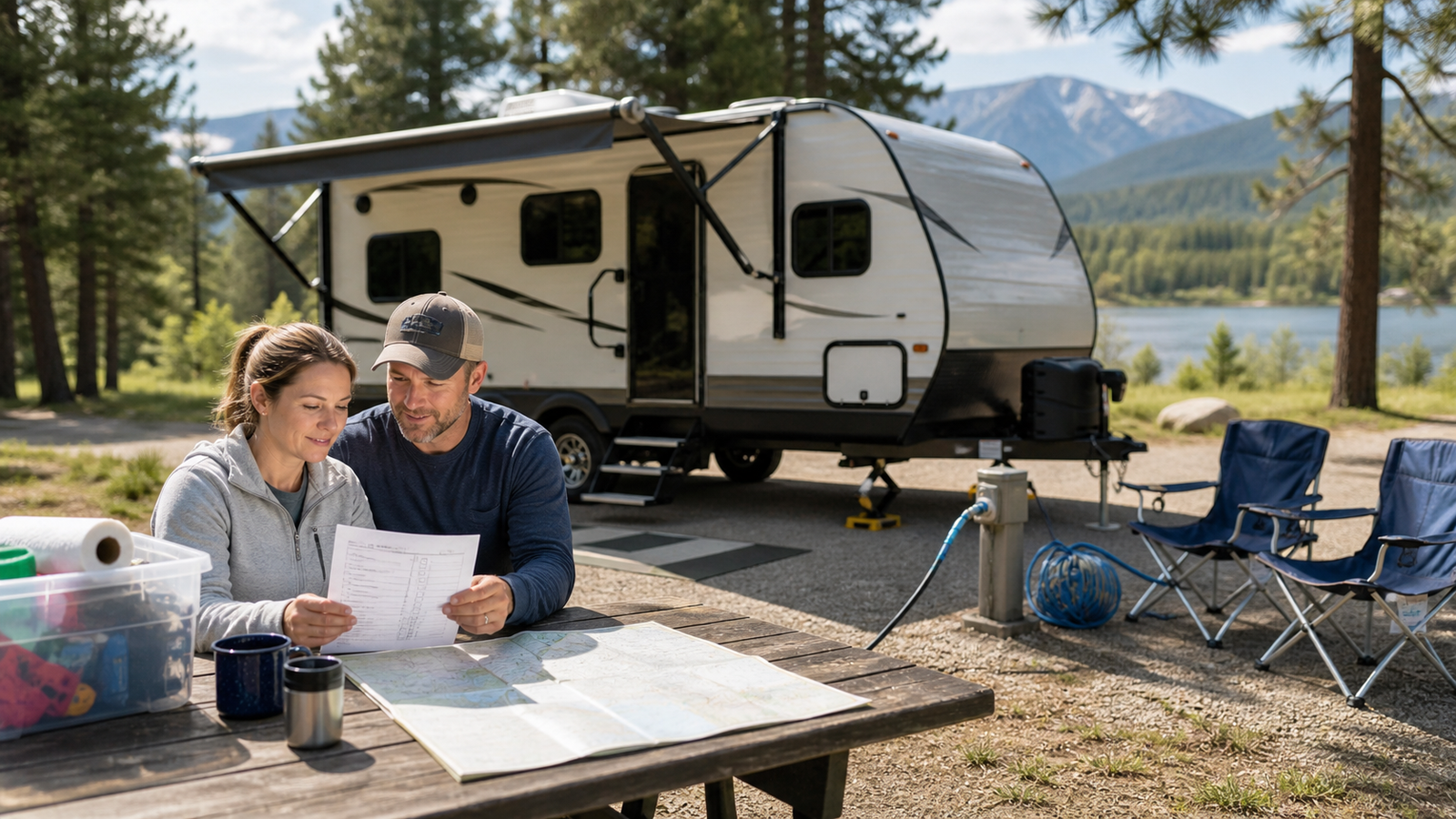
Before you book anything, decide what kind of first RV trip you actually want. A quick weekend close to home is very different from a longer road trip with multiple stops. Starting with realistic expectations will help you choose the right campground, pack more efficiently, and avoid turning your first trip into an exhausting learning experience.
Questions to answer first
- How long will the trip be? A weekend trip is usually the easiest place to start.
- How far do you want to drive? Keeping your first trip close to home lowers stress and gives you more flexibility.
- What kind of campground do you want? Choose between full hookups, partial hookups, or a more basic dry camping experience.
- What type of RV are you using? A camper van, travel trailer, and motorhome all come with different setup needs.
Your answers shape everything else. A remote campground with no hookups may sound appealing, but it also means more planning for water, power, and waste. For a first trip, simpler is usually better.
Good beginner approach
- Choose a campground within a comfortable driving distance.
- Start with one campsite instead of moving between multiple locations.
- Pick a place with published rules, clear amenities, and beginner-friendly access.
2. Book the Right Campground and Learn the Site Details
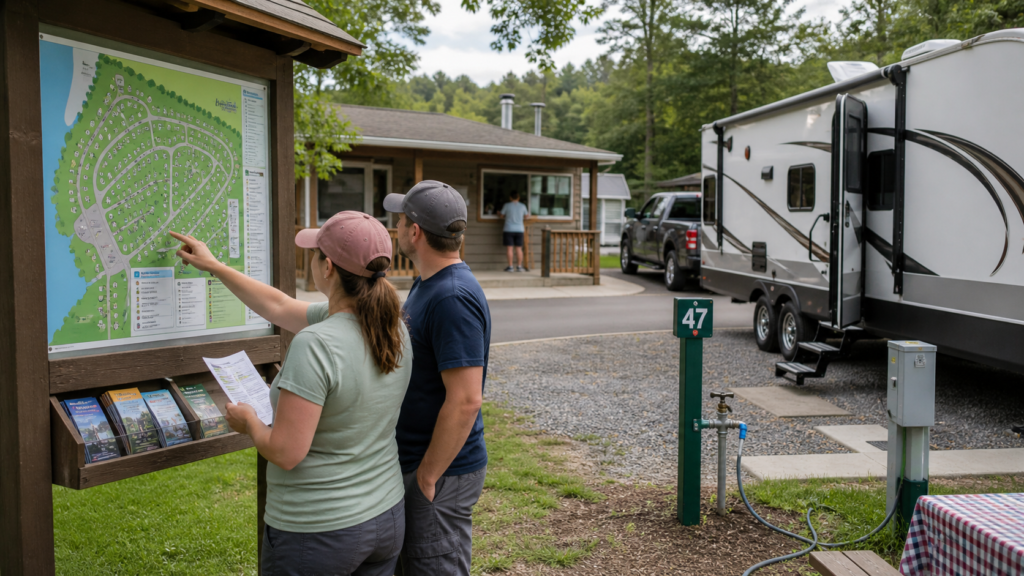
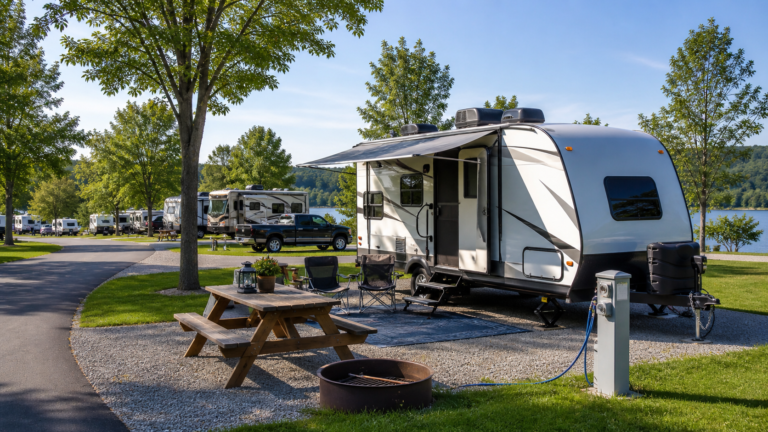
The campground you choose will have a huge effect on how easy your first trip feels. A good beginner site should match your RV size, your comfort level, and the type of trip you want to have.
What to check before booking
- Site length and width: Make sure the site fits your RV comfortably.
- Pull-through or back-in: Pull-through sites are often easier for beginners.
- Hookups: Check whether the site includes water, sewer, and electric service.
- Electrical service: Confirm whether the campsite provides 20A, 30A, or 50A power.
- Ground surface and access: Look for level ground and easy site entry.
- Nearby facilities: Restrooms, potable water, dump stations, and campground staff can all make a first trip easier.
Helpful questions to ask
- Are there any height or vehicle restrictions?
- Is the site level or likely to need extra leveling blocks?
- Are generators allowed, and if so, during what hours?
- Where is the nearest dump station if the site does not include sewer hookups?
A practical first-trip strategy is to choose the first site that clearly meets your needs instead of chasing the “perfect” scenic spot that comes with more complications.
3. Make a Simple First-Trip Packing and Shopping List
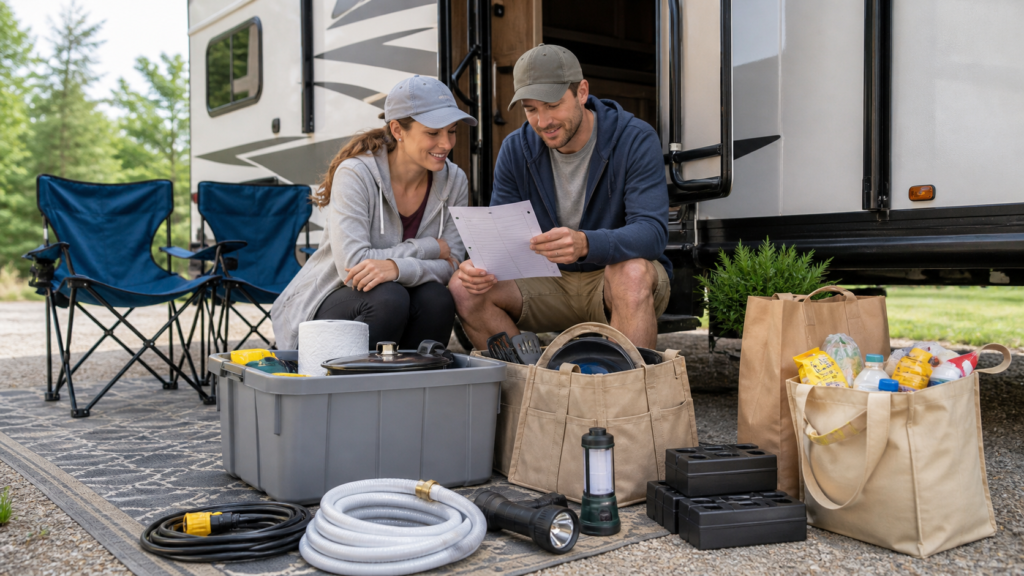
Your first RV trip does not need a giant shopping spree. The goal is to bring the basics that support comfort, safety, and campsite function without overloading your RV with gear you will not use.
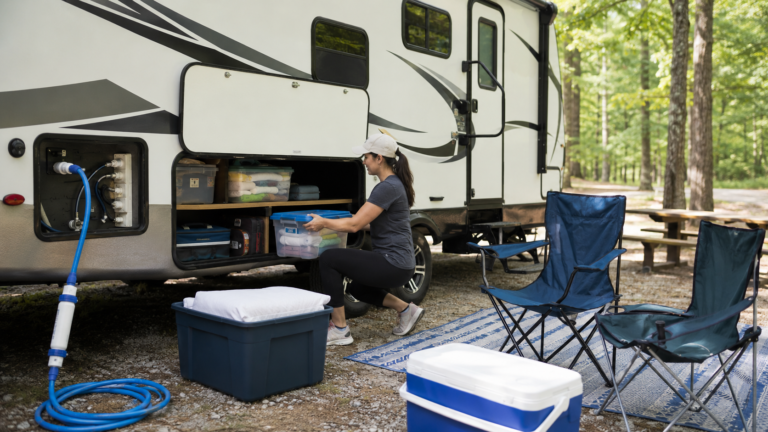
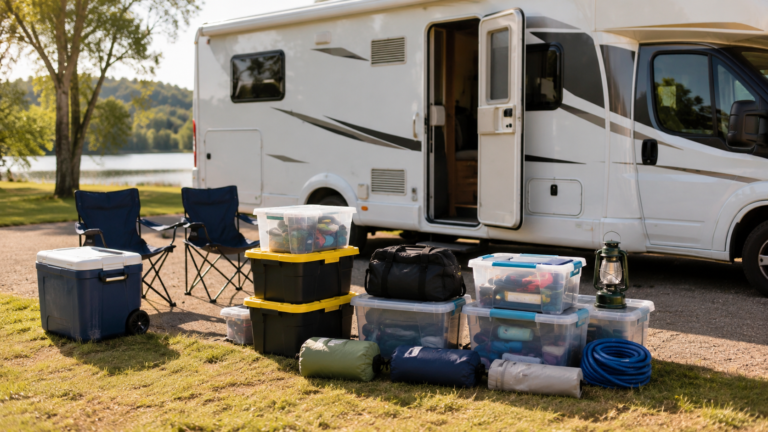
Core items to pack
- Safety: first-aid kit, fire extinguisher, flashlight, and extra batteries
- Water and utility gear: freshwater hose, water pressure regulator, sewer hose if needed, and disposable gloves
- Setup gear: leveling blocks, wheel chocks, and a basic tool kit
- Cooking basics: simple cookware, utensils, reusable dishes, trash bags, and easy meals
- Comfort items: camp chairs, weather-appropriate clothing, toiletries, bedding, and a door mat
What to verify before buying extra gear
- Will your site have hookups, or do you need to plan for dry camping?
- Does your RV already include some of the tools or adapters you need?
- Will you actually cook outdoors, or are simple indoor meals more realistic?
One of the most common beginner mistakes is bringing too much. Pack for the trip you are actually taking, not every future trip you might take someday.
4. Plan Your Campsite Setup in the Right Order
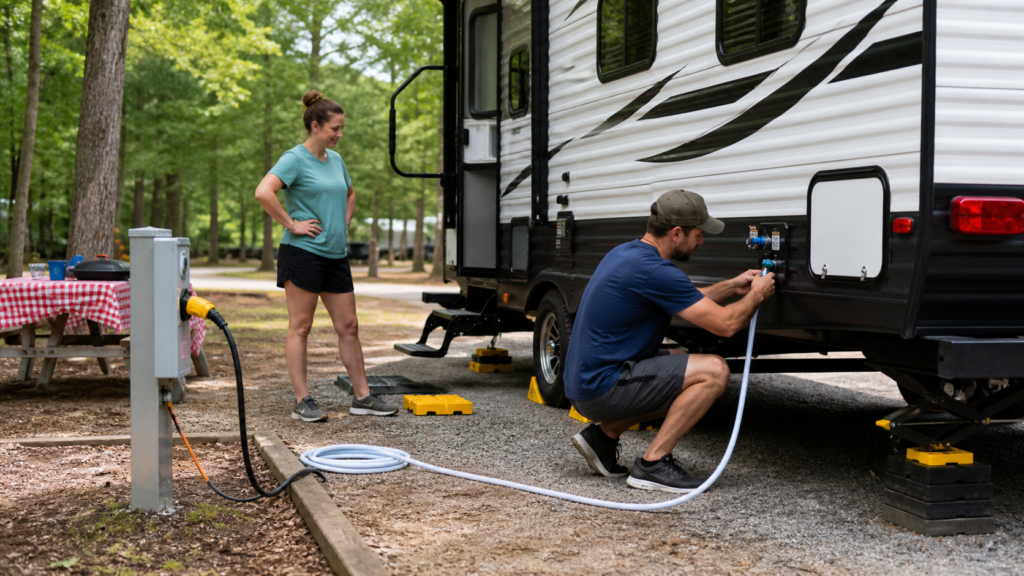
A smooth arrival makes the whole trip feel better. The easiest way to reduce stress is to follow the same simple setup order every time.
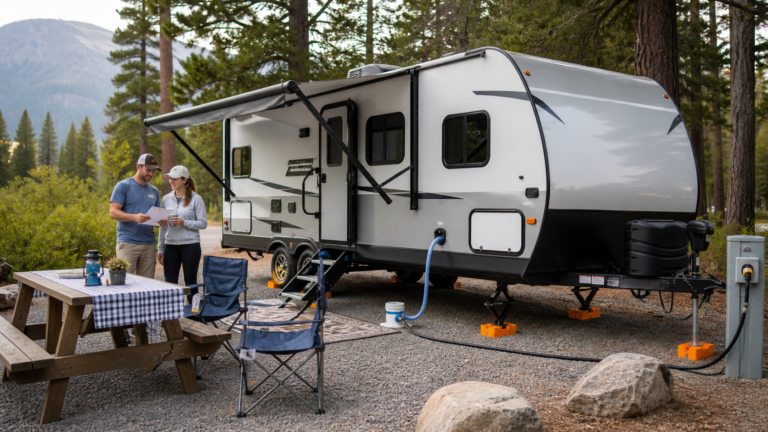
Basic campsite setup sequence
- Arrive during daylight if possible. It is much easier to position and inspect the site when you can clearly see everything.
- Check the site before parking. Locate hookups, look for obstacles, and confirm where you want the RV positioned.
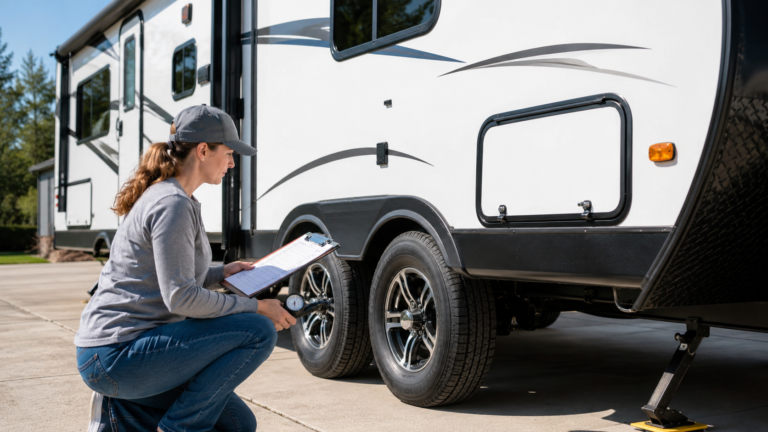
- Park and level the RV. Use leveling blocks if needed, then chock the wheels.
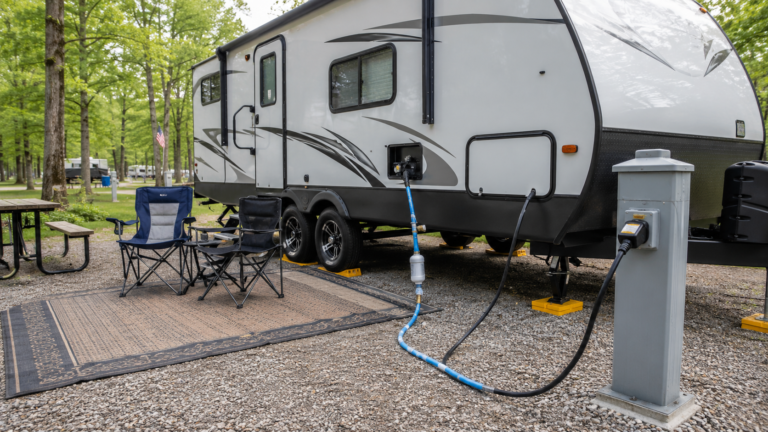
- Connect power. Check the pedestal first, then connect your RV power cord and any needed surge protection.
- Connect water. Attach your freshwater hose and pressure regulator, then check for leaks.
- Finish your campsite setup. Extend slide-outs if applicable, set stabilizers, and put out only the gear you need.
Important setup reminders
- Level before settling in fully.
- Use wheel chocks even on sites that look mostly flat.
- Do not rush hookups.
- Keep hoses and cords tidy so they do not become trip hazards.
Following a repeatable setup routine is one of the fastest ways to feel more confident as a first-time RVer.
5. Understand Basic RV Water, Power, and Waste Systems
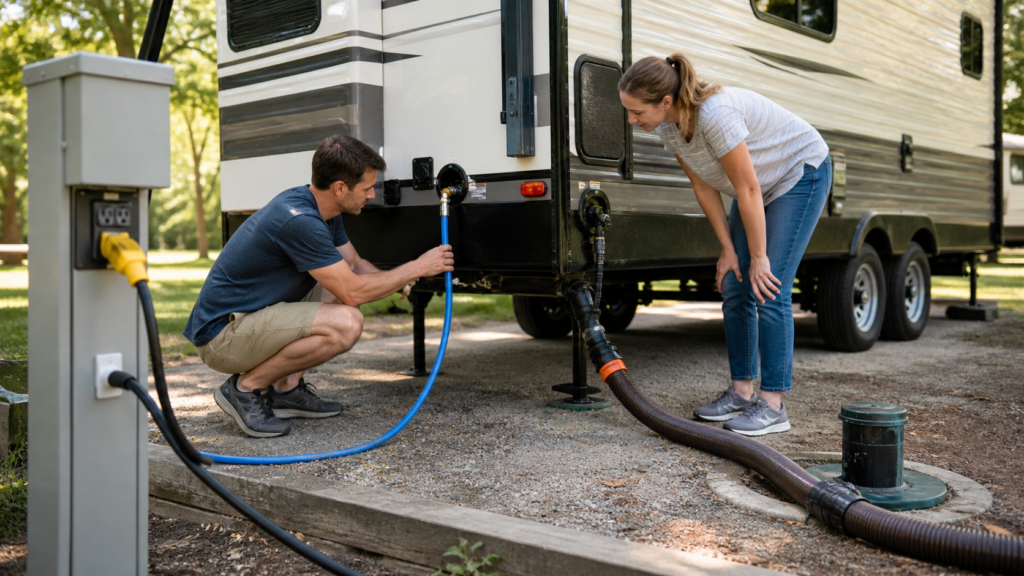
You do not need to become an RV systems expert before your first trip, but you do need to understand the basics. A little knowledge here prevents a lot of confusion later.
RV power basics
- 20A or 30A service is common for many smaller RVs and beginner setups.
- 50A service is more common for larger rigs with heavier electrical demands.
- If you are not plugged into shore power, you may be relying on batteries or a generator.
RV water and waste basics
- Fresh water is your clean water supply.
- Gray water comes from sinks and showers.
- Black water comes from the toilet system.
Make sure you know where your dump station is located and do not wait until tanks are a problem before making a plan.
Good beginner habits
- Check hookups for leaks early.
- Do not overload your electrical connection with too many appliances at once.
- Know roughly how long your water and waste capacity will last.
6. Keep Meals and Daily Routines Simple
Your first trip will feel easier if your meals and daily routines are easy too. You are not trying to create the perfect RV lifestyle on day one. You are trying to make the trip manageable and enjoyable.
Simple meal planning approach
- Plan a few easy breakfasts and two or three simple dinners.
- Use meals with minimal prep and cleanup.
- Pack snacks and drinks that do not require much storage work.
- Use leftovers intentionally to reduce waste.
Daily rhythm ideas
- Keep mornings simple and unhurried.
- Plan only one main outing or activity per day.
- Have a backup plan for bad weather.
Overplanning is one of the easiest ways to make a first trip feel more stressful than it needs to be.
7. Prepare for Safety, Rules, and Campground Etiquette
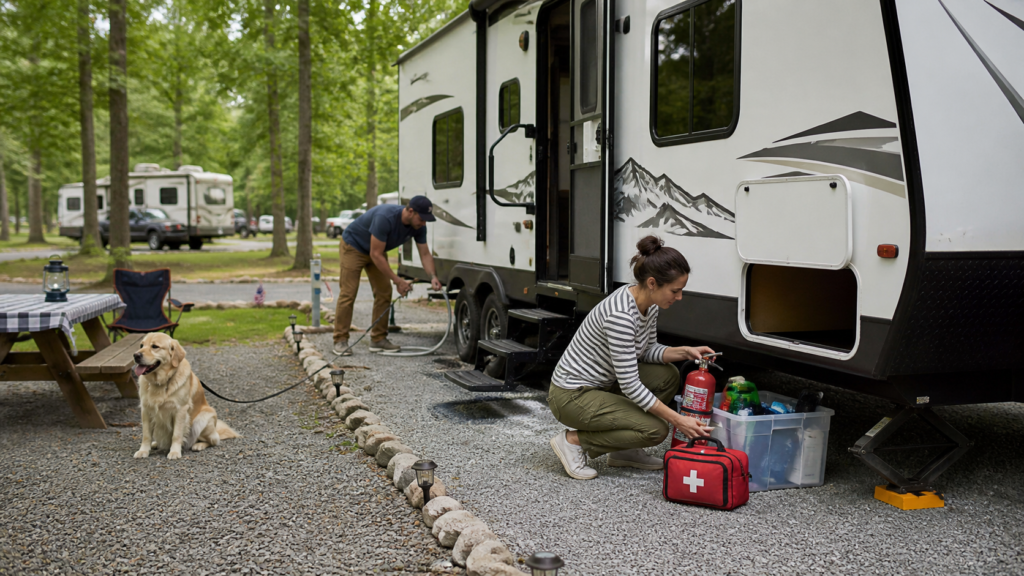
A safe and respectful trip makes the experience better for everyone, including you. This part of planning is easy to overlook, but it matters.
Basic safety priorities
- Know where your fire extinguisher and first-aid kit are.
- Store food properly, especially in areas with active wildlife.
- Keep walkways clear around your RV and campsite.
- Follow campground fire restrictions and generator rules.
Good campground etiquette
- Respect quiet hours.
- Keep pets leashed where required.
- Do not let gear spill into neighboring sites.
- Clean up your campsite before you leave.
Good etiquette is not complicated. Most of it comes down to staying aware of your surroundings and not making your campsite someone else’s problem.
Frequently Asked Questions
Is dry camping too hard for a first RV trip?
It can be done, but it adds more planning. For most beginners, a campground with at least electric and water hookups is a simpler starting point.
What is the easiest kind of campground for a first trip?
A nearby campground with beginner-friendly access, clear rules, and sites that fit your RV comfortably is usually the best place to start.
How do I avoid overpacking?
Stick to essentials for setup, safety, meals, and comfort. Pack for the actual number of days you will be gone instead of filling every storage compartment just because you can.
What is the most common first-trip mistake?
Trying to do too much at once. Long driving days, overcomplicated meals, too much gear, and overly ambitious plans can make the trip harder than it needs to be.
What should I do if something goes wrong?
Start with the basics. Check your power, water, propane, battery status, and visible connections first. A calm step-by-step check solves many beginner issues faster than panic does.
Conclusion
Your first RV camping trip does not need to be perfect to be successful. Start with a simple plan, choose a campground that fits your comfort level, pack the basics, and focus on learning the routine. The more realistic your first trip is, the more likely you are to enjoy it and want to do it again.
If you keep things simple, practical, and beginner-friendly, your first RV trip can feel a lot more exciting than stressful.