How RV Fresh Water, Gray Water, and Black Water Tanks Work
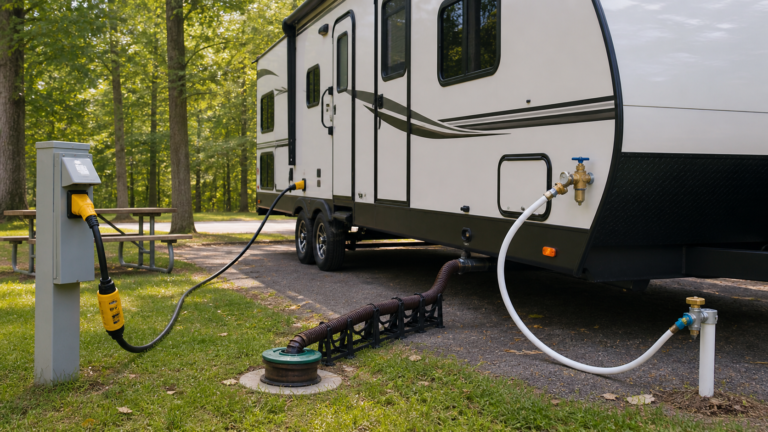
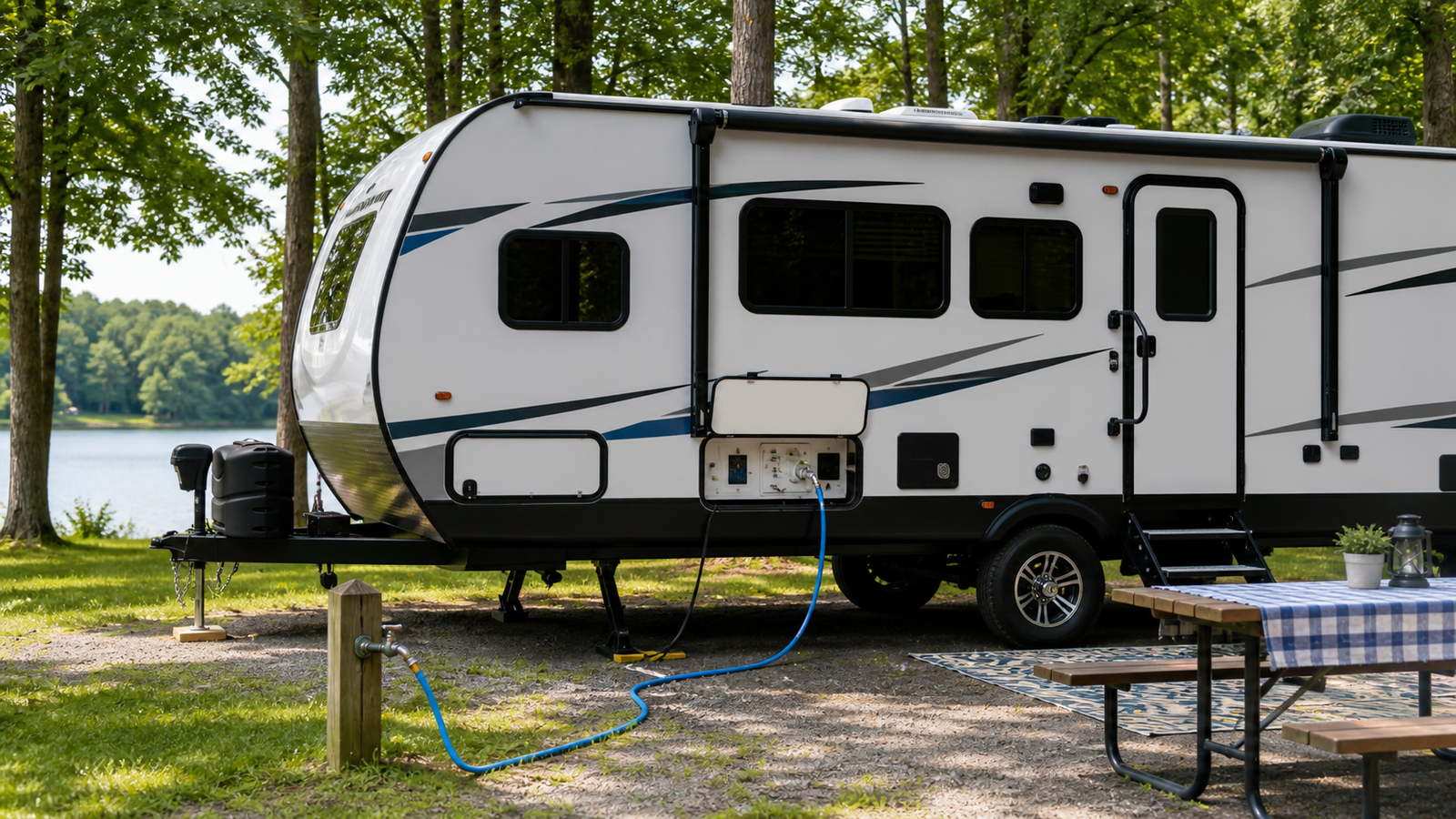
Your RV water system is much easier to manage once you understand what each tank does. The fresh water tank stores clean water for drinking, cooking, washing, and showering. The gray water tank collects used water from sinks and showers. The black water tank holds waste from the toilet.
This guide explains how each tank works, how the three tanks connect as part of one system, and what beginners should know about filling, monitoring, and dumping them without added stress.
RV Tank System at a Glance
Most RVs use three separate tanks to manage clean water and wastewater. Knowing the job of each one helps you avoid common mistakes and makes campground setup and dump station visits feel much more manageable.
- Fresh water tank: stores clean water for daily use when you are not connected to a campground water hookup
- Gray water tank: collects used water from sinks and showers
- Black water tank: collects toilet waste and toilet paper
How the RV Fresh Water Tank Works
The fresh water tank holds the clean water your RV uses when you are camping without a direct water hookup. That water feeds your sinks, shower, and toilet through the RV plumbing system, usually with help from the water pump.
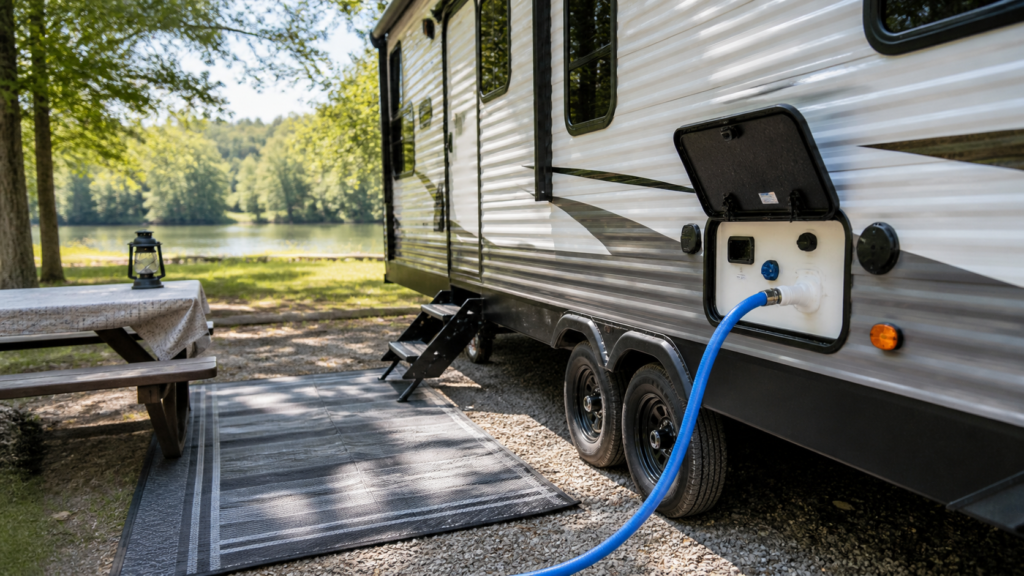
Fresh water tanks are usually mounted underneath the RV and made from durable plastic. Tank size varies by rig, but even a larger tank can empty faster than many beginners expect, especially when showers, dishwashing, and toilet flushing all pull from the same supply.
What the fresh water tank does
- Stores clean water for drinking, cooking, hand washing, showering, and flushing the toilet
- Lets you use your RV when you are not connected to city water
- Works with the RV water pump to move water through the plumbing system
Fresh water tank tips for beginners
- Fill only with potable water from a safe source
- Use a drinking-water-safe hose instead of a standard garden hose
- Watch tank levels so you do not run out unexpectedly
- Sanitize the system as recommended by your RV manufacturer
If your RV is connected to city water at a campsite, you may not need to rely on the fresh water tank as much. But when you are boondocking, overnighting without hookups, or stopping at a site with limited utilities, the fresh water tank becomes essential.
What Gray Water Is and How It Works
Gray water is the used water that drains from your RV sinks and shower. In some rigs, it may also include water from a washer. It does not usually include toilet waste, but it can still smell bad and needs to be emptied properly.
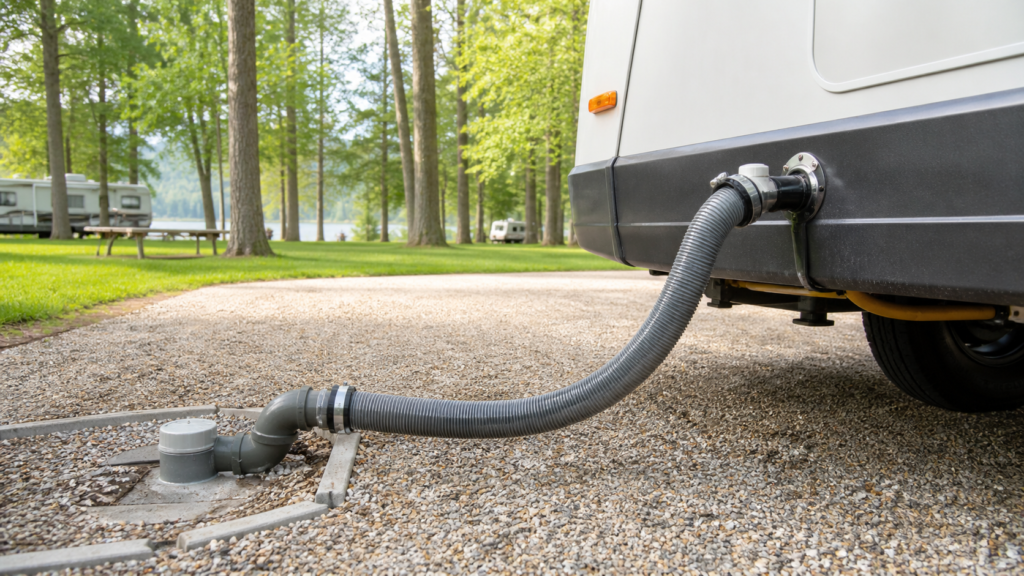
The gray tank stores wastewater until you empty it at an approved dump station or sewer hookup. Many beginners assume gray water is harmless because it does not contain toilet waste, but soap residue, food particles, and standing wastewater can still create odors and drainage problems.
Common sources of gray water
- Bathroom sink
- Kitchen sink
- Shower
- Washer, if your RV has one
How to manage gray water better
- Use RV-friendly soaps and cleaners
- Keep grease, coffee grounds, and food scraps out of the drain
- Monitor tank levels instead of waiting for a backup
- Empty the tank only at approved dump stations or sewer connections
Gray water is often easier to deal with than black water, but it still needs regular attention. A full gray tank can back up into the shower or sink and make your RV much less comfortable in a hurry.
What Black Water Is and How to Empty It Safely
The black water tank holds wastewater from the RV toilet. Because it contains human waste, it needs to stay sealed, vented properly, and emptied with care. For many beginners, this is the most intimidating part of the RV system, but it becomes much easier once you follow a simple routine.
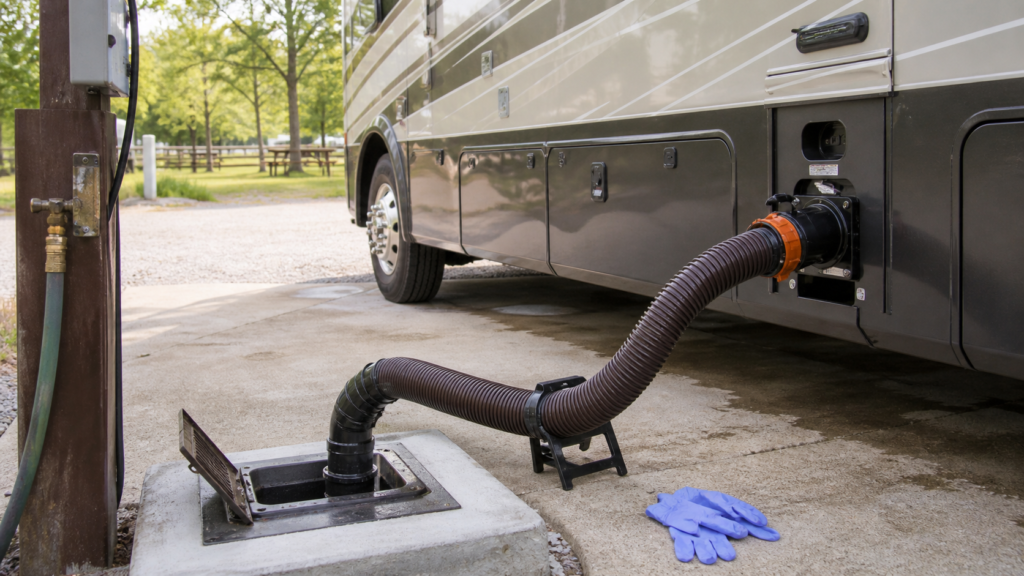
Most black tank problems come from flushing the wrong items, using too little water, or leaving waste in the tank too long. Good habits make a big difference.
Black tank basics
- It collects toilet waste and toilet paper
- It should stay closed until you are ready to dump it
- It uses a vent system to move gases safely outside
- It must be emptied at approved dump stations or legal sewer hookups
Best practices for black tank care
- Use plenty of water with each toilet flush
- Use RV-safe products recommended for your system
- Never flush wipes, paper towels, or hygiene products
- Dump the tank before it becomes overfull
- Rinse equipment and wash hands thoroughly after handling sewer gear
Good black tank habits go a long way. The goal is not just to empty the tank, but to prevent clogs, odors, and messy surprises in the first place.
How the Three RV Tanks Work Together
These tanks are separate, but they are all part of one connected system. Fresh water comes into the RV, gets used throughout the sinks, shower, and toilet, then leaves as gray water or black water depending on where it drains.
- Fresh water tank: clean water coming in
- Gray water tank: used sink and shower water going out
- Black water tank: toilet waste being stored until dumping
This is why daily habits matter. Long showers can drain your fresh water supply and fill your gray tank quickly. Frequent toilet use affects the black tank. Once you see the system as a whole, it becomes much easier to plan your water use and dumping schedule.
Dumping Order and a Simple Tank Routine
One of the most useful beginner habits is following the right dumping order. In most RV setups, you dump the black tank first and the gray tank second. The gray water helps rinse the sewer hose after the black tank has emptied.
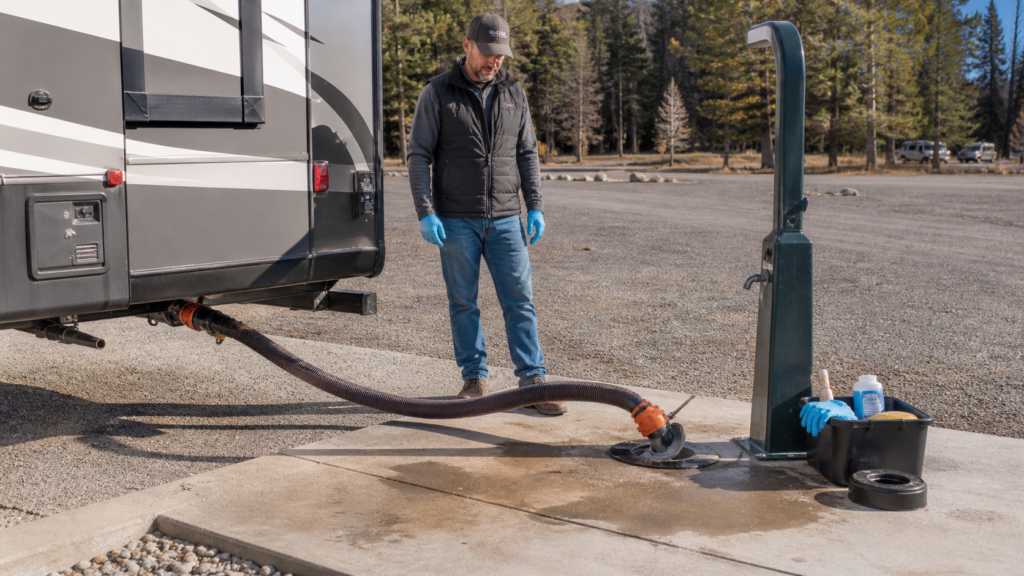
Basic RV tank dumping routine
- Park at a designated dump station or connect to a proper sewer hookup
- Put on gloves and connect the sewer hose securely
- Open the black tank valve and let it empty fully
- Close the black tank valve
- Open the gray tank valve and let it empty to help rinse the hose
- Close the gray tank valve
- Disconnect, rinse, and store your equipment carefully
Following the same routine each time makes dumping faster, cleaner, and much less stressful. It also helps you catch mistakes before they turn into a mess.
Common Beginner Mistakes to Avoid
Most RV tank problems are preventable. These are some of the most common mistakes new RV owners make.
Letting tanks get too full
Waiting too long to empty tanks can lead to odors, slow draining, and messy backups. Check your tank levels regularly and do not push them to the limit.
Using the wrong products
Household cleaners, non-RV-safe toilet paper, and harsh chemicals can cause clogs or create problems for your plumbing system. Use products that are designed for RV use and follow your manufacturer guidance.
Ignoring odors and venting issues
Bad smells often mean the system needs attention. The cause might be a full tank, buildup inside the system, or a venting issue. It is much easier to deal with odors early than after they become a bigger problem.
Dumping in the wrong place
Gray and black water should only be emptied at approved dump stations or legal sewer connections. Never dump wastewater on the ground.
FAQ
How do I know when my fresh water tank is full?
Many RVs have a tank monitor panel that shows an approximate level. You can also watch carefully while filling and stop before the tank overflows.
Does shower water go into the black tank?
No. Shower water usually goes into the gray tank. The black tank is normally reserved for toilet waste.
Can I dump gray water on the ground?
No. Even though gray water is less hazardous than black water, it still needs to be emptied at approved locations and may be illegal to dump on the ground.
What goes into the black tank?
The black tank holds toilet waste and toilet paper. Do not flush wipes, paper towels, hygiene products, or anything else not meant for RV toilet systems.
How often should I sanitize my RV fresh water system?
Sanitize it when the RV has been sitting unused for a long period, when you notice odor or taste issues, or whenever your manufacturer recommends it as part of routine maintenance.
Final Thoughts
Learning how RV fresh water, gray water, and black water tanks work is a big step toward feeling more confident as a beginner. Once you understand what each tank does, how quickly it can fill, and how to empty it properly, the whole RV water system starts to feel much less intimidating.
Start by learning your tank capacities, using the right hoses and RV-safe products, and following the same dumping routine every time. Those simple habits can help you avoid common problems and make every RV trip smoother.