RV Safety Checklist Before Hitting the Road: Beginner Pre-Trip Guide
Getting ready for an RV trip is exciting, but it can also feel like there are a hundred little things to remember. A simple RV safety checklist helps you slow down, check the important items, and leave with more confidence.
This guide is written for beginners, renters, weekend campers, and new RV owners who want a practical routine before pulling out of the driveway or campground. Use it as a pre trip RV checklist, a quick RV departure checklist, and a simple habit for better RV road trip safety.
Every RV is a little different, so use this checklist alongside your owner’s manual, tow vehicle manual, campground rules, and manufacturer instructions. If something looks damaged, smells wrong, feels loose, or triggers an alarm, pause the trip and get help before driving.
Before You Start: Use the Same Routine Every Time
The easiest checklist is the one you can repeat. Try to follow the same order before each trip: outside, towing or driving systems, propane and alarms, inside storage, emergency gear, then one final departure walk-around.
Beginners often miss things because they check randomly. A repeatable routine reduces that stress. It also makes it easier to spot when something is different from your last trip.
- Start when you are not rushed.
- Use a written or saved checklist instead of relying on memory.
- Walk all the way around the RV at least once before departure.
- Check model-specific items in your RV owner’s manual.
- Repeat a quick final check after everyone is loaded and the RV is ready to move.
Quick RV Safety Checklist for Beginners
Use this table as your fast overview. The sections below explain each part in more detail.
| Item | What to Check | Why It Matters |
|---|---|---|
| Tires and wheels | Pressure, tread, sidewalls, valve caps, spare tire, visible damage | Tires affect handling, braking, and blowout risk. |
| Exterior lights | Headlights, brake lights, turn signals, hazards, marker lights | Other drivers need to see your RV clearly. |
| Hitch and towing parts | Coupler, hitch pin, safety chains, breakaway cable, electrical plug | A secure connection is essential when towing. |
| Brakes and steering | Brake feel, brake controller if equipped, steering response, warning lights | Heavy RVs need more stopping distance and stable control. |
| Fluids and leaks | Oil, coolant, brake fluid, transmission fluid if accessible, fresh leaks | Leaks or low fluids can signal a problem before travel. |
| Propane and alarms | Propane lines, valves, smoke alarm, carbon monoxide alarm, propane detector | Fire, gas, and carbon monoxide safety should never be skipped. |
| Interior storage | Cabinets, drawers, counters, doors, fridge latch, loose gear | Loose items can fall, break, or distract the driver. |
| Emergency gear | First aid kit, flashlight, reflective triangles, tire gauge, basic tools | Small problems are easier to handle when you are prepared. |
| Route and weather | Road conditions, fuel stops, wind, storms, low clearances | Planning reduces surprises on travel day. |
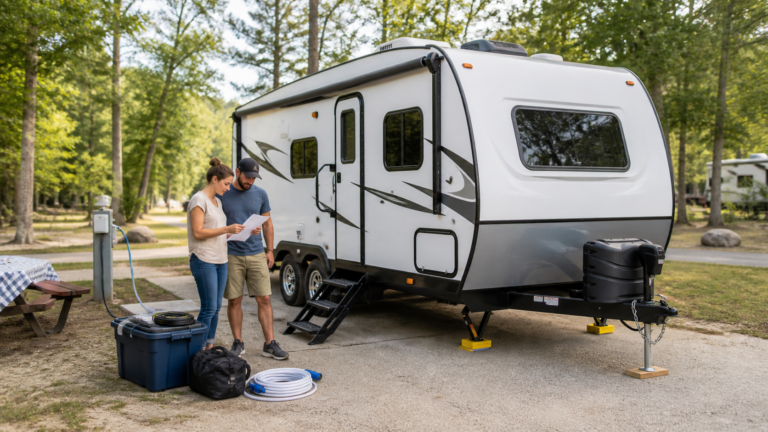
1. Do a Slow Exterior Walk-Around
Start outside and walk around the entire RV slowly. You are looking for anything loose, damaged, low, open, cracked, leaking, or out of place.
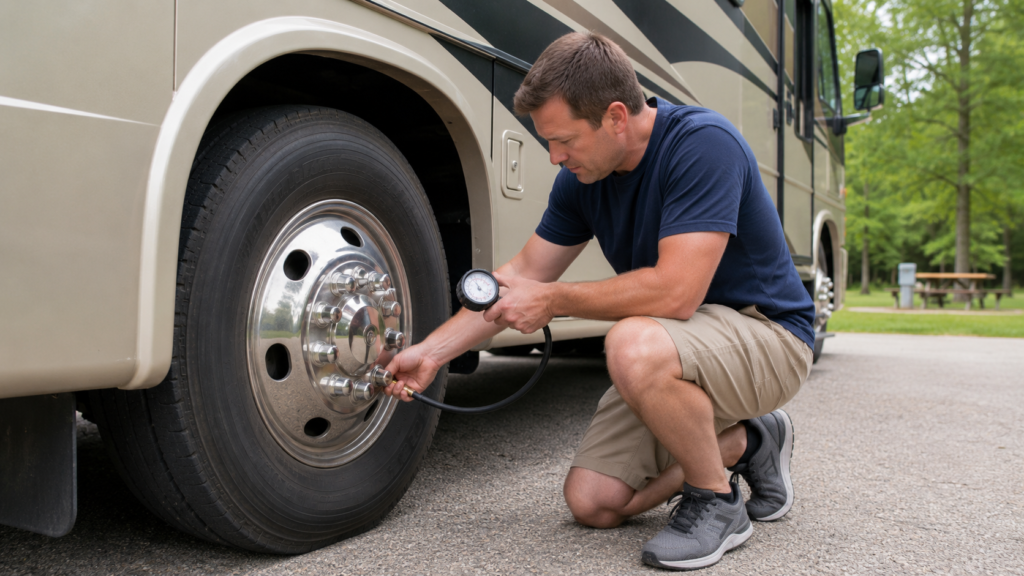
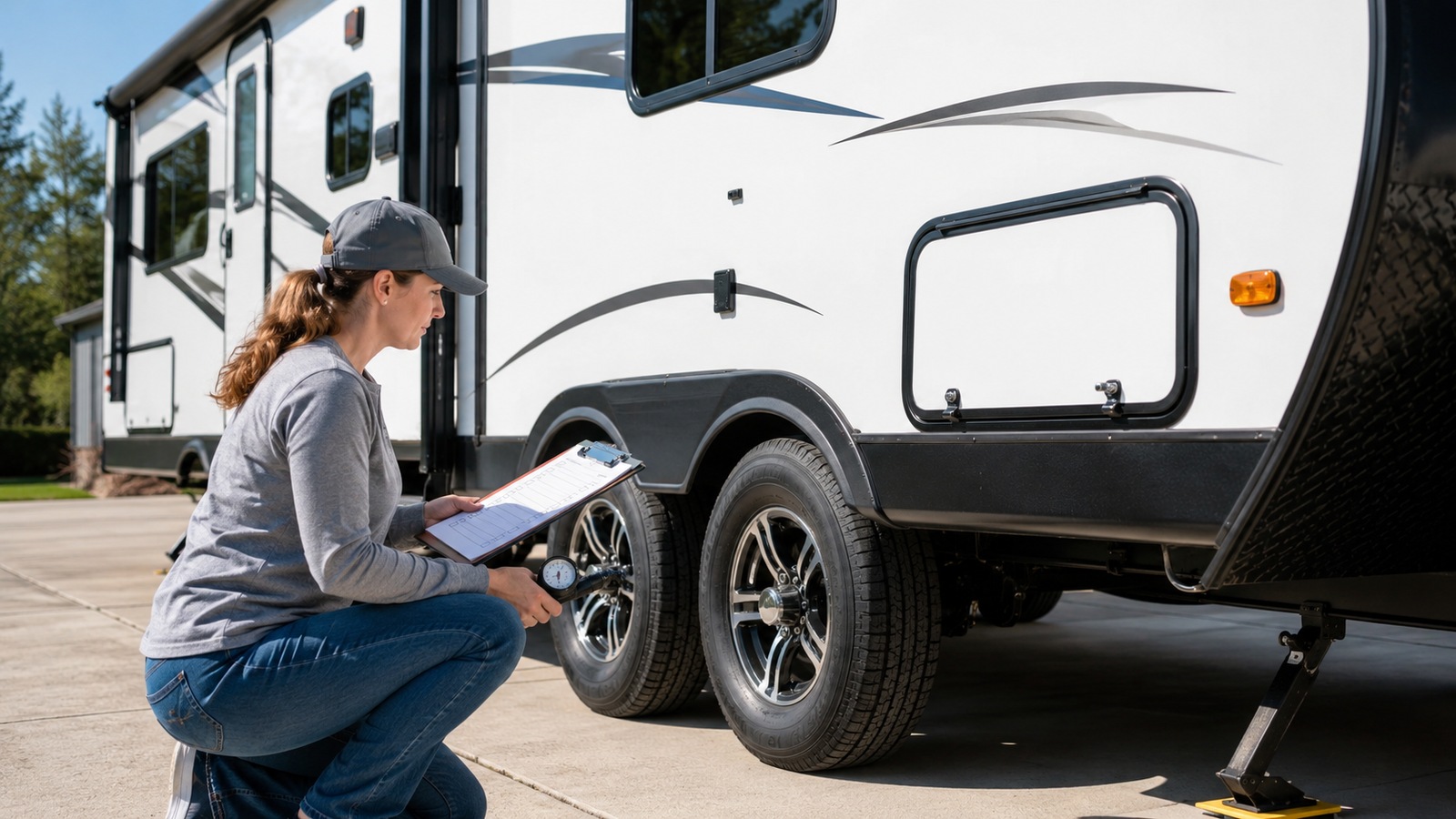
For tires, check pressure when the tires are cold whenever possible, and follow the tire placard, RV manual, or chassis manufacturer guidance for your specific RV. Do not guess based on another camper’s setup. Tire pressure and load limits vary.
- Look for uneven tread wear, cracks, bulges, nails, cuts, or exposed cords.
- Check the spare tire if your RV carries one.
- Make sure valve caps are in place.
- Look for missing, loose, or damaged lug nuts, and follow your manual for torque checks.
- Check that storage bay doors are closed and latched.
- Look under the RV for fresh leaks or hanging parts.
- Confirm steps, awnings, antennas, ladders, vents, and exterior accessories are secure.
If you are carrying full water tanks, bikes, cargo, or extra gear, remember that weight changes how the RV handles. Stay within your RV’s weight ratings and check your manual if you are unsure about cargo carrying capacity, tongue weight, or gross vehicle weight rating.
2. Check Lights, Mirrors, Brakes, and Driving Readiness
Before getting on the road, confirm that the RV can be seen, steered, and stopped safely. This is especially important if you are driving a motorhome, towing a trailer, or using a rental RV for the first time.
- Test headlights, brake lights, turn signals, hazard lights, reverse lights, and marker lights.
- Adjust mirrors before driving, not after you are already in traffic.
- Check for dashboard warning lights after starting the engine.
- Press the brake pedal and make sure it feels firm, not soft or sinking.
- If safe, do a slow brake test in a driveway, parking lot, or quiet area before heading to the highway.
- Listen for scraping, clunking, grinding, or unusual steering noises.
- Confirm the windshield, mirrors, and backup camera lens are clean.
RVs are taller, wider, heavier, and slower to stop than regular passenger vehicles. Give yourself extra room, avoid sudden lane changes, and plan turns wider than you would in a car.
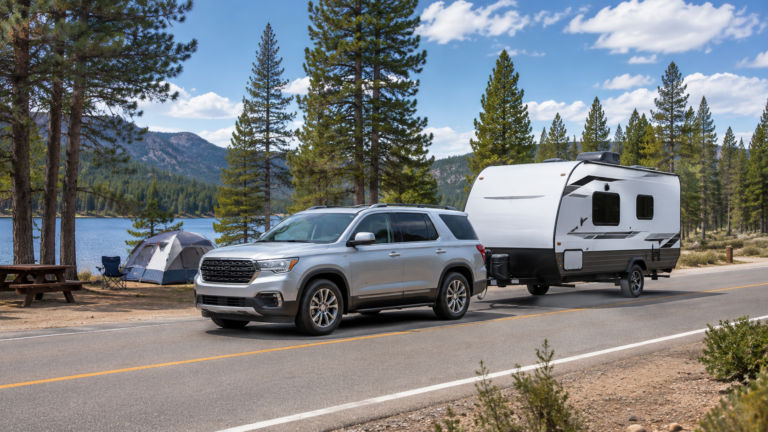
3. Towing Safety Checks for Travel Trailers and Towables
If you tow a travel trailer, fifth wheel, pop-up camper, or another trailer, hitch safety deserves its own careful check. Never rush this step, even if you have done it many times before.
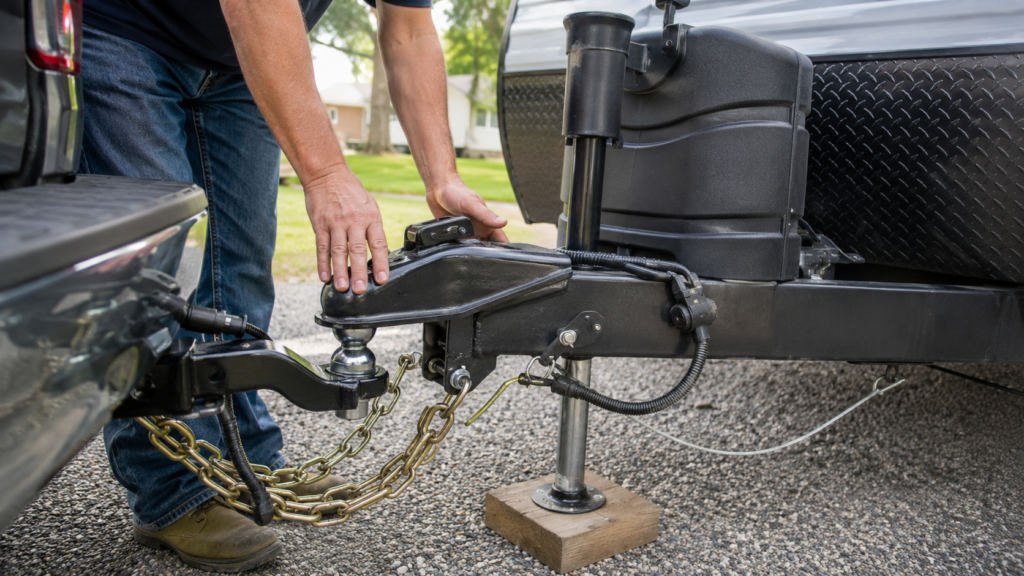
- Confirm the coupler is fully seated on the hitch ball and locked.
- Install the hitch pin or locking pin correctly.
- Attach safety chains according to your hitch and trailer instructions.
- Connect the breakaway cable to the tow vehicle as instructed, not to a removable part that could separate with the trailer.
- Plug in the trailer electrical connector and test lights.
- Check trailer brakes and brake controller settings if your setup has them.
- Install weight distribution or sway control parts exactly as the manufacturer directs.
- Check tow mirrors for a clear view down both sides of the trailer.
After hitching, pull forward a short distance in a safe area, stop, and recheck the connection. This extra minute can catch a latch, chain, cord, or jack that was missed.
4. Propane, Fire, Carbon Monoxide, and Alarm Checks
Propane, fire, and carbon monoxide safety are not areas to skip. RVs combine transportation, sleeping space, cooking appliances, electrical systems, and fuel sources in one compact space.
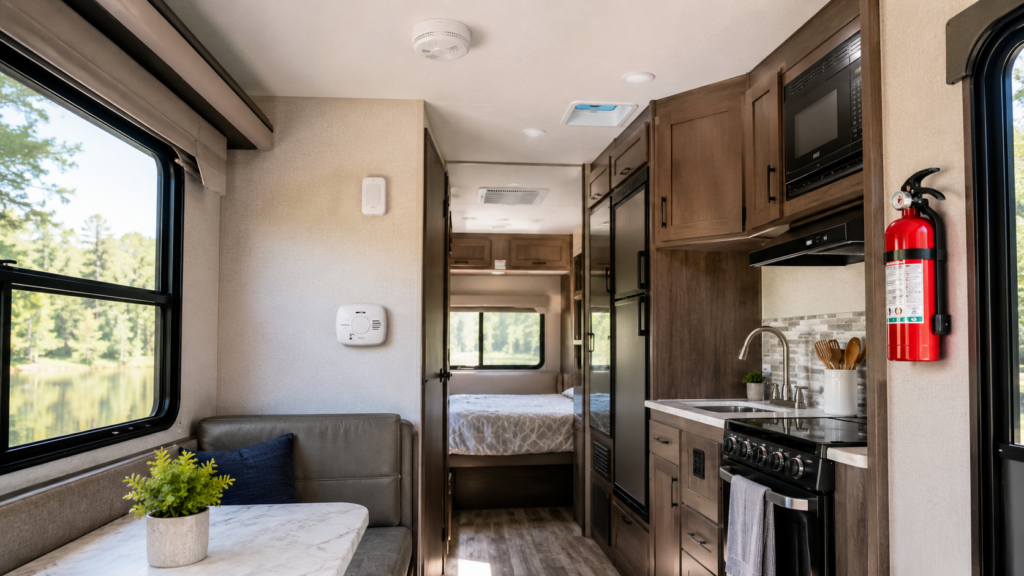
| Safety Item | What to Check | Beginner Note |
|---|---|---|
| Propane cylinders | Securely mounted, valves set according to your manual and travel rules | Rules may vary for fueling, tunnels, ferries, and campgrounds. |
| Propane lines | No obvious kinks, cracks, rubbing, or damage | Get help if you smell gas or suspect a leak. |
| Propane connections | Check after reconnecting tanks or fittings | Use an approved leak detection method or follow manufacturer instructions. |
| Smoke alarm | Test button works and batteries are good if replaceable | Test regularly during camping season. |
| Carbon monoxide alarm | Test button works and alarm is not past replacement date | Carbon monoxide can come from generators, engines, or gas appliances. |
| Propane detector | Detector is powered, unobstructed, and functioning | Do not cover or ignore a propane detector. |
| Fire extinguisher | Accessible, charged, and not expired | Everyone should know where it is stored. |
| Generator exhaust | Exhaust points away from people, openings, and nearby RVs | Never run a generator where exhaust can enter the RV. |
If a propane alarm, smoke alarm, or carbon monoxide alarm sounds, treat it seriously. Turn off appliances if you can do so safely, get people and pets out, ventilate the area from outside when appropriate, and seek help.
Many RVers turn propane off before fueling and whenever required by tunnels, ferries, or campground rules. Because RV systems and regulations vary, follow your owner’s manual and local requirements. When in doubt, choose the safer option and turn it off until you are parked and set up.
5. Secure the Inside Before Driving
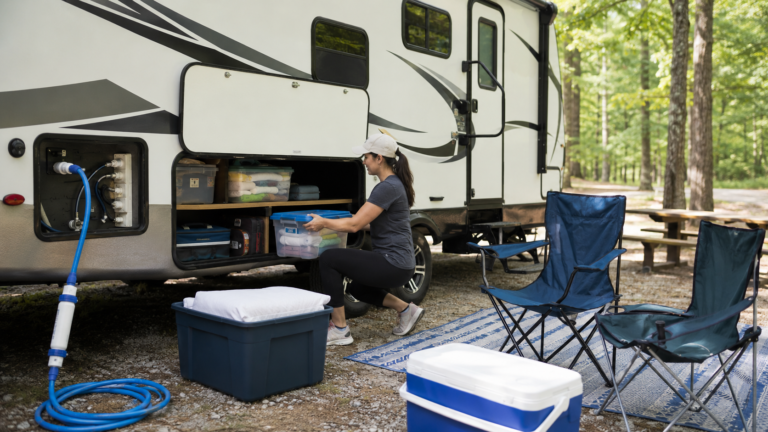
The inside of an RV can shift quickly once you brake, turn, or hit a bump. A clean, secured interior makes the drive quieter, safer, and less stressful.
- Latch cabinets, drawers, closets, and the refrigerator.
- Move heavy items off counters and tables.
- Store breakable items low and padded when possible.
- Secure coffee makers, small appliances, bins, and loose electronics.
- Close roof vents, windows, and interior doors as needed for travel.
- Keep the driver’s area free of bags, cords, shoes, and clutter.
- Make sure pets are safely restrained or secured for travel.
- Confirm every passenger has a legal, belted seat for the drive.
Do not allow passengers to move around, sleep in unsecured areas, or sit in unsafe seating positions while the RV is moving. Follow seat belt laws and your RV manufacturer’s guidance for safe travel seating.
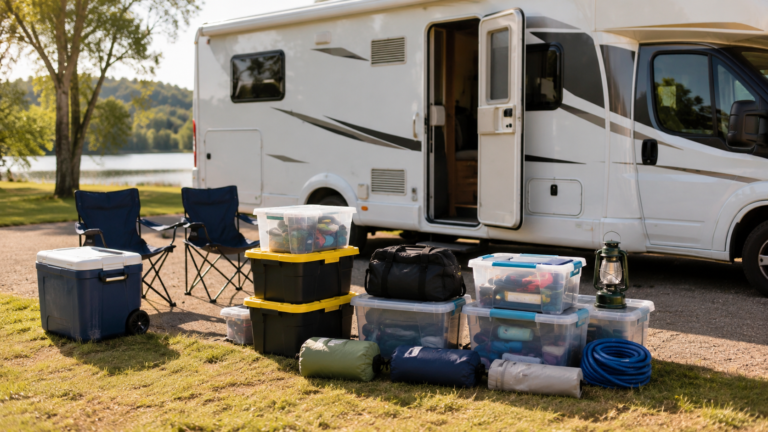
6. Pack Emergency Gear and Documents
You do not need to pack like a mechanic for your first RV trip, but basic emergency items can make small problems much easier to handle.
| Item | Why You Need It | Beginner Tip |
|---|---|---|
| Tire pressure gauge | Helps check tires before travel | Choose one that works with your tire pressure range. |
| Flashlight or headlamp | Useful for night checks and roadside stops | Pack extra batteries or charge it before leaving. |
| Reflective triangles | Helps make your RV more visible during a roadside stop | Store them where you can reach them quickly. |
| First aid kit | Covers minor cuts, scrapes, and basic needs | Check it before each season. |
| Basic tool kit | Useful for simple tightening or adjustments | Include gloves and a multi-tool if you have them. |
| Wheel chocks | Helps keep the RV or trailer stable when parked | Use them at campsites and during certain setup tasks. |
| Fire extinguisher | Important for early fire response | Keep it visible and accessible. |
| Roadside assistance info | Helpful if you need towing or mobile repair | Save the number in your phone and keep a printed copy. |
| Registration and insurance | Needed for travel and emergencies | Keep documents in a dedicated RV folder. |
Also keep your RV height, length, weight limits, tire size, and key emergency numbers somewhere easy to find. This can help when planning routes, calling for service, or checking campground site details.
7. Use This 5-Minute RV Departure Checklist Before You Pull Out
Once the RV is packed, passengers are loaded, and you think you are ready to leave, do one final walk-around. This RV departure checklist is for the last few minutes before the wheels move.
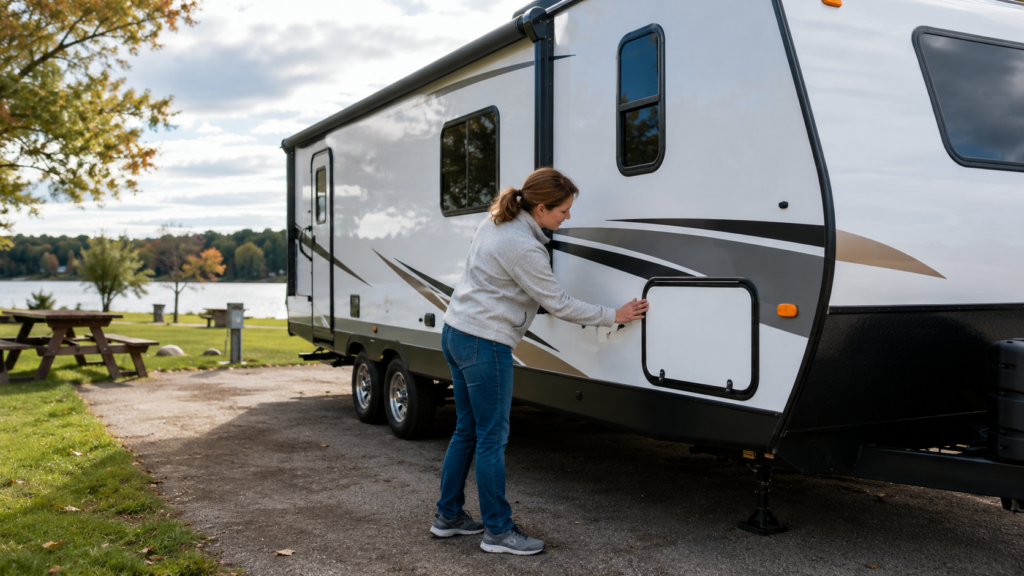
| Final Check | What to Do | Why It Helps |
|---|---|---|
| Slides | Confirm slides are fully retracted and locked if required | Prevents damage during travel. |
| Awnings | Retract and secure all awnings | Awnings can be damaged by wind or movement. |
| Steps | Retract entry steps | Prevents hitting objects while leaving. |
| Jacks and levelers | Raise and secure according to your manual | Prevents dragging or equipment damage. |
| Utilities | Disconnect water, sewer, electric, cable, and hoses | Avoids pulling away while still connected. |
| Storage bays | Close and latch every exterior compartment | Keeps gear from falling out. |
| Roof vents and windows | Close or secure for travel | Reduces leaks, wind damage, and loose parts. |
| Cabinets and fridge | Latch doors and secure food | Prevents spills and broken items. |
| Campsite area | Walk the site and look for chocks, blocks, rugs, trash, or gear | Helps you avoid leaving things behind. |
| Passengers | Seat belts on and pets secured | Protects everyone once the RV moves. |
A good habit is to have one person drive and one person spot during the first few feet of movement, especially when leaving a campsite. Stop immediately if anything sounds, drags, shifts, or looks wrong.
When to Stop and Get Help Before Driving
A checklist is not just about checking boxes. It is also about knowing when not to drive. Pause the trip and get professional help if you find any of these warning signs.
| Warning Sign | Why It Matters | What to Do |
|---|---|---|
| Tire bulge, exposed cord, or severe cracking | The tire may be unsafe for travel | Do not drive on it unless a qualified tire professional says it is safe. |
| Soft brake pedal or brake warning light | Stopping ability may be affected | Have the brakes checked before travel. |
| Propane smell or propane alarm | Possible gas leak | Leave the area, avoid flames or sparks, and get help. |
| Carbon monoxide alarm | Possible carbon monoxide exposure | Get everyone outside and seek help. |
| Hitch will not latch correctly | Trailer connection may be unsafe | Do not tow until the connection is corrected. |
| Fresh fluid leak under the RV | Could involve brakes, coolant, fuel, oil, or transmission fluid | Identify the leak or call for service. |
| Electrical burning smell | Possible electrical issue or fire risk | Disconnect power if safe and have it inspected. |
| High winds or severe weather | RVs can be difficult to control in bad conditions | Delay, reroute, or choose a safer stopping place. |
Common Beginner RV Safety Mistakes to Avoid
Most beginner mistakes are not from carelessness. They happen because RV travel has more steps than car travel. These safer habits can help.
| Mistake | Better Beginner Habit |
|---|---|
| Leaving without a full walk-around | Walk around the RV every time before departure. |
| Checking tires only by looking at them | Use a tire pressure gauge and inspect for damage. |
| Assuming the hitch is fine because it clicked | Visually confirm the coupler, pin, chains, cable, and plug. |
| Forgetting campground hookups | Use a final departure checklist before moving. |
| Leaving heavy items on counters | Store heavy items low and secure before driving. |
| Ignoring alarms or warning lights | Stop and investigate before continuing. |
| Driving too far on the first day | Plan shorter travel days while you build confidence. |
| Not checking weather or wind | Review conditions before departure and adjust the plan. |
Beginner Tips for Safer RV Road Trips
Good RV road trip safety starts before you leave, but it continues while you drive. Build in extra time and avoid treating RV travel like a rushed car trip.
- Drive slower than you think you need to, especially while learning.
- Leave more following distance than you would in a car.
- Brake early and avoid sudden steering moves.
- Watch for low branches, low bridges, fuel station canopies, and tight turns.
- Stop for breaks before you feel exhausted.
- Recheck the RV after fuel stops, rest stops, and rough roads.
- Have a plan for where you will stop if weather gets worse.
For your first few trips, simple routes are better than complicated ones. Choose easier campgrounds, wider fuel stations, shorter driving days, and routes without tight mountain roads until you feel more comfortable.
FAQ About RV Safety Checklists
What should be on a pre trip RV checklist?
A good pre trip RV checklist should include tires, lights, brakes, mirrors, fluids, leaks, hitch connections if towing, propane safety, alarms, emergency gear, interior storage, documents, weather, and a final departure walk-around.
How often should I use an RV safety checklist?
Use an RV safety checklist before every travel day. It is especially important after storage, after a campground stay, after bad weather, after rough roads, or anytime someone else has moved gear or changed hookups.
What is the most important RV safety check?
Tires, brakes, lights, hitch connections, and alarms are among the most important checks because they affect travel safety right away. Do not skip propane, fire, or carbon monoxide checks either, especially before sleeping or using appliances.
Can I drive my RV with propane on?
Rules and recommendations vary by RV, appliance, location, tunnel, ferry, and fuel stop. Follow your RV owner’s manual and local requirements. Many beginners choose to turn propane off before driving, fueling, or entering restricted areas because it is the simpler and more cautious habit.
How long should an RV departure checklist take?
Once you know your RV, the final RV departure checklist may take only a few minutes. As a beginner, give yourself more time so you are not rushing. A slow, careful check is better than discovering a missed step on the road.
Do I need to weigh my RV?
Weighing your RV can be helpful, especially if you carry full tanks, lots of gear, bikes, tools, or family cargo. At minimum, understand your RV’s weight ratings and cargo limits from the owner’s manual and weight labels.
Related Beginner RV Articles
- RV Driving Tips for Beginners
- Towing a Travel Trailer for the First Time
- RV Maintenance for Beginners: What to Check Before Every Trip
- RV Campsite Setup Checklist for Beginners
- Essential RV Gear for Beginners
- How to Plan Your First RV Camping Trip Step by Step
Final Thoughts on RV Safety Before Hitting the Road
A reliable RV safety routine does not need to be complicated. Start with the outside of the RV, check your tires and lights, confirm towing parts if needed, test alarms, secure the interior, pack basic emergency gear, and finish with one last walk-around.
The more often you use this RV safety checklist, the more natural it becomes. With a calm pre-trip routine and a simple RV departure checklist, you can catch small problems early and begin each trip with more confidence.