RV Camping for Beginners: Everything You Need to Know Before Your First Trip
RV camping for beginners can feel like a lot at first. You are learning how to drive or tow something larger, book the right kind of campsite, use basic RV systems, and settle into a completely different travel routine. The good news is that your first trip does not need to be perfect. It just needs to be simple enough that you can learn without feeling overwhelmed.
This guide walks you through what matters most before your first RV trip, what to pack, how to set up camp, how hookups and tanks work, and which beginner mistakes are easiest to avoid. Whether you own an RV or are renting one for the first time, the goal is the same: make trip number one feel manageable and confidence-building.
What first-time RV campers really need to know
New RV campers often assume they need to know everything before they leave home. You do not. What you really need is a simple plan, a basic understanding of your RV, and a repeatable setup routine. Most first-trip stress comes from trying to do too much, drive too far, or figure out every system at once.
If you keep your first trip short, choose an easy campground, and focus on the basics, RV camping becomes much easier to learn. Your first goal is not to master every detail. It is to come home understanding your rig a little better and feeling ready for the next trip.
- Choose an easy first destination close to home.
- Book a beginner-friendly site with hookups if possible.
- Learn the location of your key controls before you leave.
- Pack for one simple trip, not every possible scenario.
- Use the same setup order every time you arrive.
Choose the easiest possible first RV trip
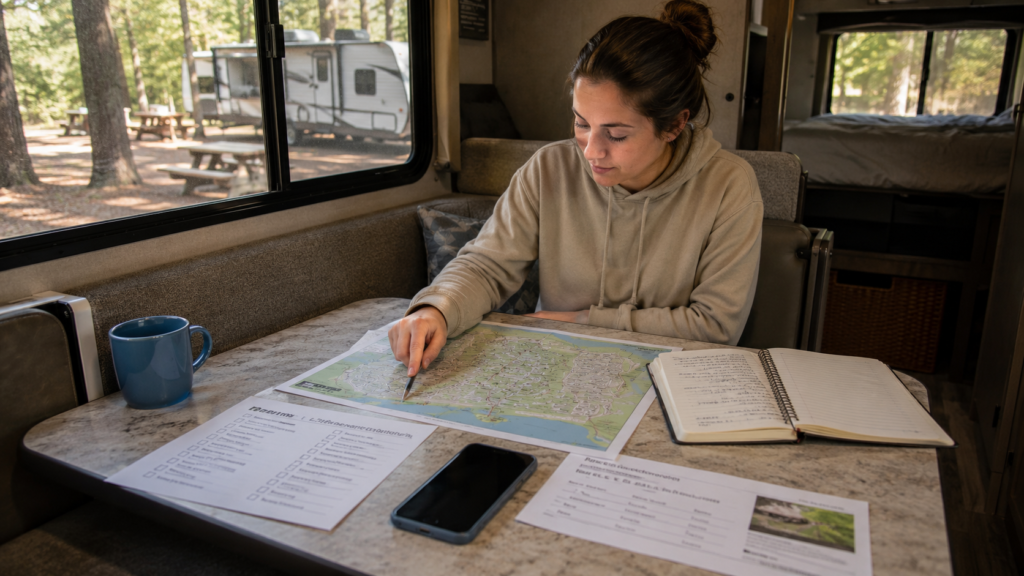
The easiest first RV trip is usually a short weekend close to home at a campground with easy site access and at least water and electric hookups. That gives you room to practice without adding long drive days, complicated routes, or too many off-grid decisions.
Before you book, make sure you understand your RV length, whether you need a pull-through or back-in site, and what hookups are included. A full-hookup site usually means water, electric, and sewer at the campsite. A partial-hookup site may offer only some of those services. If you are renting, review the rental walkthrough carefully and ask where the most important controls and connection points are located.
| Planning Choice | Best for Beginners | Watch Out For |
|---|---|---|
| Trip length | A short weekend close to home | Long first trips can make small problems feel bigger |
| Campground type | Developed campground with clear site access | Remote or tight sites add stress fast |
| Hookups | Water and electric, or full hookups | Dry camping requires closer attention to battery, water, and waste |
| Site style | Level site with easy parking | Steep, uneven, or narrow sites are harder to learn on |
- Confirm campground rules, check-in time, and quiet hours.
- Check whether the site fits your RV length and slide-outs.
- Save the campground address and arrival instructions before you leave.
- Try to arrive with daylight left so setup feels easier.
Understand your RV basics before you leave
You do not need to be an RV expert before your first trip, but you should know where a few key things are and how they work. This matters whether you have a motorhome, travel trailer, fifth wheel, or camper van.
- Power: Know how your RV connects to campground electricity, where the breaker panel is, and how to tell whether shore power is working.
- Water: Learn where the fresh water connection is, how to turn the water pump on, and where to look for obvious leaks.
- Waste tanks: Know the difference between fresh, gray, and black tanks. Fresh water is clean water you use. Gray water is sink and shower waste. Black water is toilet waste.
- Propane: Know whether your stove, water heater, furnace, or refrigerator may use propane, and how to shut it off if needed.
- Leveling and stabilization: Understand the difference between making the RV level and using stabilizers to reduce movement. They are not the same thing.
It also helps to locate your awning controls, slide-out controls if your RV has them, wheel chocks, leveling blocks, water hose, power cord, sewer gear, flashlight, and basic tool kit before trip day. A slow walkthrough at home is much easier than a rushed search after dark at a campground.
Because RV layouts and equipment vary, check your owner’s manual, rental walkthrough materials, or manufacturer instructions for the exact steps and limitations for your rig.
What to pack for your first RV trip
One of the easiest beginner mistakes is overpacking. RVs have limited space, and a short first trip does not require a fully stocked rolling house. Pack around your actual trip length, weather, campsite type, and cooking plan.
- Bedding and pillows
- Weather-appropriate clothes and extra layers
- Toiletries and medications
- Toilet paper approved for your RV system if needed
- Basic cookware, plates, utensils, mugs, and a can opener
- Simple food for easy meals and snacks
- Drinking water or a safe way to fill and store it
- Trash bags, paper towels, and basic cleaning supplies
- Flashlight or headlamp
- First-aid kit
- Power cord, water hose, pressure regulator, and any adapters your RV requires
- Wheel chocks, leveling blocks, and gloves
- A small tool kit and spare fuses if appropriate for your RV
Pack with a beginner mindset. Bring what helps you stay comfortable, safe, and organized. Leave behind the “just in case” extras you are unlikely to use on one short trip.
How to set up an RV campsite for the first time
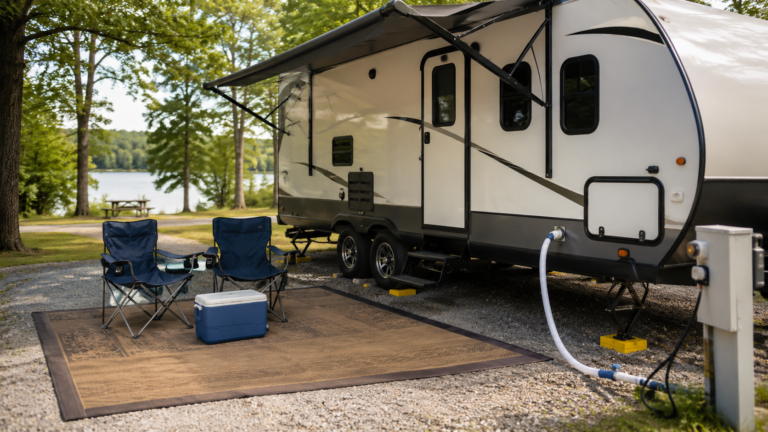
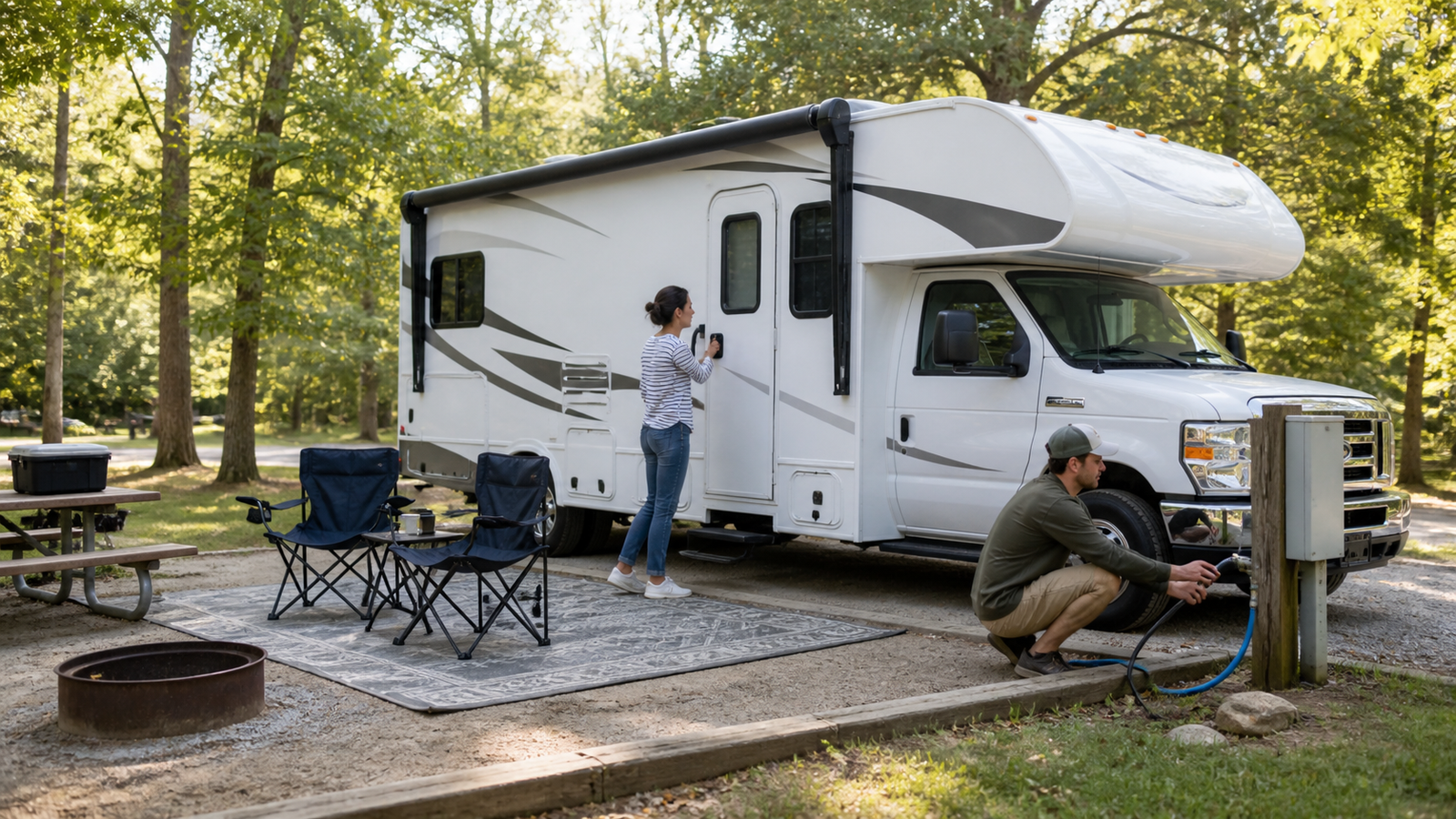
A consistent setup routine makes first-time RV camping much less stressful. When you arrive, slow down. Look at the site, notice where the hookups are, and think through where your RV needs to sit before you start connecting anything.
If you are traveling with someone else, decide who is spotting and who is driving or backing in. Use clear signals, move slowly, and pause whenever something feels off. Taking a few extra minutes during arrival is much easier than fixing a rushed setup later.
| Step | What to Do | Beginner Tip |
|---|---|---|
| 1 | Park in the best position for hookups, slide-outs, and doors | Check tree branches, picnic tables, and utility locations before finalizing your spot |
| 2 | Secure the RV with parking brake and wheel chocks | Do this before moving around outside the rig |
| 3 | Level the RV as needed | Use leveling blocks or your RV’s leveling system and recheck before continuing |
| 4 | Deploy stabilizers if your RV has them | Stabilizers reduce movement but do not replace proper leveling |
| 5 | Connect electric, water, and sewer in the correct way for your site | Move slowly and double-check each connection |
| 6 | Open slide-outs and set up your outdoor space | Make sure you have enough clearance before extending anything |
After setup, take a quick walk around the RV. Make sure cords and hoses are secure, stabilizers are placed correctly, and the campsite still feels safe and organized. This small habit catches a surprising number of beginner mistakes.
RV hookups and tanks explained in simple terms
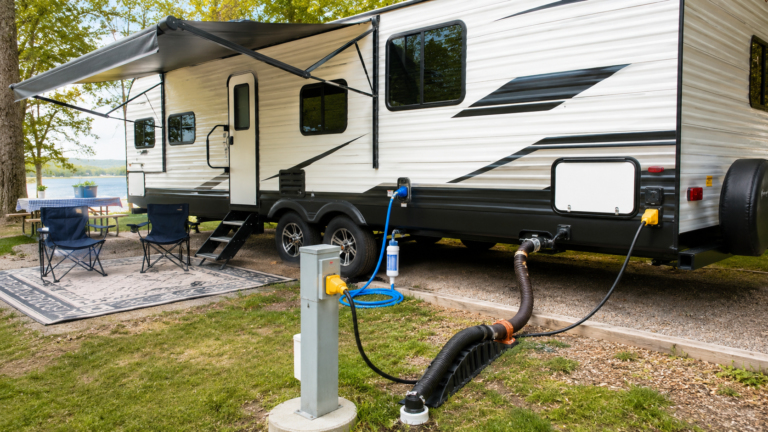
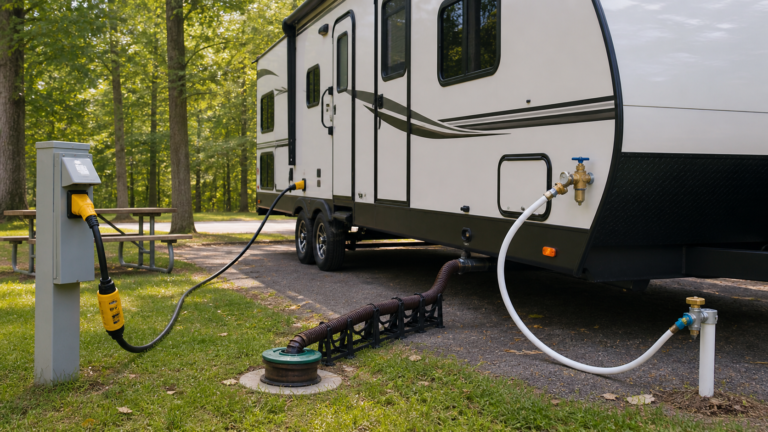
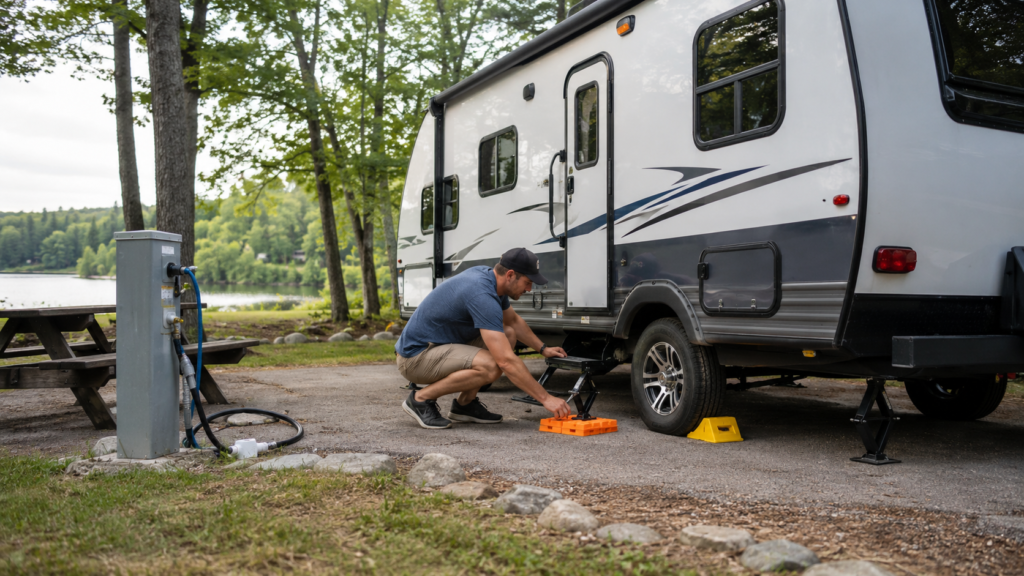
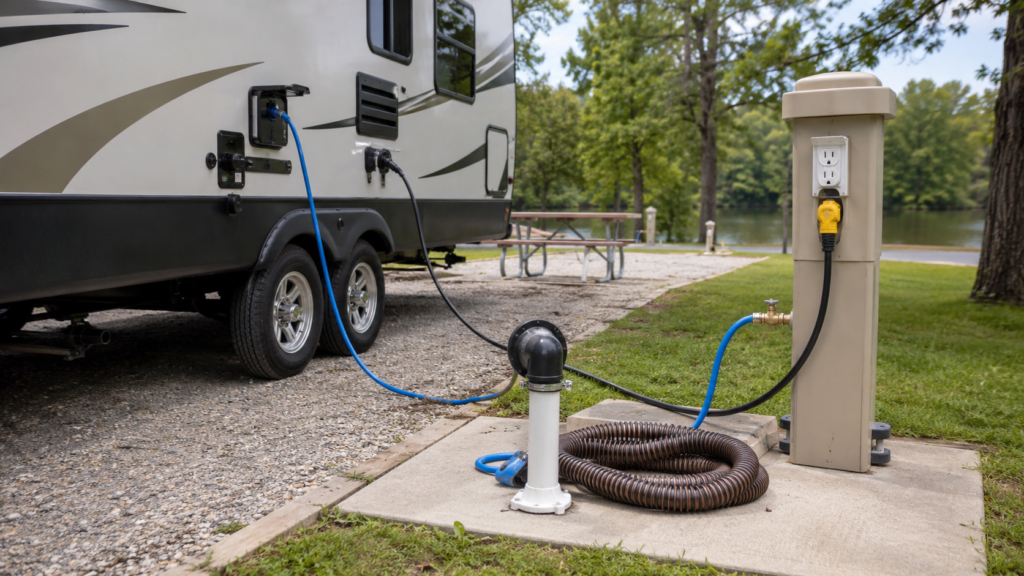
Hookups are one of the most intimidating parts of RV camping for beginners, but they are easier once you understand what each connection does. At most campgrounds, you may connect to electric, fresh water, and sometimes sewer.
- Electric hookup: This powers your RV from the campground pedestal instead of relying only on battery power. Always connect exactly as your RV and campground equipment require.
- Water hookup: This provides pressurized fresh water to your RV. Many RV campers use a water pressure regulator and a dedicated drinking-water-safe hose.
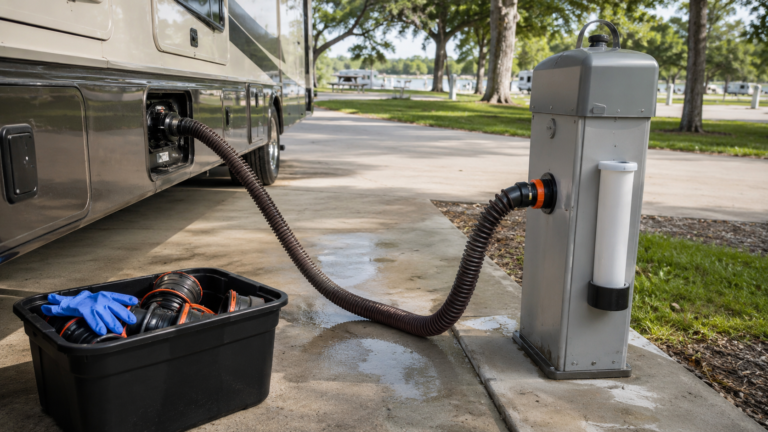
- Sewer hookup: This lets you empty your gray and black tanks at the site if sewer is provided. Keep sewer gear separate from fresh water gear and follow campground rules carefully.
For tanks, remember the basic rule: fresh water is what you use, gray water is used sink and shower water, and black water is toilet waste. If you are staying at a full-hookup site, you may have more convenience, but you still need to understand your tank valves and dumping procedure before using them.
If you are unsure about any connection, stop and check your manual, rental instructions, or campground guidance before forcing anything. A cautious five-minute review is better than a preventable problem with water, power, or waste systems.
Common beginner mistakes and better habits
Most beginner RV mistakes are not disasters. They are usually small routine issues that happen when people feel rushed, tired, or overloaded. A few better habits can prevent a lot of frustration.
| Mistake | Better Beginner Habit | Why It Helps |
|---|---|---|
| Booking a difficult first site | Pick an easy campground with simple access and hookups | You can focus on learning instead of problem-solving everything at once |
| Arriving late | Try to arrive with daylight left | Parking, leveling, and hookups are easier to see and less stressful |
| Overpacking | Pack for one short trip and simple meals | Less clutter makes setup and living space easier to manage |
| Rushing setup | Use the same setup order every time | You are less likely to miss a step or create confusion |
| Ignoring manuals or campground rules | Check instructions when details vary | RV systems differ, and local rules matter |
| Trying to learn everything on trip one | Focus on the basics first | Confidence grows faster when the learning curve stays realistic |
Campground etiquette and basic first-trip safety
Part of feeling comfortable at a campground is understanding the social side of RV camping. A few simple etiquette habits help you avoid awkward moments and make the experience smoother for everyone nearby.
- Keep music, lights, and voices respectful, especially during quiet hours.
- Do not walk through other campsites.
- Keep pets controlled and clean up after them.
- Store trash properly and leave your site clean.
- Watch children around roads, hookups, and neighboring campsites.
- Follow fire rules, generator rules, and local campground policies.
For safety, do a simple check before you leave each day and before you drive home. Make sure steps are up, jacks or stabilizers are handled correctly for travel, cords and hoses are disconnected, loose items are secured, and doors, compartments, and windows are closed as needed. Your exact travel checklist will depend on your RV type, so use your owner’s manual or rental checklist as your final reference.
Troubleshooting your first trip without panicking
Small problems happen on first trips. What matters most is staying calm and checking the obvious things first. Many issues turn out to be simple setup misses rather than major failures.
- No power inside the RV: Recheck the pedestal connection, your RV power cord, and any tripped breakers.
- No water flow: Confirm the campground water is on, the hose is connected correctly, and the water pump is being used correctly for your setup.
- RV feels unsteady: Recheck your leveling, wheel chocks, and stabilizers.
- Tank confusion: Slow down and verify which valve is which before touching anything.
- Something seems wrong beyond a simple check: Stop and use campground staff, roadside assistance, rental support, or a qualified RV technician instead of guessing.
Keep a flashlight, gloves, paper towels, and your key RV documents in one easy-to-reach place. That alone makes small first-trip problems much easier to handle.
FAQ
How do I choose the right campsite for a first RV trip?
Look for a campground with easy access, a site that fits your RV, and hookups that match your comfort level. For most beginners, a level site with water and electric is a good starting point, and a pull-through site can feel easier than backing in.
What should I pack for a one-night RV trip?
Pack bedding, toiletries, simple food, basic kitchen gear, clothes for the weather, a flashlight, first-aid supplies, trash bags, and your essential setup gear. Keep it simple and practical.
Is dry camping a good idea for beginners?
It can be done, but hookups usually make a first trip easier. Dry camping means paying closer attention to battery use, fresh water, waste tanks, and propane, which adds more to learn all at once.
What if I cannot get the RV level at the campsite?
Reset and try again slowly with your leveling method. If the site is especially uneven or you are unsure what is safe for your RV, ask campground staff or an experienced helper before continuing. Do not settle for a badly unlevel setup if your RV manual says proper leveling matters for safe or correct operation.
How can I make my second RV trip easier than my first?
Write down what you actually used, what you forgot, and what confused you during setup. Then turn those notes into a simple packing list and arrival checklist for next time. That is how beginner trips start feeling easier very quickly.
Related Beginner RV Articles
- First-Time RV Camping Mistakes to Avoid
- What to Expect at an RV Campground
- How to Plan Your First RV Camping Trip Step by Step
- How to Set Up an RV at a Campsite for the First Time
- RV Hookups for Beginners: Water, Electric, and Sewer Explained
- RV Packing List for Beginners
- RV Driving Tips for Beginners
- RV Maintenance for Beginners: What to Check Before Every Trip
Final thoughts
Your first RV trip does not need to go perfectly to be a success. It only needs to be simple enough that you learn the basics, enjoy the experience, and come home more confident than when you left. Start small, choose an easy campground, use a repeatable routine, and let your first trip teach you what matters most for the next one.