RV Packing List for Beginners: What to Pack for Your First RV Trip
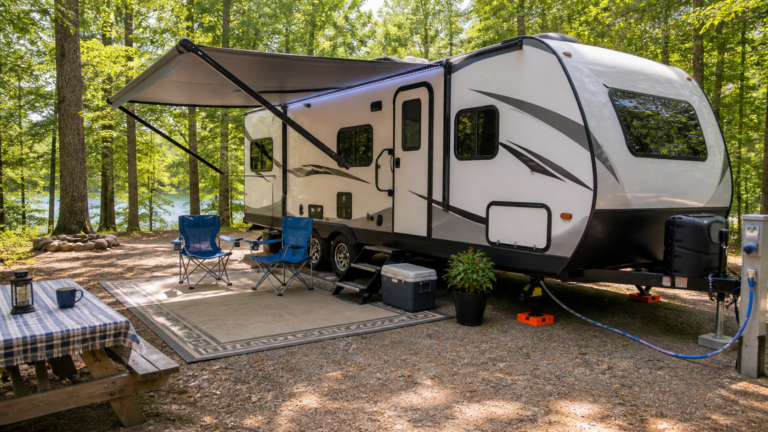
Packing for your first RV trip can feel confusing because an RV is part vehicle, part tiny home, and part campsite. You are not just packing clothes and snacks. You are also packing the basic gear you need to sleep comfortably, cook simple meals, hook up safely, keep things clean, and handle small problems without stress.
This RV packing list for beginners will help you decide what to pack for an RV trip without filling every cabinet with things you may never use. Use it as a first RV trip packing list, then adjust it after each trip based on your RV, campground style, weather, and family needs.
The goal is simple: pack the RV essentials checklist first, skip the clutter, and leave enough room to actually enjoy your space once you arrive.
Before You Pack: Match Your List to Your Trip
A good RV packing list starts with the trip you are actually taking. A weekend at a full-hookup campground does not require the same setup as a longer trip with no hookups, colder weather, pets, or kids.
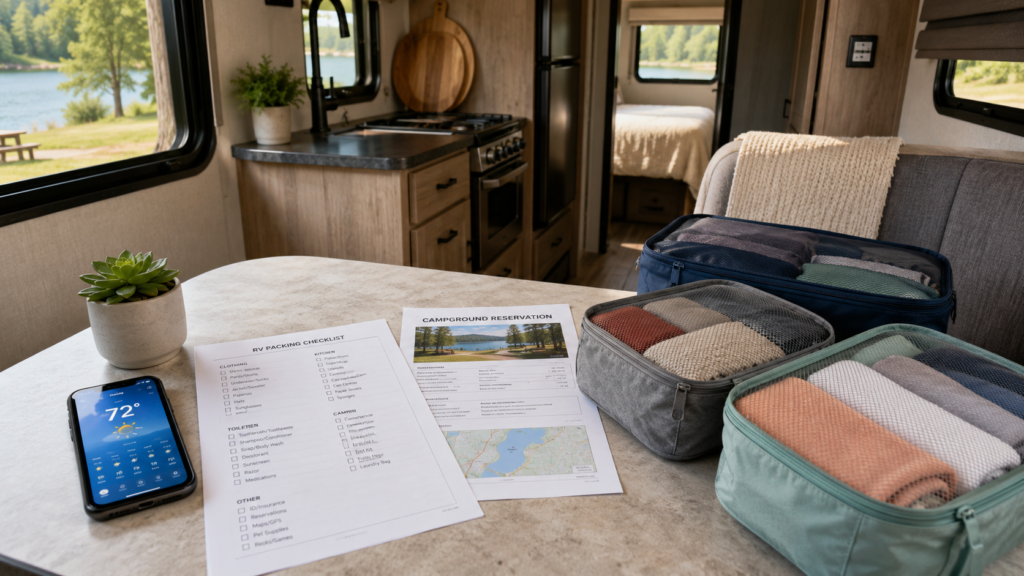
Before you start loading bins, answer these questions. They will help you avoid both underpacking and overpacking.
| Question | Why It Matters | Beginner Tip |
|---|---|---|
| How many nights are you camping? | Trip length affects food, clothing, towels, and toiletries. | For your first trip, pack for the trip plus one extra outfit. |
| Will you have full hookups? | Water, sewer, and electric access change what gear you need nearby. | Check your reservation details before you pack hookup gear. |
| What weather is expected? | Rain, heat, wind, and cold nights can change your comfort fast. | Pack layers even when daytime weather looks warm. |
| Are you cooking inside, outside, or both? | Your kitchen gear depends on your meal plan. | Plan simple meals before packing cookware. |
| Are pets or kids coming? | They add safety, comfort, food, and entertainment needs. | Pack their daily routine items first, then extras. |
If you are renting an RV, ask what is already included. Some rentals include kitchen supplies, hoses, leveling gear, linens, or basic tools, while others include very little. If you own the RV, check your owner’s manual for cargo limits, tire information, electrical service, tank capacities, and any equipment recommendations specific to your rig.
RV Essentials Checklist for Beginners
This section covers the core items most beginners should think through before their first RV trip. You may not need every item for every campground, but this RV essentials checklist gives you a practical starting point.
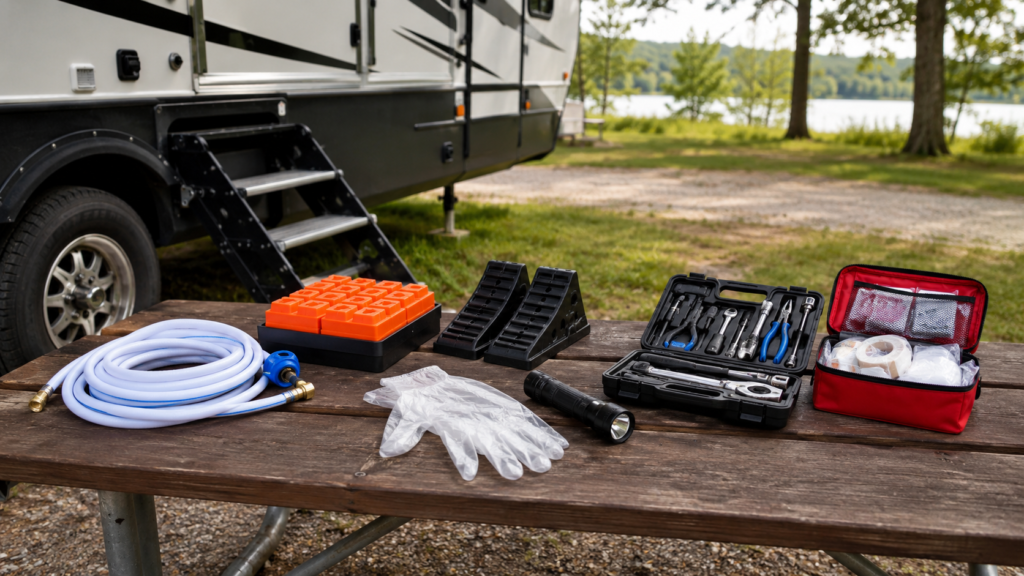
| Category | Pack First | Beginner Note |
|---|---|---|
| Documents | Reservation, ID, insurance, registration, roadside assistance info | Keep these where you can reach them on travel day. |
| Safety | First-aid kit, flashlight, batteries, fire extinguisher, emergency contacts | Check that alarms and safety gear are working before the trip. |
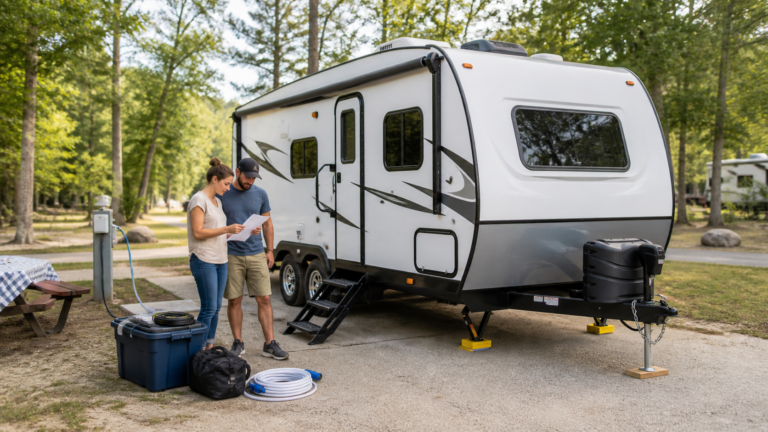
| Hookups | Drinking-water hose, sewer hose, gloves, power cord, surge protector | Match electrical gear to your RV’s service and campground pedestal. |
| Setup | Leveling blocks, wheel chocks, outdoor mat, basic tool kit | Use chocks and leveling gear according to your RV instructions. |
| Kitchen | Simple cookware, plates, utensils, mugs, dish soap, trash bags | Pack based on your meal plan, not your home kitchen. |
| Sleeping | Sheets, blankets, pillows, pajamas, earplugs if needed | RV beds can be different sizes, so measure before buying linens. |
| Clothing | Layers, rain jacket, comfortable shoes, socks, underwear | Pack for weather changes and campground activities. |
| Bathroom | Toiletries, medications, towels, RV-safe toilet paper if required | Follow your RV or rental instructions for toilet and tank products. |
| Cleaning | Paper towels, sponge, wipes, broom, small trash bags | A small cleaning kit keeps the RV from feeling cramped and messy. |
| Outdoor Comfort | Camp chairs, lantern, bug protection, sunscreen | Choose compact items that store easily. |
Documents and Trip Information
Start with the paperwork and information you would not want to dig for at a gas station, campground office, or roadside stop.
- Driver’s license and any required vehicle documents
- RV registration and insurance information, if applicable
- Rental agreement, if you are renting
- Campground reservation confirmation
- Check-in instructions, gate code, and site number
- Roadside assistance information
- Printed or downloaded directions in case cell service is weak
- Pet vaccination records if the campground requires them
A small folder or zip pouch works well for these items. Keep it in the tow vehicle, motorhome cab, or another easy-to-reach place during travel days.
Safety and Roadside Basics
RV safety gear should be easy to find, not buried under blankets or camp chairs. Check your RV manual, rental instructions, and local requirements because safety equipment can vary by RV type and location.
- First-aid kit
- Flashlight or headlamp with extra batteries
- Fire extinguisher rated for your RV use
- Working smoke alarm, carbon monoxide alarm, and propane alarm if your RV uses propane
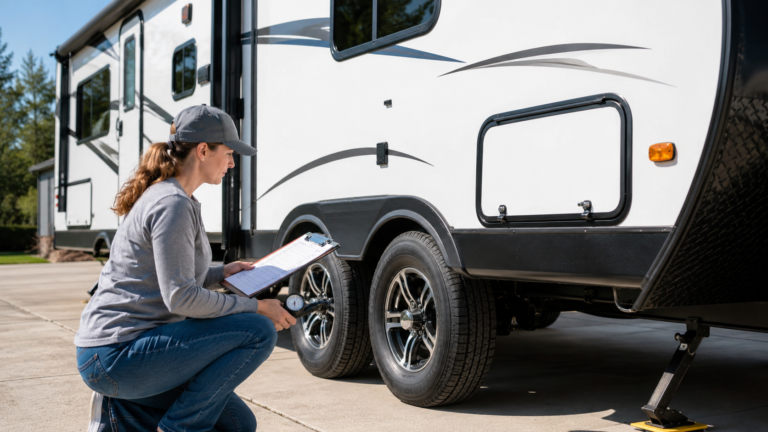
- Tire pressure gauge rated for your RV tires
- Basic tool kit
- Work gloves
- Duct tape and zip ties for temporary minor fixes
- Reflective triangles or roadside markers
- Emergency contact list
- Charged phone and charging cable
- Weather radio or weather app access
Do not rely on guesswork for tires, jacks, towing equipment, or electrical systems. Use the manufacturer instructions for your RV, tow vehicle, and hitch setup. Stabilizer jacks are for stabilizing the RV, not for lifting it to change a tire.
Campground Hookup Gear
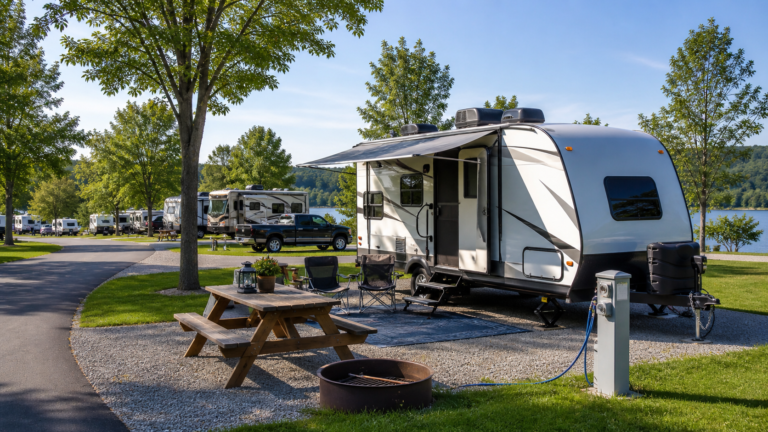
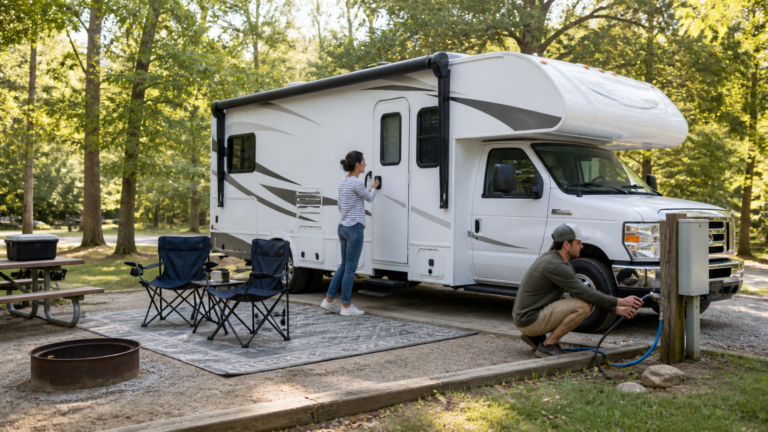
If you are staying at a campground with hookups, you need a few RV-specific items. These are easy for beginners to overlook because they are not part of normal tent camping.
- Drinking-water-safe hose
- Water pressure regulator
- Water filter if you prefer filtered campground water
- RV power cord that matches your RV
- RV surge protector or electrical management system appropriate for your RV service
- Sewer hose and sewer hose support if using sewer hookups
- Clear sewer elbow or adapter if needed for the campsite connection
- Disposable gloves for sewer tasks
- Separate storage bin for sewer gear
- Wheel chocks
- Leveling blocks
Keep fresh water gear and sewer gear in separate storage areas. Labeling these bins helps prevent mix-ups and keeps setup cleaner.
Sleeping and Comfort Items
RV beds are not always the same size as home beds. Some are short queens, bunks, convertible dinettes, or fold-out sleeping areas. Measure before buying sheets or packing bulky bedding.
- Sheets or sleeping bags
- Blankets for the season
- Pillows
- Extra throw blanket for cool evenings
- Pajamas
- Small fan if allowed and useful for your setup
- Earplugs or sleep mask for light sleepers
- Laundry bag
For a first RV trip, choose bedding that is easy to pack and easy to reset each morning. Bulky comfort items can quickly fill cabinets and under-bed storage.
Clothing for Your First RV Trip
Pack clothing by activity and weather, not by “just in case” thinking. RV storage fills fast, and most beginners bring more clothing than they use.
- Comfortable travel-day outfit
- Shirts for each day, plus one extra
- Pants, shorts, or leggings based on weather
- Underwear and socks for each day, plus extras
- Warm layer for mornings and evenings
- Rain jacket or lightweight shell
- Sleepwear
- Comfortable walking shoes
- Camp sandals or slip-on shoes
- Swimsuit if needed
- Hat and sunglasses
Rolling clothes or using packing cubes can help keep small RV closets and drawers organized. A separate dirty laundry bag also prevents the RV from feeling cluttered by day two.
RV Kitchen Basics
Your first RV kitchen kit should be simple. Think through what you will actually cook, then pack only the tools needed for those meals.
- Small skillet
- Saucepan or small pot
- Spatula and large spoon
- Sharp knife with cover
- Cutting board
- Can opener
- Plates and bowls
- Cups and mugs
- Forks, spoons, and knives
- Reusable water bottles
- Food storage containers or bags
- Dish soap, sponge, and dish towels
- Trash bags
- Foil or parchment paper if you use it for planned meals
Choose nesting, stackable, or collapsible items when possible. Avoid bringing breakable dishes or a full duplicate of your home kitchen until you know how you like to cook in the RV.
Food and Drinks
Food is easier to pack when you plan meals before the trip. For a beginner-friendly first RV trip packing list, keep meals familiar, low-mess, and flexible.
- Coffee, tea, or morning drinks
- Easy breakfasts such as oatmeal, eggs, yogurt, fruit, or breakfast bars
- Simple lunches such as sandwiches, wraps, soup, or leftovers
- Easy dinners such as tacos, pasta, grilled meals, or one-pan meals
- Snacks for travel days
- Cooking oil or spray
- Salt, pepper, and a few favorite seasonings
- Condiments you will actually use
- Drinking water if campground water is uncertain or you prefer bottled water
- Pet food if traveling with pets
Do not pack the pantry like you are leaving for a month unless you are. For a weekend trip, a few planned meals and snacks are usually easier than a crowded cabinet full of options.
Bathroom, Toiletries, and First Aid
Pack your bathroom kit like a small travel toiletry bag, then add RV-specific items based on your toilet and tank system. Some RVs require RV-safe toilet paper or specific tank treatment, so follow your owner’s manual or rental instructions.
- Toothbrush and toothpaste
- Soap, shampoo, and conditioner
- Deodorant
- Hairbrush or comb
- Medications and copies of prescriptions if needed
- Sunscreen
- Bug protection
- Towels and washcloths
- Shower shoes for campground bathhouses
- Toilet paper appropriate for your RV system
- Tank treatment if recommended for your RV
- Basic first-aid supplies
- Motion sickness or allergy items if your family uses them
If you plan to use campground showers, pack a small shower tote. It is much easier than carrying loose toiletries across the campground.
Cleaning and Housekeeping Supplies
A small RV gets messy faster than a house. You do not need a huge cleaning cabinet, but you do need enough to handle dishes, spills, shoes, trash, and daily wipe-downs.
- Trash bags in a size that fits your RV trash can
- Paper towels or reusable cleaning cloths
- Dish soap
- Sponge or dish brush
- Small broom and dustpan
- All-purpose cleaner safe for your RV surfaces
- Disinfecting wipes if you use them
- Hand soap
- Dirty laundry bag
- Doormat or outdoor mat to reduce tracked-in dirt
Keep cleaning supplies compact and easy to reach. A quick daily reset makes RV camping feel much more comfortable, especially for families.
Outdoor Campsite Comfort
Outdoor gear is where beginners often overpack. Start with the items that make your campsite comfortable and safe, then add extras later as you learn your camping style.
- Camp chairs
- Outdoor mat
- Lantern or outdoor light
- Small folding table if needed
- Cooler if your RV fridge space is limited
- Bug protection
- Sunscreen
- Picnic table cover if you like using campground tables
- Compact grill or camp stove only if allowed and part of your meal plan
- Fire starters only if campfires are allowed
Always check campground rules before using grills, camp stoves, fire pits, generators, outdoor rugs, or clotheslines. Rules can vary by campground, season, and fire conditions.
Pets, Kids, and Personal Extras
Personal extras are not the same for every camper. Pack what supports your family’s normal routine and helps everyone settle in.
- Pet food, bowls, leash, waste bags, bed, and vaccination records if needed
- Kids’ comfort items, pajamas, favorite blanket, and simple toys
- Books, cards, or quiet games
- Binoculars or nature guides if you enjoy wildlife watching
- Day pack for hikes or campground activities
- Phone chargers and battery packs
- Camera or action camera if you use one
For your first RV trip, avoid packing every hobby item you own. Pick one or two easy activities and see what you actually use.
What to Pack for RV Trip Length
Your packing list should change depending on whether you are going away for one weekend, a full week, or a longer route. This table keeps the difference simple.
| Trip Type | Pack More Of | Keep Simple |
|---|---|---|
| One or two nights | Basic clothes, simple meals, bedding, safety items | Skip bulky extras and complicated cooking gear. |
| Weekend trip | Layers, towels, planned meals, camp chairs, cleaning basics | Bring one main outdoor activity, not every activity. |
| Week-long trip | Extra toiletries, laundry plan, more food storage, backup layers | Plan grocery stops instead of overloading the RV. |
| Family trip | Kid gear, snacks, extra towels, entertainment, cleaning supplies | Use bins by person or category to reduce clutter. |
| Pet-friendly trip | Pet food, leash, bowls, bed, waste bags, records if required | Keep pet items in one easy-to-grab tote. |
| No-hookup camping | Water plan, battery plan, conservative meals, extra lighting | Only attempt this when you understand your RV systems and limits. |
For a first RV trip, a full-hookup campground is often easier because you can learn the RV in a more forgiving setting. If you plan to camp without hookups, learn your fresh water, gray water, black water, battery, and propane limits before you go.
What Not to Pack on Your First RV Trip
A helpful RV packing list for beginners is not just about what to bring. It is also about what to leave at home. Overpacking makes the RV harder to organize, harder to clean, and sometimes less safe if you exceed weight limits.
| Beginner Mistake | Better Habit | Why It Helps |
|---|---|---|
| Packing a full home kitchen | Pack for your planned meals. | Saves cabinet space and reduces dish clutter. |
| Bringing too many clothes | Pack layers and rewear outerwear. | Keeps drawers and closets manageable. |
| Mixing water and sewer gear | Use separate labeled bins. | Keeps setup cleaner and easier. |
| Buying every RV gadget before trip one | Start with true essentials. | Prevents wasted money and storage problems. |
| Ignoring RV weight limits | Check cargo capacity and pack lighter. | Supports safer handling and less stress. |
| Relying only on phone service | Save key details offline. | Helps when campground cell service is weak. |
If you are unsure about an item, ask whether it helps with safety, setup, sleep, food, hygiene, weather, or a planned activity. If it does not support one of those things, it can probably wait until a later trip.
How to Pack and Organize Your RV Without Clutter
The best first RV trip packing list will not help much if everything is loose, hidden, or hard to reach. Organization matters because RV spaces are small and travel days can shift items around.
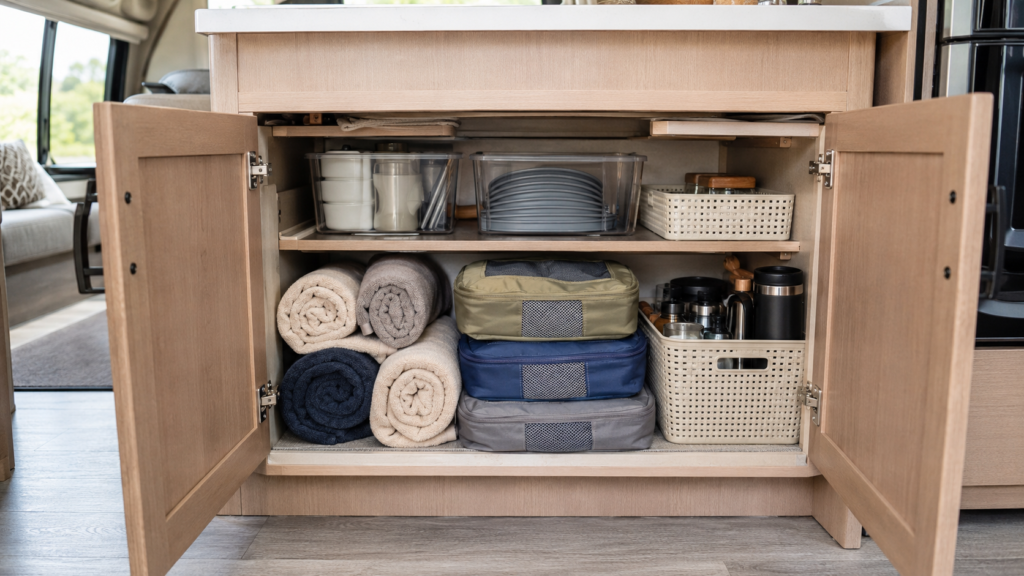
Use Bins by Category
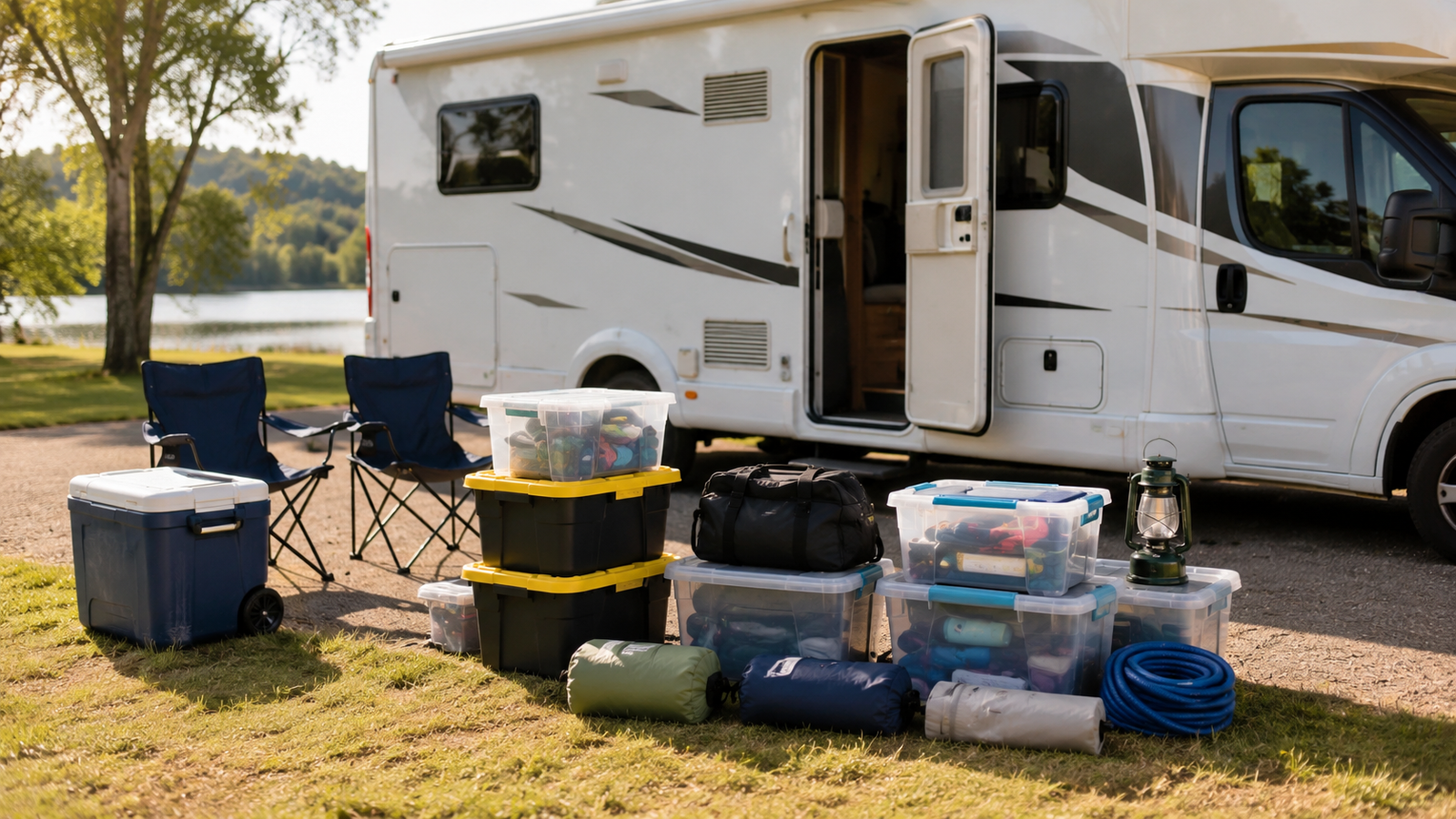
Group items by purpose instead of scattering them around the RV. Good beginner categories include kitchen, bathroom, bedding, hookup gear, outdoor gear, cleaning, tools, and pet or kid supplies.
- Use clear bins when you want to see contents quickly.
- Use labels for bins stored outside or underneath the RV.
- Keep sewer gear in its own clearly marked container.
- Keep frequently used items at waist level when possible.
- Store heavy items low and secured so they do not shift during travel.
Create a Travel-Day Zone
Some items should stay easy to reach while you are on the road. This includes documents, snacks, water bottles, medications, pet supplies, chargers, and weather layers.
A small travel-day tote prevents you from opening cabinets or digging through storage compartments during stops.
Pack Heavy Items Low
Heavy items should be stored low and secured. Avoid loading all heavy gear on one side of the RV. Follow your RV manual for cargo limits and weight distribution guidance.
This is especially important for beginners towing a travel trailer because poor loading can affect handling. When in doubt, pack lighter and get familiar with your rig before adding more gear.
Do a Practice Pack at Home
Before your first trip, load the RV once at home. Open cabinets, make the bed, pretend to cook a meal, and check whether important items are easy to reach.
If something is hard to access during a calm practice pack, it will be more frustrating when you are tired at the campground.
Beginner-Friendly Packing Routine
A repeatable routine makes packing faster every time. Use this simple system before your first RV trip, then update it after you return.
| Task | When to Do It | Why It Helps |
|---|---|---|
| Review campground details | One week before | Confirms hookups, arrival time, rules, and site type. |
| Check weather | A few days before | Helps you pack layers, rain gear, and bedding. |
| Plan simple meals | A few days before | Prevents overpacking kitchen tools and food. |
| Gather gear by category | Two days before | Makes missing items easier to spot. |
| Load heavy items low | Before departure | Helps keep the RV organized and more stable. |
| Do a final walkaround | Right before leaving | Catches open compartments, loose gear, and missed steps. |
| Make notes after the trip | When you unpack | Builds a better custom checklist for next time. |
The after-trip notes are important. Write down what you forgot, what you packed but never used, and what needs to be restocked. That is how a generic RV essentials checklist becomes your own reliable system.
Last-Minute RV Departure Checklist
Use this quick checklist before leaving home and again before leaving the campground. It is not a replacement for your RV manual, but it gives beginners a simple final scan.
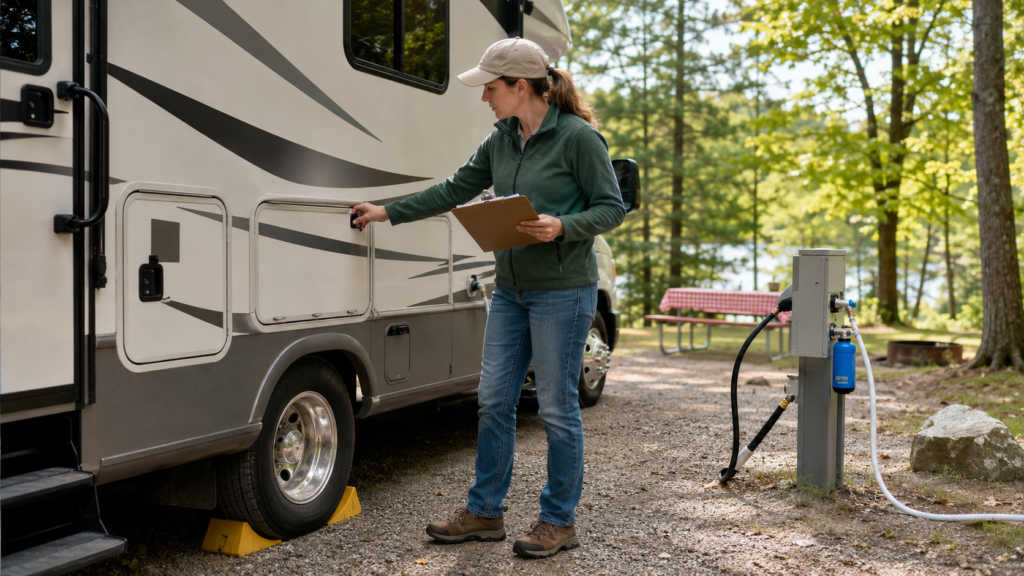
- Reservation, ID, keys, and wallet are packed.
- Medications and important personal items are packed.
- Phone, chargers, and battery packs are packed.
- Cabinets, drawers, refrigerator, and interior doors are latched.
- Loose items are secured for travel.
- Windows, vents, and exterior compartments are closed and latched.
- Awning is fully retracted and secured.
- Steps are retracted or secured.
- Water, sewer, and electric connections are disconnected and stored correctly.
- Fresh water gear and sewer gear are stored separately.
- Wheel chocks and leveling blocks are removed and packed when it is safe to do so.
- Tires are visually checked and tire pressure is checked according to your RV specifications.
- Lights and signals are checked.
- Hitch, safety chains, breakaway cable, mirrors, and brake controller are checked if towing.
- Pets and passengers are safely secured before driving.
- Trash is disposed of properly and the campsite is clean.
Move slowly through this list. Most beginner mistakes happen when people rush the final few minutes before departure.
Simple Weekend RV Packing List for Beginners
If you want a copy-and-check version, start with this weekend list. It is designed for a basic two- or three-night campground trip with access to hookups. Adjust it for your RV, weather, campground rules, and family needs.
Personal Items
- Clothes for each day, plus one extra outfit
- Underwear and socks
- Warm layer
- Rain jacket
- Comfortable shoes
- Sleepwear
- Toiletries
- Medications
- Towels and washcloths
- Dirty laundry bag
RV Setup and Hookups
- Wheel chocks
- Leveling blocks
- Drinking-water hose
- Water pressure regulator
- RV power cord
- Surge protector or electrical management system
- Sewer hose and fittings if using sewer hookups
- Disposable gloves
- Outdoor mat
- Basic tool kit
Kitchen and Food
- Planned meals and snacks
- Coffee, tea, or morning drinks
- Reusable water bottles
- Skillet and small pot
- Spatula and spoon
- Knife and cutting board
- Plates, bowls, cups, and utensils
- Can opener
- Food storage containers
- Dish soap, sponge, and dish towels
- Trash bags
Sleeping and Living
- Sheets or sleeping bags
- Blankets
- Pillows
- Camp chairs
- Lantern or flashlight
- Books, cards, or simple activities
- Chargers
- Small fan or extra blanket if needed for the season
Safety and Cleaning
- First-aid kit
- Fire extinguisher
- Flashlight or headlamp
- Extra batteries
- Tire pressure gauge
- Paper towels or cleaning cloths
- All-purpose cleaner safe for your RV surfaces
- Small broom and dustpan
- Hand soap
- Sunscreen and bug protection
FAQ: RV Packing List for Beginners
What should be on a first RV trip packing list?
A first RV trip packing list should include documents, safety gear, bedding, clothing, toiletries, simple kitchen supplies, planned food, cleaning basics, campground hookup gear, and outdoor comfort items. Start with essentials before adding extras like games, grills, decorations, or specialty cooking tools.
What are the most important RV essentials for beginners?
The most important RV essentials for beginners are safety gear, wheel chocks, leveling blocks, a drinking-water-safe hose, water pressure regulator, RV power cord, surge protector or electrical management system, sewer supplies if needed, basic tools, bedding, food, and personal items. Always match gear to your specific RV and campground setup.
Do I need a water pressure regulator for my first RV trip?
A water pressure regulator is commonly used with campground water hookups because water pressure can vary. Check your RV manual or rental instructions for the correct setup, and use drinking-water-safe equipment for your fresh water system.
Do I need a surge protector for an RV campground?
Many RV campers use a surge protector or electrical management system when plugging into campground power. Make sure the device matches your RV’s electrical service, such as 30 amp or 50 amp, and follow the manufacturer instructions for safe use.
How do I avoid overpacking an RV?
To avoid overpacking, plan meals, pack clothing by weather and activity, use bins by category, and leave behind items that do not support safety, setup, sleep, food, hygiene, or a planned activity. After the trip, remove anything you did not use unless it is an emergency or safety item.
What should I pack for an RV trip with kids?
For kids, pack weather-appropriate clothes, pajamas, shoes, toiletries, medications, comfort items, simple toys, books or games, snacks, water bottles, and extra towels. Keep kid items in one bin or drawer so the RV stays easier to manage.
What should I pack for an RV trip with pets?
For pets, pack food, bowls, leash, waste bags, bedding, medications, vaccination records if required, towels, and a familiar toy or blanket. Check campground pet rules before arrival because leash rules, breed rules, pet areas, and documentation requirements can vary.
Related Beginner RV Articles
- Essential RV Gear for Beginners
- How to Plan Your First RV Camping Trip Step by Step
- RV Campsite Setup Checklist for Beginners
- RV Hookups for Beginners: Water, Electric, and Sewer Explained
- First-Time RV Camping Mistakes to Avoid
- How to Organize a Small RV Kitchen
Final Thoughts on Your First RV Trip Packing List
Your first RV trip does not need to be packed perfectly. It needs to be packed thoughtfully. Start with the basics, keep safety and setup gear easy to reach, plan simple meals, and avoid filling every cabinet before you know what you actually use.
Use this RV packing list for beginners as your starting point, then make notes after each trip. Over time, your RV essentials checklist will become faster, lighter, and more personal to the way you camp.