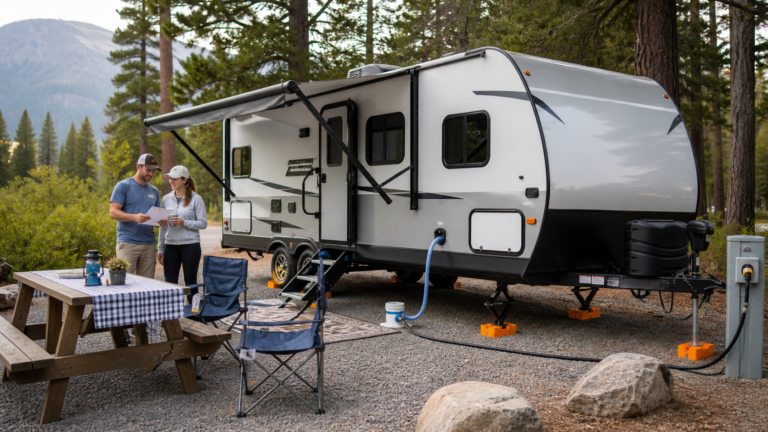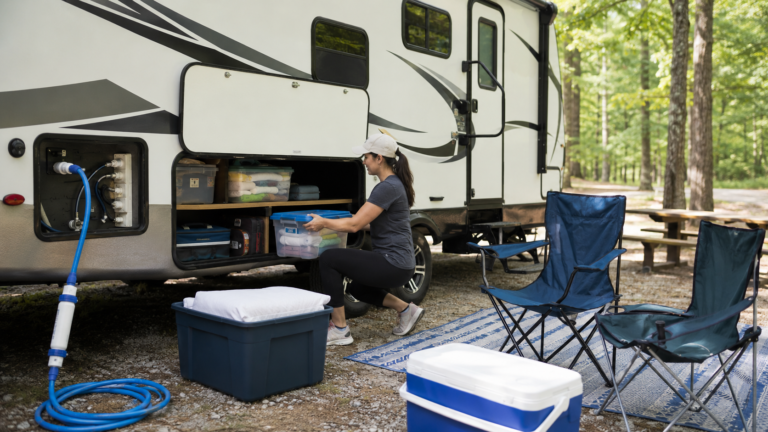
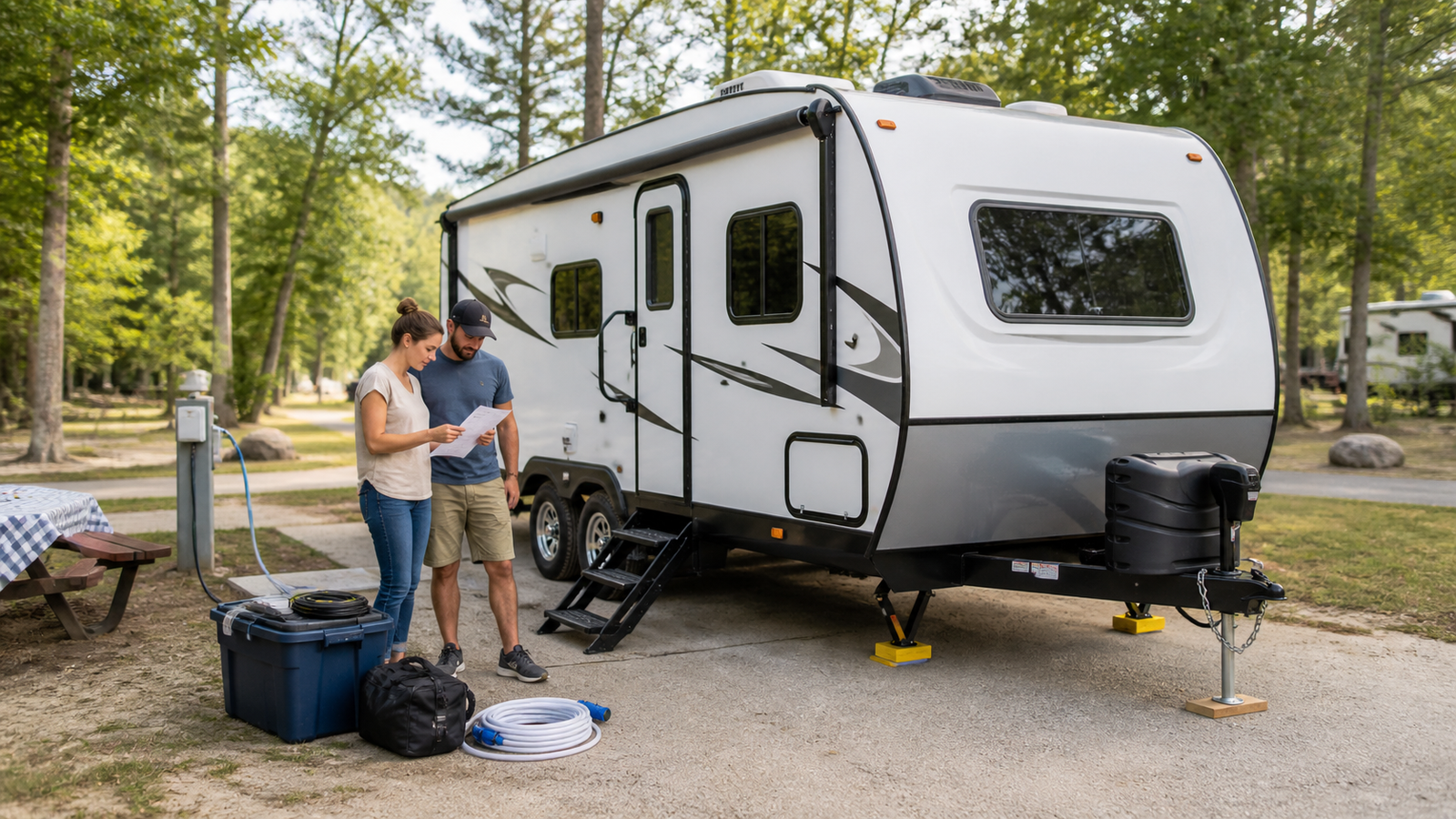
First-Time RV Camping Mistakes to Avoid
First-time RV camping is exciting, but a few avoidable mistakes can make the whole trip feel harder than it needs to. This guide walks you through the most common beginner RV camping mistakes, why they happen, and what to do instead so you can feel more prepared, less stressed, and a lot more confident when you pull into camp.
What first-time RV campers usually get wrong
Most beginner mistakes come down to the same thing: trying to figure everything out in real time at the campsite. That usually leads to rushed setup, forgotten essentials, and those classic “well, that could have gone better” moments. The good news is that most of these problems are easy to prevent once you know what to watch for.
Not planning for power, water, and waste needs
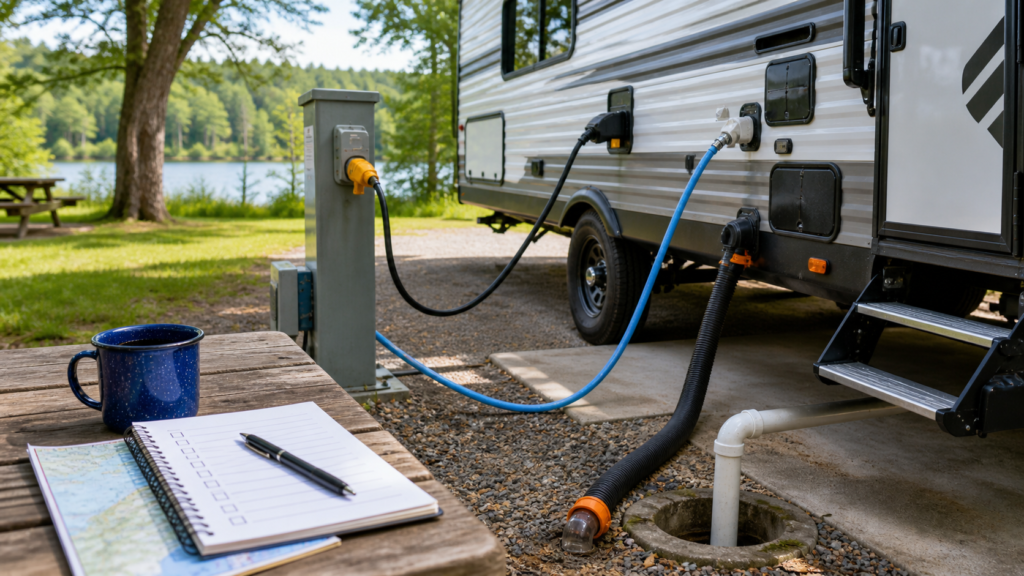
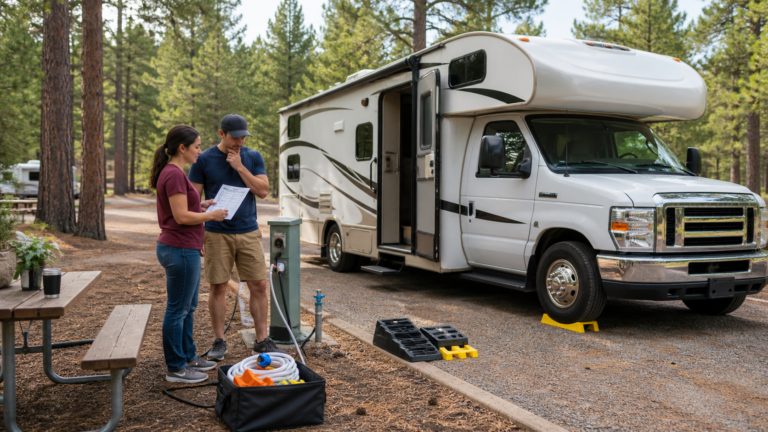
This is one of the fastest ways to turn a fun trip into a frustrating one. If you do not understand how your RV handles electricity, water, and waste, you can run out of power, fill tanks too fast, or end up dealing with a sewer setup you were not ready for.
What to do instead
- Know whether your campsite has full hookups, partial hookups, or no hookups at all.
- Check whether your RV uses 30-amp or 50-amp electrical service before you arrive.
- Learn the basics of your fresh water, gray water, and black water systems before your first trip.
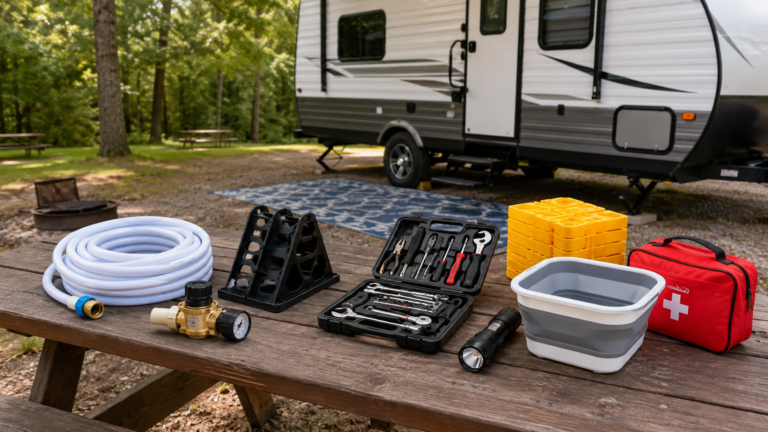
- Bring the right hoses, fittings, pressure regulator, and adapters before you leave home.
Choosing the wrong campsite or arriving underprepared
Your campsite can make your first trip feel easy or unnecessarily awkward. A site that is too tight, too uneven, or missing the hookups you expected can create stress before you even finish parking.
What to do instead
- Choose a site that matches your RV’s size, hookup needs, and your comfort level as a beginner.
- Check the site length and layout before booking, especially if your RV has slide-outs or an awning that needs extra clearance.
- Arrive during daylight when possible so you can park and set up without rushing.
- Keep your reservation details, gate codes, and arrival notes easy to access before you pull in.
Overpacking or underpacking for the space you actually have
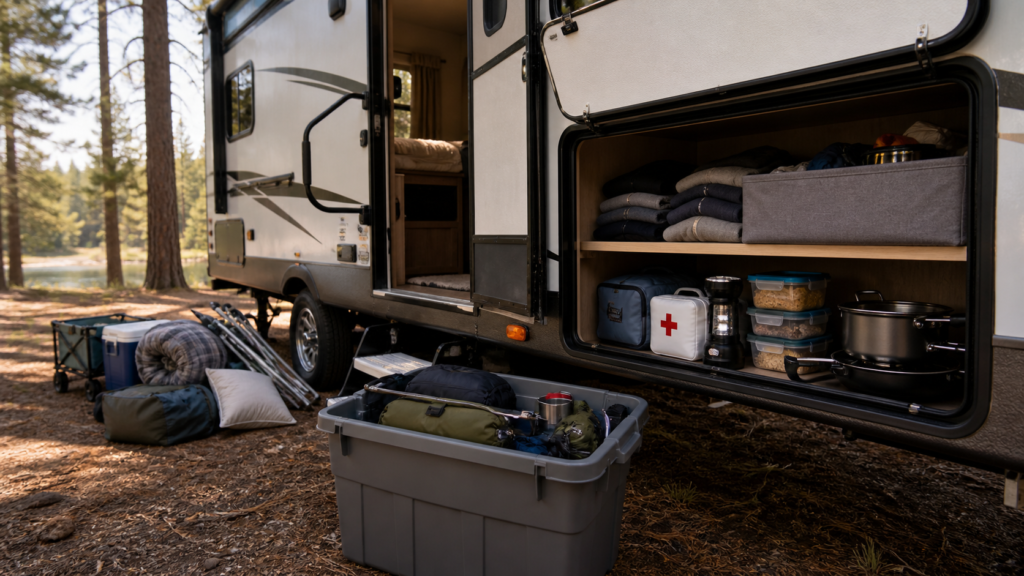
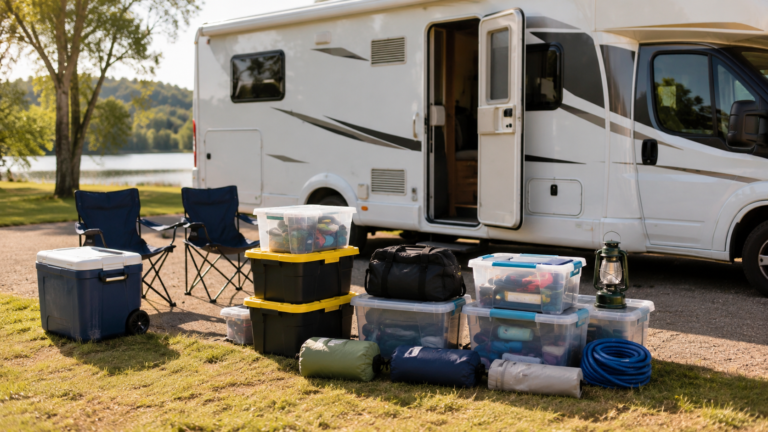
Too much gear makes an RV feel cluttered fast. Too little gear leaves you making avoidable campground store runs or improvising around missing basics. The goal is not to bring everything. It is to bring the right things.
What to do instead
- Start with essentials and group items by use instead of packing randomly.
- Pack for the length of the trip and the actual weather forecast, not every possible scenario.
- Do not pack duplicates unless you already know you need them.
- Adjust your packing list after each trip based on what you actually used.
Skipping safety checks and basic maintenance
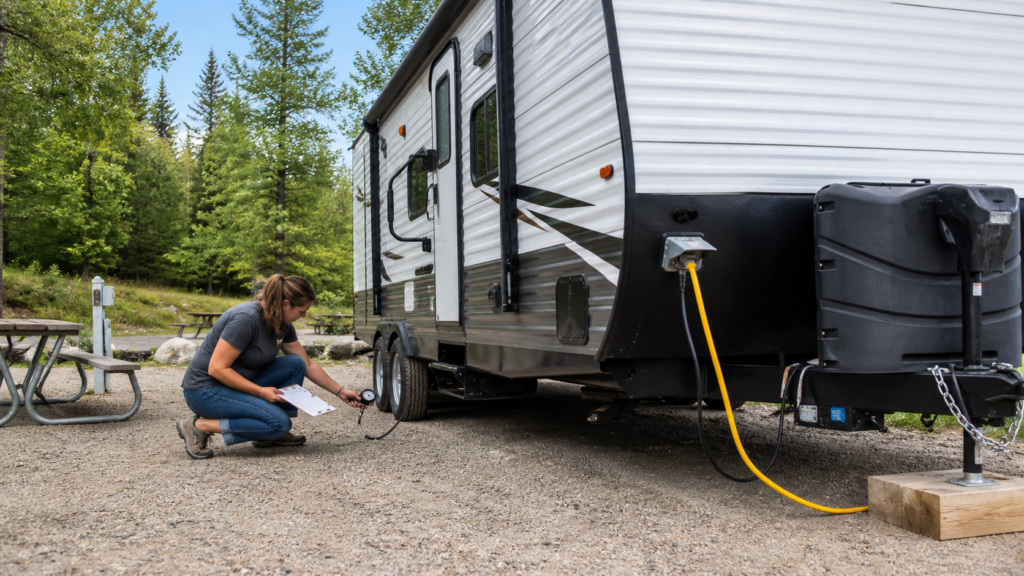
Safety is not the glamorous part of RV camping, but ignoring it can create expensive or dangerous problems. Many beginner issues come from simple things that could have been caught before leaving home.
What to do instead
- Check tire condition and tire pressure before every trip.
- Confirm your battery status, lights, safety gear, and any loose exterior connections.
- Make sure propane-related systems are being used with good awareness of ventilation and safety.
- Do a quick walk-around before every departure.
Common safety mistakes to avoid
- Ignoring tire condition or pressure
- Using propane appliances without good awareness of ventilation and safety
- Leaving without checking lights, connections, and loose gear
- Assuming you will figure it out later if something seems off
Ignoring campground rules and basic etiquette
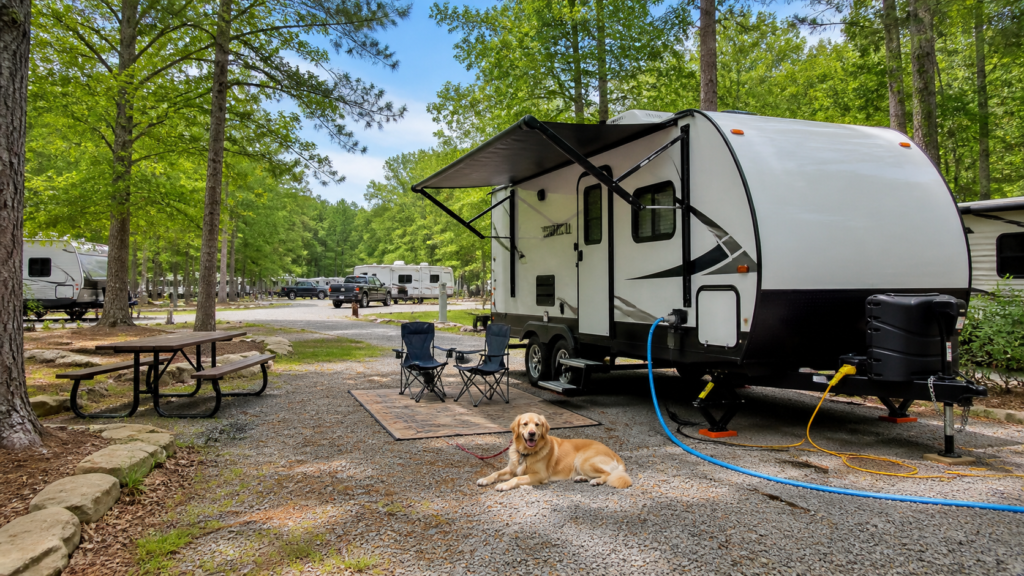
Campground life works better when everyone follows the same basic expectations. Beginners sometimes focus so much on their own setup that they forget the social side of camping matters too.
What to do instead
- Read the campground rules before or as soon as you arrive.
- Respect quiet hours, speed limits, pet rules, and generator restrictions.
- Keep your setup tidy so hoses, cords, slides, and outdoor gear do not create problems for neighbors.
- Be mindful of road access, site boundaries, and shared campground spaces.
Common etiquette mistakes to avoid
- Blocking road access or crowding neighboring sites
- Keeping noise, lights, or generator use too high
- Not cleaning up after pets or keeping them under control
- Leaving your site in rough shape when you go
Frequently asked questions
What is the most common first-time RV camping mistake?
The most common mistake is arriving without a clear plan for hookups, setup, and basic campsite needs. That usually leads to rushed decisions, forgotten steps, and avoidable stress right when you are trying to settle in.
How do I make my first RV trip easier?
Keep the trip short, choose an easy campground, arrive during daylight, and focus on learning the basics instead of trying to do everything perfectly. A simple first trip builds confidence much faster than an overly ambitious one.
What should I double-check before leaving home?
Check your tire pressure, battery status, safety gear, water and sewer supplies, campground reservation details, and any key tools or hoses you need for setup. A quick pre-trip checklist can prevent a surprising number of beginner mistakes.
How do I avoid overpacking the RV?
Start with essentials, group items by use, and skip extras you are not likely to touch on a short trip. After your first few trips, your packing list gets much better because you learn what actually matters.
What should I do if something goes wrong at the campsite?
Pause, assess the problem, and start with the simplest fix first. Many beginner issues come from loose connections, missed setup steps, or overloaded power use. If the problem is bigger than that, ask campground staff or a qualified RV professional for help.
Conclusion
First-time RV camping comes with a learning curve, but it does not need to feel overwhelming. If you plan for the basics, choose the right campsite, set up carefully, pack with intention, stay on top of safety, and follow campground etiquette, your first trip will go a lot more smoothly. You do not need a perfect trip to have a good one. You just need a smart, simple start.
Related beginner RV articles
- RV Camping for Beginners: Everything You Need to Know Before Your First Trip
- What to Expect at an RV Campground
- How to Plan Your First RV Camping Trip Step by Step