What to Expect at an RV Campground for the First Time
Going to an RV campground for the first time can feel exciting and a little intimidating at the same time. You are arriving somewhere new, learning a campground routine, and trying to get parked, connected, and comfortable without missing anything important. The good news is that most RV campgrounds are much easier to navigate once you understand the basic flow.
This guide walks you through what to expect when you arrive, how check-in usually works, what hookups are really like, how to set up without feeling rushed, and which beginner mistakes are easiest to avoid. A little preparation makes your first campground stay smoother, safer, and much more enjoyable.
What You’ll Usually Notice on Day One
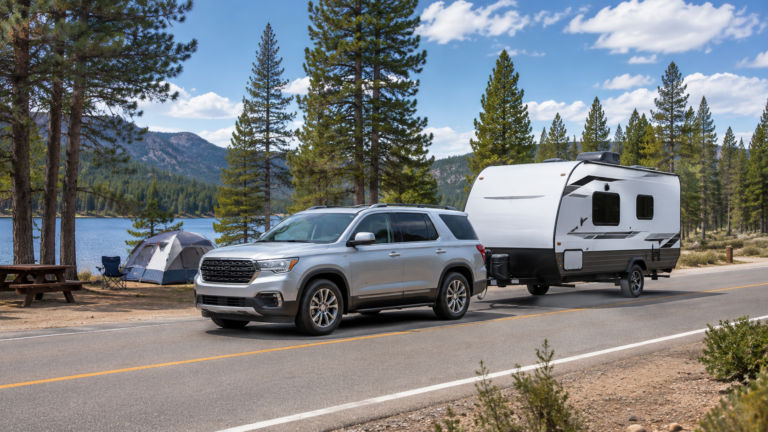
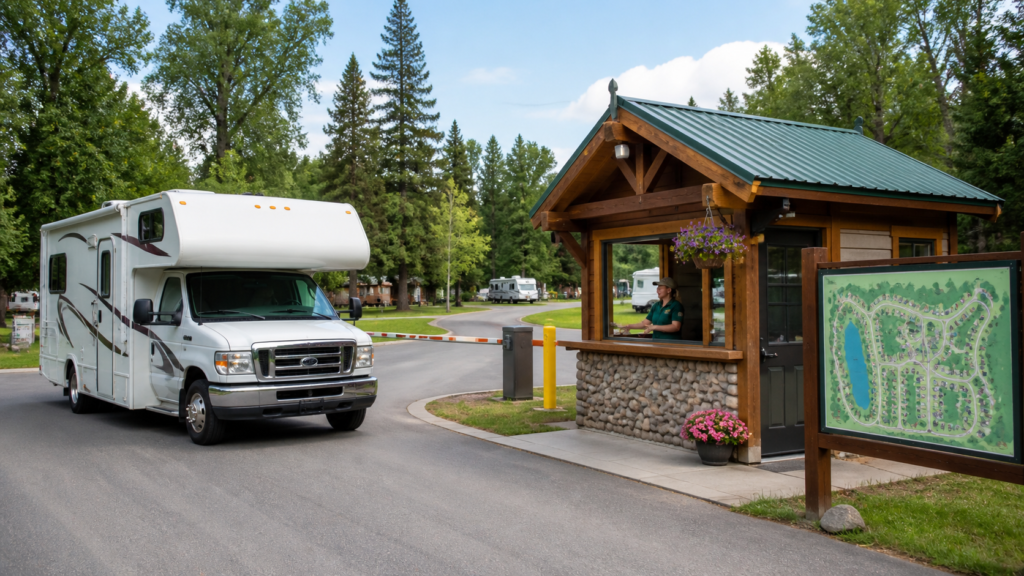
When you first pull into an RV campground, you will usually notice three things right away: a check-in area, a campground map, and other RVs already settled into their sites. That alone can make the place feel a little more manageable because it quickly becomes clear that there is a routine to follow.
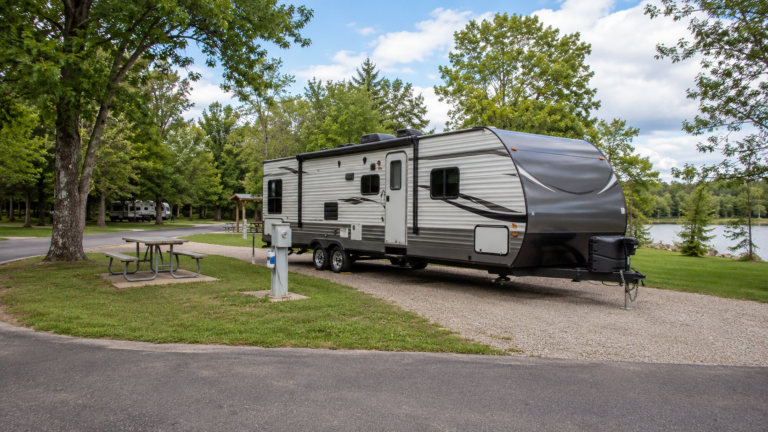
Most campgrounds are fairly beginner-friendly once you slow down and pay attention to the layout. Roads are typically marked, sites are numbered, and the basic amenities are usually easy to find after check-in. You may also notice speed limit signs, quiet hour reminders, and instructions about where to park while registering.
In many cases, staff will confirm your reservation, explain any key rules, and point you toward your site. Some campgrounds will escort you or help with directions, while others will hand you a site map and let you make your way there. Either way, the first part of the stay is usually less about camping and more about getting oriented.
How to Check In Smoothly and Choose the Right Site
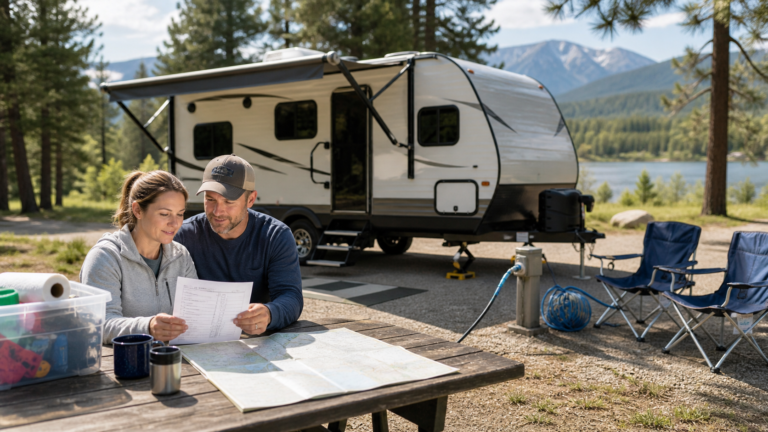
- Keep your reservation details easy to access. Have your confirmation email, site number, and any booking notes ready before you reach the office or gate.
- Make sure the site fits your RV. Check that there is enough room for your rig length, slide-outs, awning, and a comfortable setup area.
- Look at the campground layout early. Find the restrooms, showers, dump station, trash area, and main roads before you get too settled.
- Confirm the hookups before you commit to setup. Ask whether the site has 30-amp or 50-amp power, water, sewer, or a mix of services.
- Choose simplicity over difficulty for your first trip. A level, easy-to-access site is usually a better beginner choice than a tighter site with a better view.
If you are given a choice, do not make your first campground stay harder than it needs to be. A site that is easy to back into, easy to level, and easy to connect is often the smartest option. Convenience matters more than novelty when you are still learning the routine.
Understanding Hookups: Power, Water, and Sewer
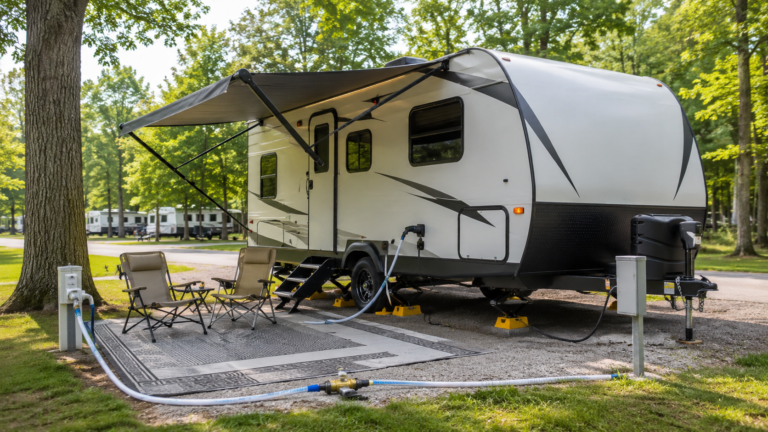
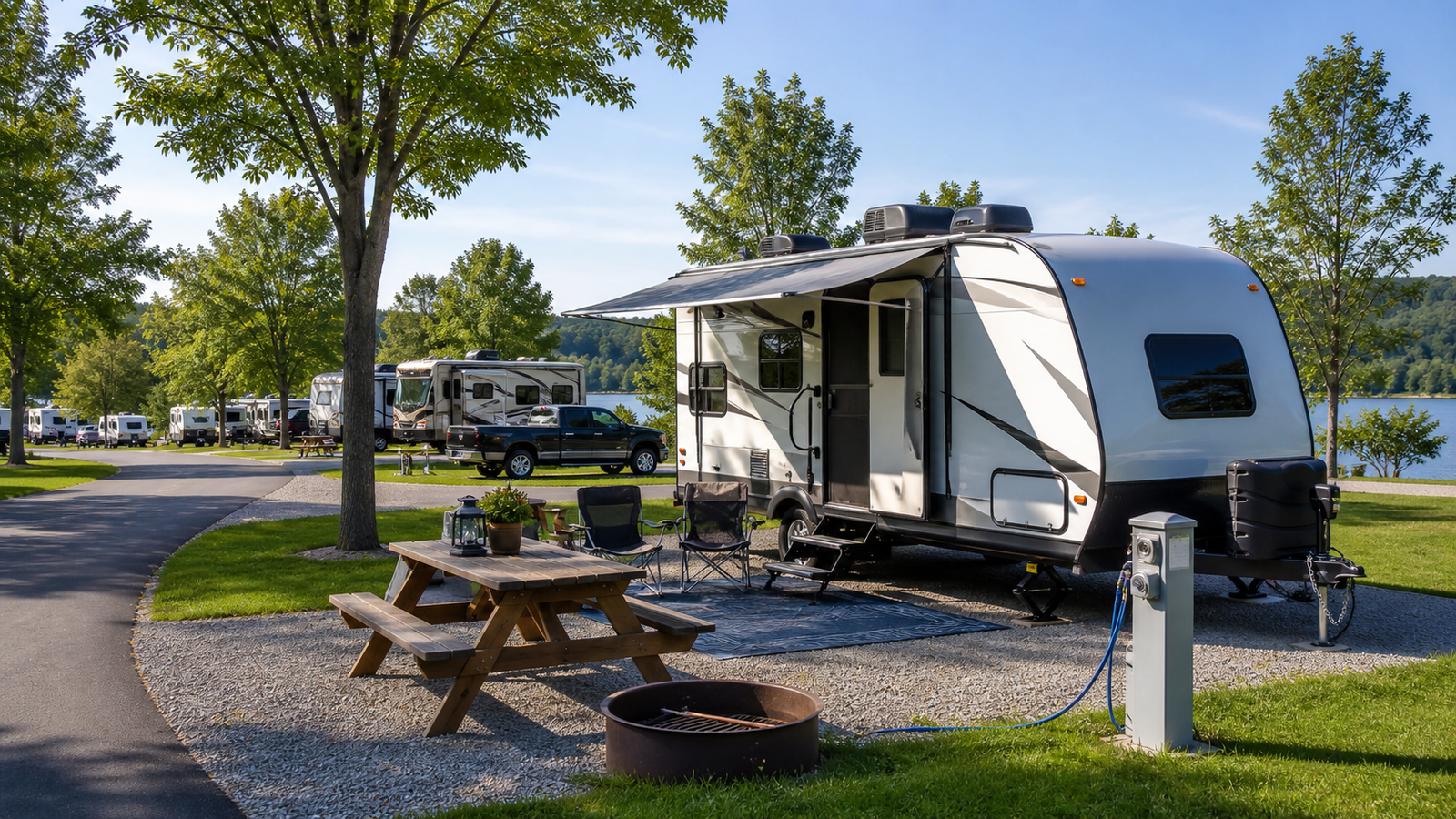
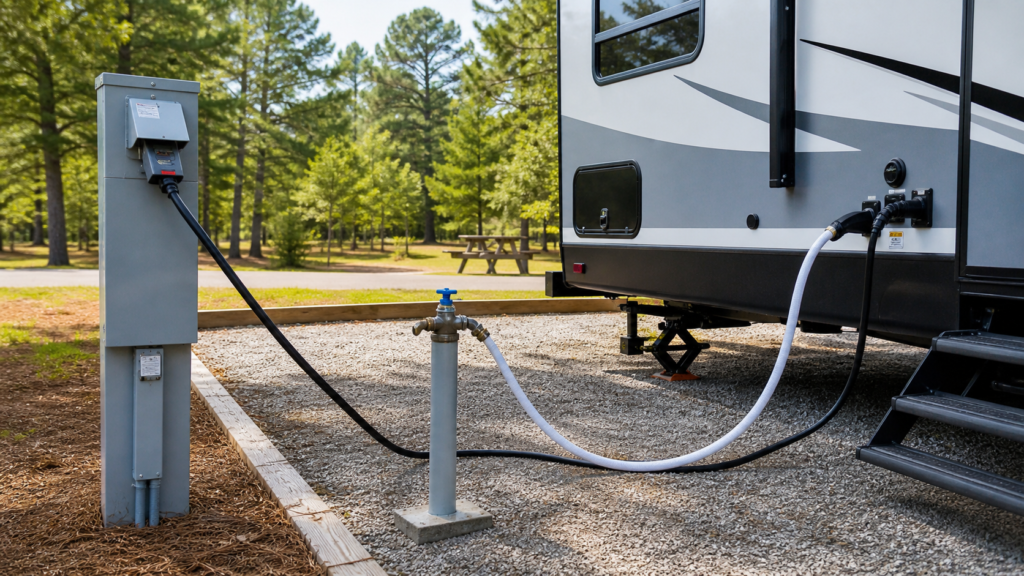
Hookups are the part of campground camping that seems complicated before your first trip and much more normal after you have done it once or twice. At most campgrounds, your site will give you access to some combination of electrical service, fresh water, and sewer.
- Electrical: Most RV sites provide either 30-amp or 50-amp power. Make sure you know which service your RV uses before you arrive. If your RV uses 30-amp service, be more careful about running multiple power-hungry appliances at the same time.
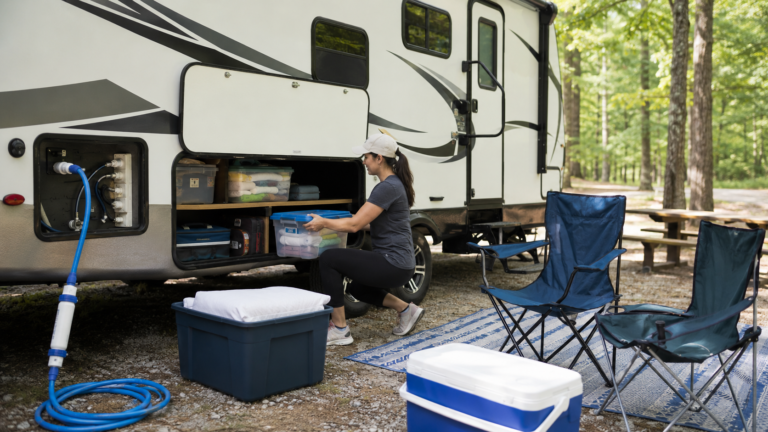
- Water: Water hookup is usually straightforward. Connect a drinking-water-safe hose to the campground spigot and your RV water inlet, then turn the water on slowly and check for leaks.
- Sewer: If the site includes sewer, make sure the hose is attached securely and the fittings feel tight. If anything looks unclear, ask before assuming it is correct.
It helps to think of hookups as the basic systems that make your campsite work. Once those three systems are connected correctly, everything else about the stay usually feels less stressful. The goal is not speed. The goal is a clean, safe, and organized setup.
What to Do During Setup
The easiest way to avoid feeling overwhelmed is to follow the same setup order every time. A simple routine reduces mistakes and helps you catch problems before they become frustrating.
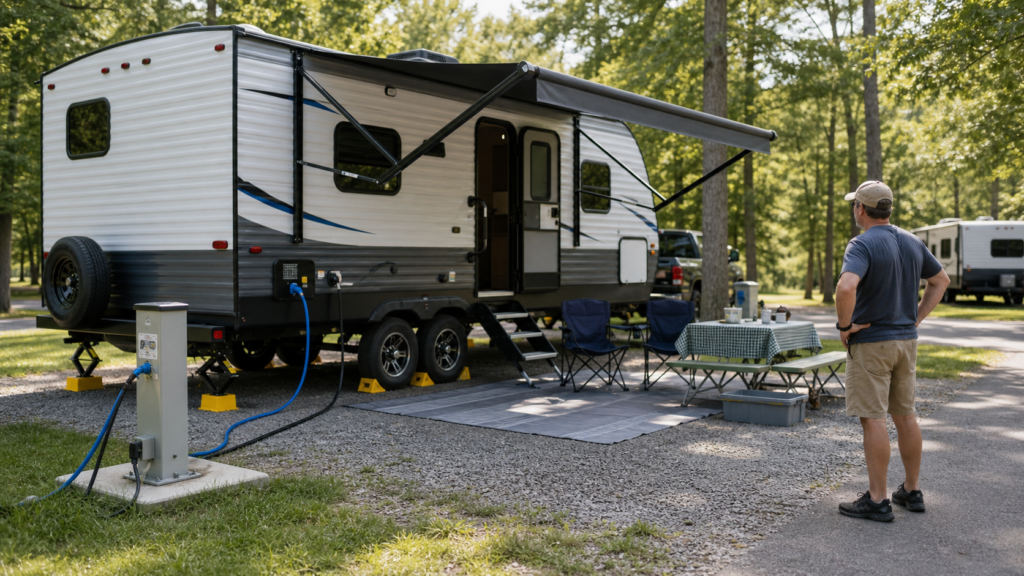
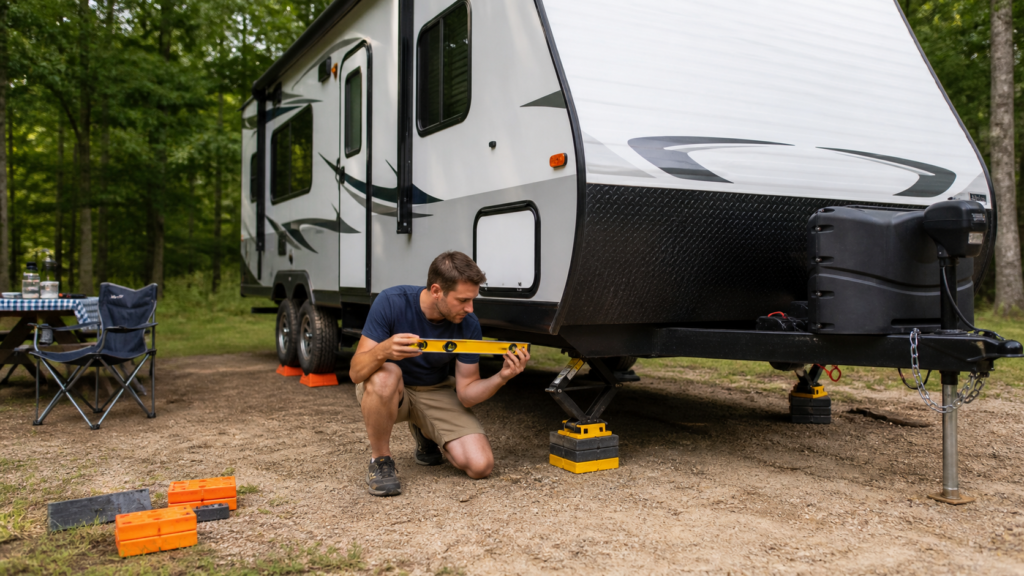
- Level your RV first. Use leveling blocks or ramps as needed. An unlevel RV can feel uncomfortable and can affect how some systems work.
- Secure the RV. Use wheel chocks where needed and lower stabilizer jacks after the RV is properly positioned and leveled.
- Connect your utilities carefully. Handle power, water, and sewer one at a time so you can double-check each connection.
- Walk the site once more. Make sure cords, hoses, and gear are not creating trip hazards or crowding your main walking paths.
- Set up your outdoor area last. Put out chairs, mats, and small accessories only after the essential setup is complete.
A calm setup routine is one of the best habits you can build as a beginner. It keeps the arrival process from feeling chaotic and makes every future campsite easier to manage. You do not need to rush. You just need a repeatable order that works.
Campground Rules, Etiquette, and Shared Routines
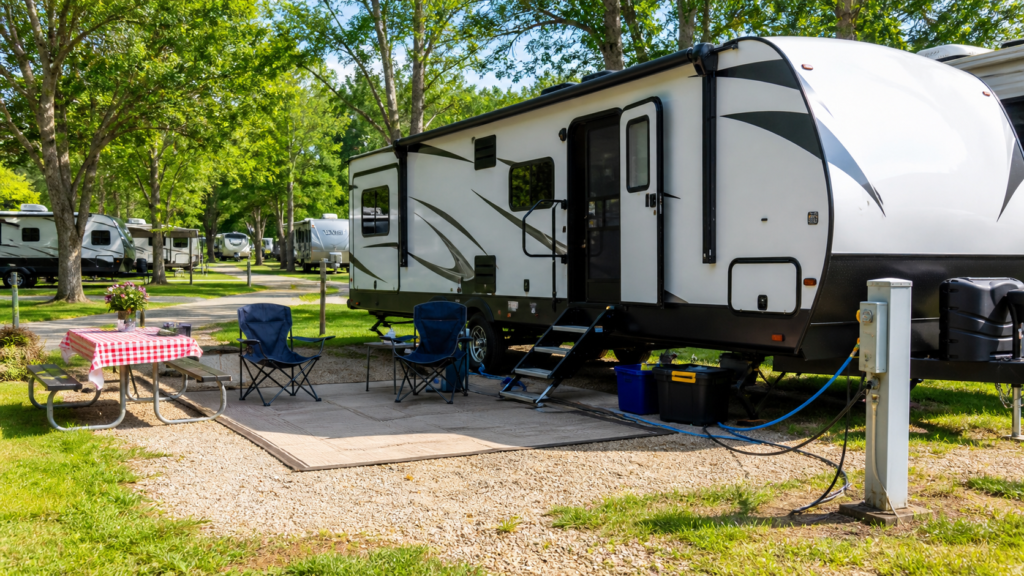
Campgrounds are shared spaces, so part of knowing what to expect at an RV campground is understanding that your site is only one small part of a larger environment. A good stay usually depends as much on awareness and courtesy as it does on gear.
- Quiet hours: Most campgrounds have them, and they are usually taken seriously. Keep voices, music, and generators under control.
- Speed limits: Drive slowly through the campground. Children, pets, bikes, and pedestrians are common.
- Fire safety: Use only approved fire pits if fires are allowed, and fully put fires out before leaving the site or going to bed.
- Trash and waste: Use the proper disposal areas and do not leave trash outside overnight.
- Respect shared space: Avoid cutting through other campsites and keep your setup contained within your own site whenever possible.
Being a good campground neighbor does not require anything complicated. In most cases, it comes down to staying aware of the people around you, keeping your site orderly, and following the posted rules without needing reminders.
Common First-Time Mistakes to Avoid
- Underestimating the size of your RV. Trees, posts, picnic tables, neighboring rigs, and tight turns feel much closer once you are at the campsite.
- Assuming the hookups will be obvious. Even simple connections can feel confusing if you did not confirm what the site provides ahead of time.
- Using the wrong hose or skipping key accessories. A water pressure regulator, proper sewer fittings, and the right cords matter more than many beginners expect.
- Trying to do everything too fast. Rushing usually leads to small mistakes that are easy to avoid with a slower setup routine.
- Ignoring tank planning. Know where the dump station is and have a rough idea of your water and waste usage before it becomes urgent.
Most beginner campground mistakes are not major disasters. They are usually small oversights that become irritating because they happen at the wrong moment. A little planning and a slower arrival routine solve a lot of first-trip stress.
What to Do if Something Goes Wrong
If something does not seem right, stop and work through one issue at a time. Most campground problems are manageable when you slow down enough to check the basics first.
- If the power trips, unplug nonessential appliances and reset the breaker before assuming something is seriously wrong.
- If water pressure seems weak, check for kinks, loose fittings, or a valve that is not fully open.
- If the RV still feels unstable, recheck your leveling blocks, wheel chocks, and stabilizers.
- If you are unsure about the sewer setup, stop before using it and ask campground staff for guidance.
- If backing in feels stressful, ask for a spotter or take another minute before trying again.
You do not need to know everything on your first trip. You just need to stay calm enough to solve one problem at a time. Campground staff see beginner questions all the time, and asking early is usually better than guessing.
Frequently Asked Questions
What should I bring for a first-time campground stay?
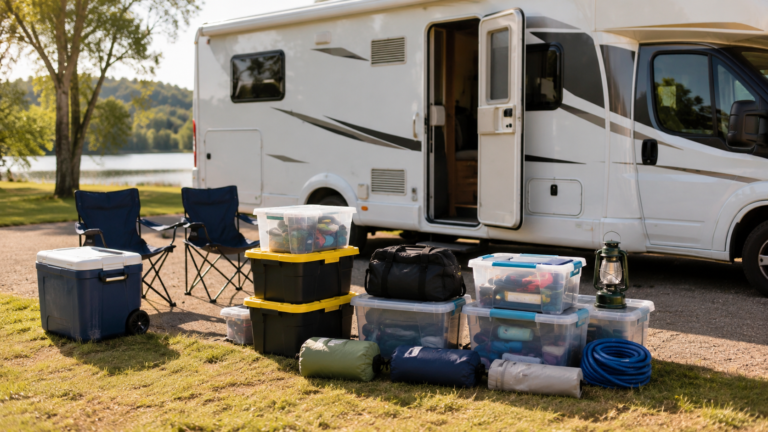
Bring your RV manuals, a basic tool kit, leveling gear, wheel chocks, a drinking-water-safe hose, sewer hose with proper fittings, and any important safety items. A few dependable basics make the first stay much easier.
How do I choose the right site as a beginner?
Look for a site with easy access, enough room for your RV, and the hookups you actually need. A simple site that is easy to enter and level is often the best choice for a first trip.
What if my generator is noisy or I am not sure when I can use it?
Check the campground rules as soon as you arrive. Many campgrounds limit generator use to certain hours, and some do not allow it at all in certain areas.
Is campground Wi-Fi usually reliable?
Sometimes, but not always. It is smart to expect slower internet than you may be used to and have a backup plan if internet access matters during your stay.
What is the best way to stay organized during the stay?
Use a simple routine. Keep setup gear in the same place, stay on top of basics like trash and tank checks, and do a quick site walk-around once or twice a day.
Conclusion
Your first RV campground stay is part learning experience and part confidence-building routine. You do not need to get every detail perfect. Focus on arriving calmly, checking in clearly, connecting your hookups carefully, and following a simple setup order that makes sense.
Once you understand what to expect at an RV campground, the whole experience starts to feel much more manageable. The goal is not to look like an expert on day one. The goal is to feel a little more comfortable each time you pull into a site.