RV Driving Tips for Beginners: Build Confidence Before Your First Trip
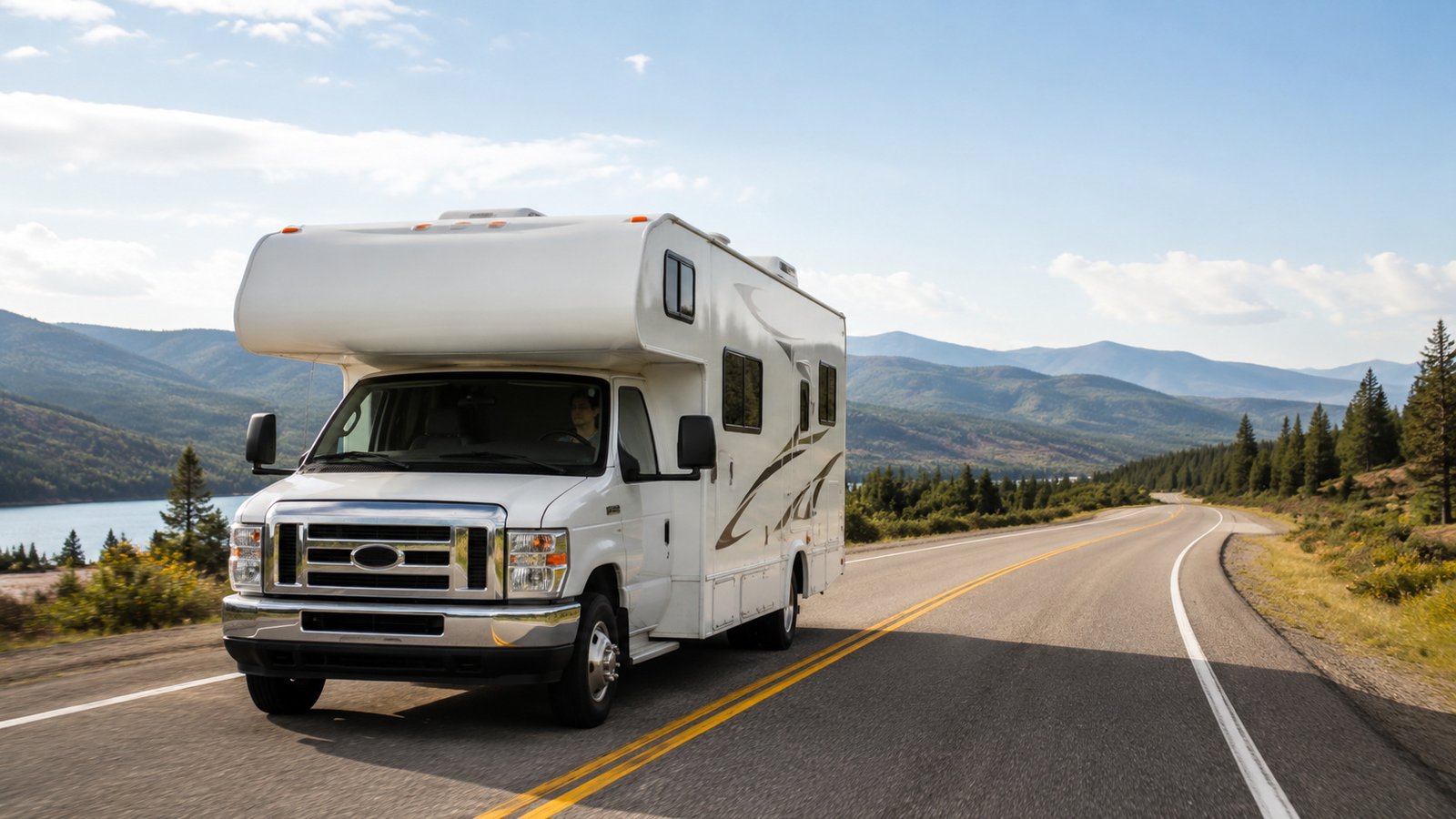
Driving an RV for the first time can feel intimidating, especially if you are used to a regular car, SUV, or pickup. The RV is taller, longer, heavier, and less nimble, which means you need more space, more patience, and a calmer pace.
These RV driving tips for beginners will help you understand what feels different, what to check before you leave, how to practice safely, and which beginner RV driving mistakes to avoid. Whether you are renting a motorhome, towing a travel trailer, or moving from tent camping into RV camping, the goal is simple: drive slowly, plan ahead, and build confidence one step at a time.
You do not need to feel fearless before your first RV trip. You need a simple plan, a few safe habits, and enough practice to understand how your RV responds.
Driving an RV for the First Time: What Beginners Should Expect
Driving an RV for the first time usually feels strange because everything happens on a larger scale. Turns feel wider, braking takes more planning, parking requires more space, and low-clearance obstacles matter in a way they may not have mattered before.
That does not mean RV driving has to be scary. It means you should expect a slower, more deliberate driving style. Give yourself permission to take your time, use easier routes, avoid tight spaces, and stop when you need to think through the next move.
- The RV will feel wider than your normal vehicle. Stay aware of lane position, shoulders, curbs, signs, and fuel pumps.
- The RV will need more room to turn. Slow down before the turn and watch your mirrors as the rear of the RV or trailer follows.
- The RV will take longer to stop. Look farther ahead and leave more space between you and the vehicle in front of you.
- Fuel stops and parking lots need more planning. Look for easy entry, easy exit, and enough clearance before pulling in.
- Feeling nervous is normal. Confidence comes from calm practice, not from rushing into difficult situations.
What Makes RV Driving Different From Driving a Car?
The biggest difference is that an RV needs more room for almost everything. It takes more space to turn, more time to stop, more attention to overhead clearance, and more planning before you pull into gas stations, parking lots, campgrounds, or narrow roads.
Before your first drive, learn your specific RV’s height, length, width, weight limits, mirror setup, and braking behavior. If you are renting, ask for a full walkthrough and write down the measurements before leaving the rental location. If you own the RV, check the owner’s manual, door placards, and manufacturer information instead of guessing.
| Driving habit | In a car | In an RV |
|---|---|---|
| Turning | You can usually turn tighter and correct quickly. | You need wider turns, slower speed, and more mirror awareness. |
| Stopping | You can often slow down in a shorter space. | You should leave extra room and brake earlier than you would in a car. |
| Clearance | Most parking lots, trees, and overhangs are not a concern. | You must watch for low branches, fuel station canopies, bridges, drive-throughs, and campground obstacles. |
| Parking | You can fit in standard spaces more easily. | You may need pull-through spaces, open lots, or a spotter to help guide you. |
| Route planning | You can usually follow any normal route. | You should check for RV-friendly roads, low-clearance warnings, fuel stops, and campground access roads. |
Do not compare your first RV drive to your normal car routine. A slower, more deliberate pace is part of safe RV driving.
Beginner RV Driving Checklist Before You Leave
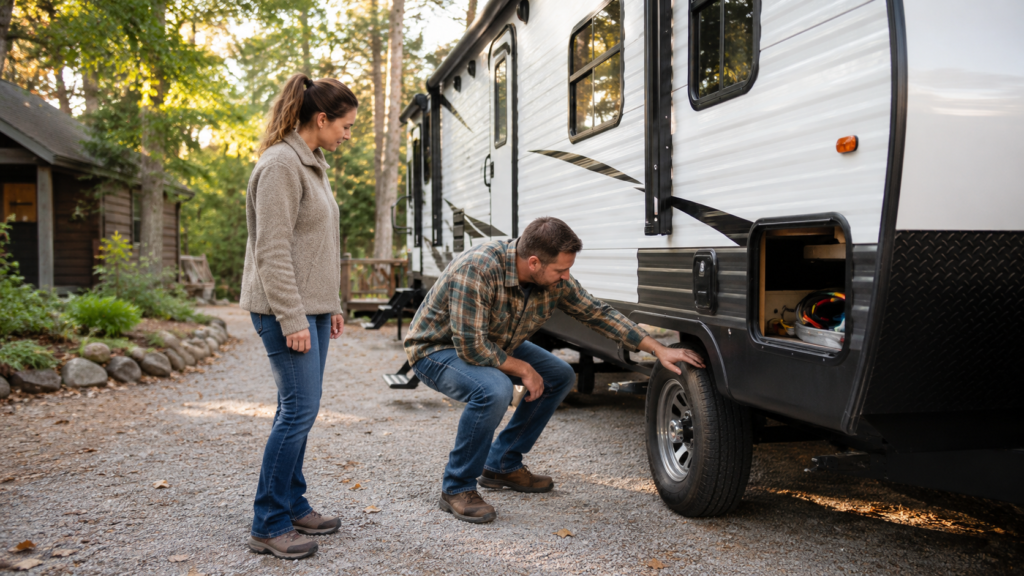
A calm pre-drive routine is one of the easiest ways to reduce stress. It helps you catch simple problems before they become stressful road issues, and it gives new drivers a repeatable process to follow before every trip.
Use this beginner RV driving checklist as a starting point, then adjust it for your RV, tow vehicle, trailer, rental instructions, and owner’s manual.
| Area to check | What to look for | Beginner note |
|---|---|---|
| Tires | Visible damage, uneven wear, and proper pressure for your RV. | Use the pressure listed for your specific RV or tow vehicle setup, not a guess. |
| Mirrors | Side mirrors adjusted so you can see along both sides of the RV or trailer. | Take time to adjust before moving. Poor mirror setup makes lane changes and backing harder. |
| Lights | Headlights, brake lights, turn signals, running lights, and trailer lights if towing. | Ask a passenger to help confirm everything works before leaving. |
| Exterior compartments | Storage doors, steps, awning, and access panels closed and secured. | Do a full walk-around before every departure, even from a campsite. |
| Inside the RV | Loose items stowed, cabinets latched, appliances secured, and slides retracted if required. | Anything loose can shift while driving, especially during turns or sudden stops. |
| Route | Road width, fuel stops, bridge clearance, campground entrance, and parking options. | Choose the easiest route, not just the shortest one. |
| Hitch or tow setup | Coupler, safety chains, breakaway cable, electrical connection, and weight distribution setup if used. | Follow your hitch, trailer, and tow vehicle instructions carefully. |
For renters, ask the rental company to show you how to check lights, close compartments, retract slides, and confirm the RV is ready to move. For owners, keep a printed checklist in the cab until the routine becomes familiar.
How to Practice Driving an RV Before Your First Trip
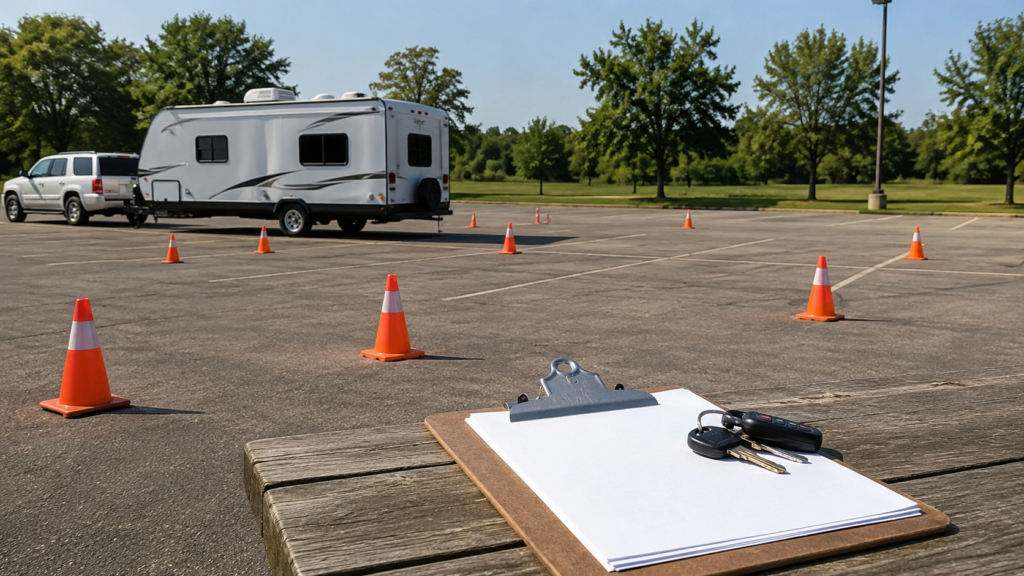
Your first time behind the wheel should not be on a crowded highway, a tight campground loop, or a busy fuel station entrance. Start somewhere open and low-pressure, such as an empty parking lot, a wide quiet road, or a practice area where you have room to move slowly.
The goal is not to master everything in one session. The goal is to learn how your RV feels when it starts, stops, turns, backs up, and responds to small steering changes.
| Practice skill | Where to practice | What to focus on |
|---|---|---|
| Starting and stopping | Open parking lot or quiet road | Smooth acceleration, gentle braking, and extra stopping room. |
| Wide turns | Empty lot with cones or visible parking lines | Turning slowly while watching mirrors and rear wheel path. |
| Lane positioning | Quiet multi-lane road | Keeping the RV centered without drifting toward the shoulder or center line. |
| Backing up | Open lot or wide driveway | Using mirrors, moving slowly, and stopping when unsure. |
| Fuel stop approach | Large open station or practice lot | Entering and exiting without tight turns or low-clearance surprises. |
| Campground arrival | Beginner-friendly campground or open practice space | Taking your time, using a spotter, and avoiding rushed decisions. |
If you are nervous, practice with a calm passenger who understands the goal: slow, clear communication and no pressure. A good practice session should leave you feeling more prepared, not more overwhelmed.
Starting, Braking, and Following Distance
RV driving rewards smooth movements. Quick acceleration, sudden braking, and sharp steering all feel more dramatic in a larger rig. When you drive gently, the RV has time to respond and you have more time to think.
Start Slowly
Ease onto the accelerator instead of jumping into traffic quickly. A loaded RV or tow setup may take longer to get moving, especially on hills, ramps, or rough campground roads. Give yourself room and wait for a safe opening.
Brake Earlier Than You Think You Need To
An RV is heavier than a typical passenger vehicle, so it should be treated with extra stopping space. Look farther ahead, slow down earlier for lights and turns, and avoid tailgating. In rain, wind, traffic, construction zones, or unfamiliar areas, add even more space.
Keep Your Eyes Far Ahead
New RV drivers often focus too close to the front bumper. Instead, scan farther down the road so you can notice brake lights, merging traffic, turns, hills, low branches, and lane closures early. The earlier you spot a problem, the easier it is to handle calmly.
Turning, Lane Changes, and Clearance
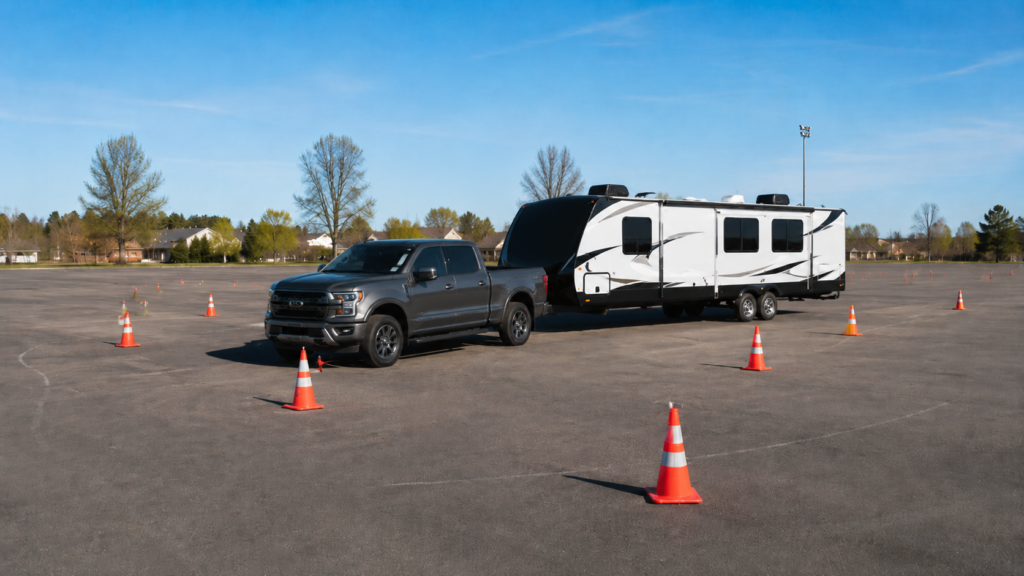
Turns and lane changes are where beginners usually notice the size of the RV the most. You are not just steering the front of the vehicle. You also need to think about where the rear wheels, trailer, bumper, and overhang will travel.
Take Wider, Slower Turns
Signal early, slow down before the turn, and use your mirrors to watch the side of the RV or trailer. Avoid cutting corners tightly around curbs, campsite posts, fuel pumps, rocks, or signs. If a turn looks too tight, stop before committing and reassess your path.
Check Mirrors Before Every Lane Change
Lane changes take more planning in an RV. Signal early, check both mirrors, watch for smaller vehicles in blind spots, and move over gradually when there is plenty of room. Do not let impatient drivers rush you into changing lanes before you are ready.
Know Your Height Before You Leave
Write your RV’s height somewhere easy to see from the driver’s seat. Remember that air conditioners, vents, antennas, and roof accessories can affect clearance. Be extra cautious around gas station canopies, drive-throughs, parking garages, low tree branches, bridges, and campground entrances.
If you are not sure you will clear something, do not guess. Stop in a safe place and choose another option.
Highway Driving, Hills, and Wind
Highways can be easier than tight city streets because there are fewer turns and stops, but they also require steady attention. Speed, wind, grades, and passing traffic can all affect how an RV feels.
Choose a Comfortable Speed
Drive at a speed that matches road conditions, traffic, weather, your RV, and posted limits. You do not need to keep up with fast traffic if it makes the RV feel less stable. Staying in the right lane when appropriate can reduce pressure and make the drive feel calmer.
Use Extra Care on Hills and Grades
On long climbs, your RV may slow down. That is normal. Use the appropriate gear or tow mode if your vehicle has one, and follow your owner’s manual for your specific setup.
On downhills, control speed early instead of waiting until the RV is moving too fast. Use lower gears, engine braking, tow/haul mode, or other manufacturer-recommended features when available. Avoid riding the brakes for long periods, and pull off safely if you need a break.
Respect Wind and Passing Trucks
Crosswinds and large passing vehicles can make an RV feel like it is being pushed. Keep both hands on the wheel, reduce speed if needed, and avoid sudden steering corrections. If wind makes the drive feel unsafe, find a safe place to stop and wait for better conditions.
Backing Up, Parking, and Hitching Safely
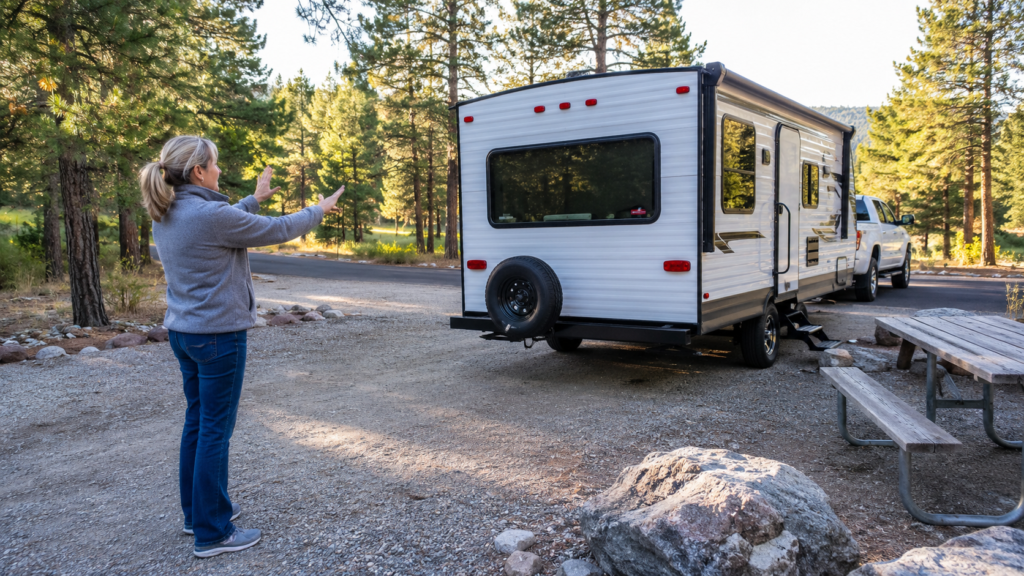
Backing up is one of the most intimidating parts of RV camping for beginners, but it becomes much easier when you slow everything down. The safest approach is to move a little, check your position, and stop whenever you are unsure.
Use a Spotter When You Can
A spotter can help you avoid posts, trees, picnic tables, hookups, rocks, and low branches that may be hard to see from the driver’s seat. Agree on simple hand signals or use phones on speaker before you start. If you lose sight of your spotter, stop immediately.
Get Out and Look
There is nothing wrong with stopping, setting the brake, and walking around the RV. In fact, it is one of the best beginner habits you can build. A quick look can prevent damage and help you understand where the RV is in relation to the campsite.
Hitch and Unhitch With a Checklist
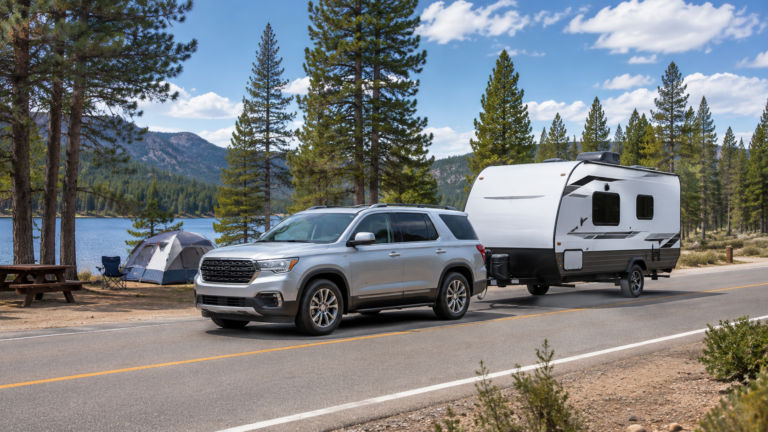
If you tow a travel trailer, do not rely on memory when hitching up. Follow the instructions for your hitch, trailer, and tow vehicle. Confirm the coupler is secured, safety chains are crossed if required for your setup, the breakaway cable is connected, lights work, and the jack is raised before driving away.
At the campsite, chock wheels and follow a safe setup order before unhitching. Campgrounds, slopes, hitch types, and RV models vary, so use your owner’s manual and campground rules as your final guide.
What to Do If You Feel Overwhelmed While Driving
Feeling overwhelmed does not mean you are bad at RV driving. It usually means you need more space, more time, or a simpler decision. The safest beginner habit is to slow the situation down before it gets worse.
- Pull over safely when you need to reset. Choose a wide shoulder, rest area, parking lot, or other safe place instead of trying to solve stress while moving.
- Skip tight turns if you are unsure. It is better to go around the block, choose another entrance, or ask for help than to force a turn.
- Let impatient drivers pass. Do not speed up or make risky moves because someone behind you is frustrated.
- Use calm communication. Ask passengers to keep directions simple and avoid talking over each other during turns, parking, or backing.
- Make the first trip easy on purpose. Choose shorter driving days, daylight arrivals, pull-through campsites if available, and routes with simple fuel stops.
Confidence grows from repeated calm experiences. Your first few trips are not the time to prove anything. They are the time to build safe routines.
Beginner RV Driving Mistakes to Avoid
Most beginner RV driving mistakes come from rushing, guessing, or treating the RV like a normal car. Watch for these common problems before your first trip.
- Mistake: Forgetting your RV height. Fix: Write your RV’s total height somewhere visible from the driver’s seat and check it before entering areas with low-clearance risks.
- Mistake: Turning like you are driving a car. Fix: Slow down, swing wider, and watch your mirrors through the entire turn.
- Mistake: Following too closely. Fix: Give yourself more braking room than you think you need, especially in traffic, rain, wind, or unfamiliar areas.
- Mistake: Skipping the walk-around. Fix: Check compartments, steps, awnings, vents, slides, and campsite items before every departure.
- Mistake: Choosing tight fuel stops. Fix: Look for stations with easy entry, easy exit, wide lanes, and enough overhead clearance.
- Mistake: Backing up too quickly. Fix: Move slowly, use a spotter when possible, and stop whenever you are unsure.
- Mistake: Ignoring weight and loading limits. Fix: Check your owner’s manual and weight ratings for your specific RV and tow setup.
- Mistake: Arriving after dark on your first trip. Fix: Plan your route so you can arrive in daylight and see the campsite clearly.
Beginner-Friendly Gear That Can Make RV Driving Easier
You do not need to buy every RV accessory before your first trip. Start with tools that support safety, visibility, communication, and basic road confidence. Match any gear to your RV type, tow setup, and manufacturer instructions.
- Printed pre-drive checklist: A simple checklist helps you avoid skipping steps when you are nervous or distracted.
- Tire pressure gauge: Choose one that works for your RV or tow vehicle tires and use it as part of your pre-trip routine.
- Mirror extensions: Helpful for some towing setups when factory mirrors do not provide enough visibility.
- Backup camera: Useful for many RVs and trailers, but it should support your mirrors and spotter, not replace them.
- Two-way radios or phone communication: Helpful for backing into campsites when a spotter is guiding you.
- RV-safe route planning app or tool: Useful for checking clearance, road restrictions, and campground access, but still verify important details.
- Emergency roadside kit: A basic kit can help with minor roadside issues while you wait for help or assess the situation safely.
Beginner drivers benefit most from gear that reduces confusion or improves safety, not from buying every gadget at once.
Related Beginner RV Articles
Once you feel more comfortable with the driving basics, these beginner RV topics are natural next steps:
- RV Safety Checklist Before Hitting the Road
- Towing a Travel Trailer for the First Time
- How to Back an RV Into a Campsite
- Common Beginner RV Driving Mistakes
- How to Plan Your First RV Camping Trip
- Essential RV Gear for Beginners
RV Driving Tips for Beginners FAQ
What are the best RV driving tips for beginners?
The best RV driving tips for beginners are to know your RV’s height and length, complete a pre-drive checklist, practice in an open area, take wider turns, brake earlier, leave extra following distance, and use a spotter when backing up. Keep your first routes simple and avoid rushing.
Is driving an RV for the first time hard?
Driving an RV for the first time can feel hard because the RV is larger, slower to stop, and harder to maneuver than a car. It becomes easier when you practice in a low-pressure area, plan beginner-friendly routes, and give yourself more room for turns, braking, and parking.
What beginner RV driving mistakes should I avoid?
The biggest beginner RV driving mistakes are forgetting the RV’s height, turning too sharply, following too closely, skipping the walk-around, choosing tight fuel stops, backing up too quickly, and arriving at a campground after dark on your first trip.
Do I need a special license to drive an RV?
License rules depend on where you live and the size or weight of your RV. Many smaller RVs can be driven with a standard driver’s license, but larger motorhomes or certain towing setups may have different requirements. Check your local DMV or transportation authority before your trip.
How can I practice driving an RV before my first trip?
Start in an empty parking lot or quiet open area. Practice starting, stopping, wide turns, mirror checks, lane positioning, and backing up. Once that feels comfortable, move to quiet roads before trying busier highways, fuel stops, or campground roads.
How do I get more confident driving an RV?
Build confidence by repeating simple driving routines. Use a checklist, practice in open spaces, choose easy routes, drive during daylight, take breaks when needed, and avoid situations that feel too tight or rushed. Each calm drive helps the RV feel more familiar.
Should beginners use cruise control in an RV?
Cruise control may be helpful on long, flat, calm stretches of road, but beginners should use it carefully. Turn it off in hills, heavy traffic, rain, wind, construction zones, or any situation where you need more direct control. Follow your RV or tow vehicle manual for specific guidance.
What is the safest way to back up an RV?
The safest way is to go slowly, use mirrors, use a spotter when possible, and stop whenever you are unsure. Agree on signals before backing up, keep the spotter visible, and get out to look if the space is tight or confusing.
How can I avoid low-clearance problems?
Know your exact RV height, including roof-mounted equipment, and keep that number visible from the driver’s seat. Plan RV-friendly routes, watch for clearance signs, avoid drive-throughs and parking garages, and be cautious around gas station canopies and low tree branches.
Final Thoughts on Building RV Driving Confidence
RV driving confidence does not come from rushing into a difficult trip. It comes from preparation, practice, and calm decision-making. Learn your RV’s size, build a pre-drive checklist, practice in low-pressure places, and give yourself more room than you think you need.
Your first RV drive may feel awkward, and that is normal. Keep your route simple, arrive in daylight, use a spotter when backing up, and stop when you need to reset. With each careful drive, the RV will feel less intimidating and more like the start of a trip you are ready to enjoy.