Towing a Travel Trailer for the First Time: Beginner Tips and Checklist
Towing a travel trailer for the first time can feel like a lot at once. You are thinking about the hitch, the weight, the mirrors, the brakes, the turns, and whether the camper is going to feel steady behind you.
The good news is that first-time towing gets much easier when you break it into simple steps. You do not need to become an expert overnight. You need to understand your towing numbers, hitch up carefully, check the basics before you leave, and practice slowly before you drive into traffic.
This beginner guide walks you through the essentials of towing a travel trailer for the first time, including beginner towing tips, a travel trailer towing checklist, common mistakes, and what to do if the trailer does not feel right on the road.
Start With the Most Important Rule: Do Not Guess
The biggest mistake new RV owners make is assuming that because a vehicle has a hitch, it can safely tow any camper that fits on the ball. Safe towing depends on the full combination: the tow vehicle, the trailer, the hitch, the cargo, passengers, water, propane, and everything packed inside.
Before your first time towing a camper, look up the towing information in your tow vehicle owner’s manual and your travel trailer owner’s manual. You should also check the labels on the tow vehicle and trailer. If the numbers are confusing or close to the limits, get help from a qualified RV technician, hitch installer, dealer, or public scale before taking a trip.
For beginners, the safest mindset is simple: stay comfortably within your rated limits, load the trailer thoughtfully, and stop to recheck anything that feels loose, uneven, or unstable.
Know Your Towing Numbers Before You Leave
Travel trailer towing starts with weight. A trailer that is too heavy, loaded unevenly, or matched with the wrong hitch can be harder to steer, stop, and control. A properly matched setup feels calmer and gives you more confidence behind the wheel.
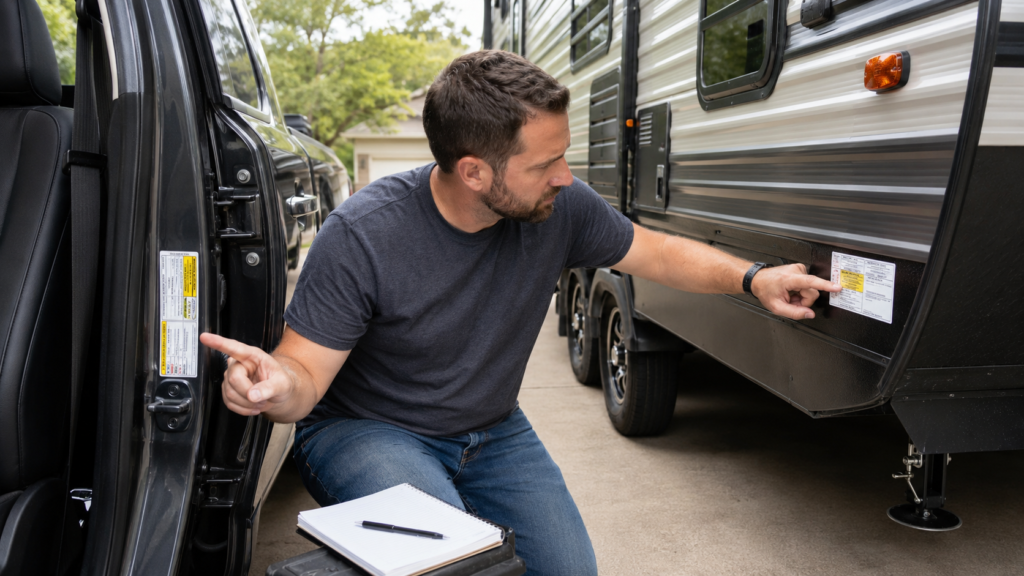
Here are the towing terms beginners should understand before hitching up.
| Term | What It Means | Beginner Note |
|---|---|---|
| Tow rating | The maximum trailer weight your vehicle is rated to tow. | Check your owner’s manual, not just online guesses. |
| Payload | The weight your tow vehicle can carry, including people, cargo, hitch equipment, and trailer tongue weight. | Payload often becomes the limiting number for RV beginners. |
| GVWR | Gross Vehicle Weight Rating, or the maximum allowed weight of the vehicle or trailer when loaded. | Your loaded trailer should not exceed the trailer GVWR. |
| GCWR | Gross Combined Weight Rating, or the maximum allowed weight of the tow vehicle and trailer together. | This includes the vehicle, trailer, passengers, fuel, and gear. |
| GAWR | Gross Axle Weight Rating, or the maximum weight each axle can carry. | Do not overload the tow vehicle or trailer axles. |
| Tongue weight | The amount of trailer weight pressing down on the hitch. | Too little or too much tongue weight can cause handling problems. |
| Dry weight | The trailer’s weight before you add gear, food, water, propane, and supplies. | Do not plan only around dry weight. Use loaded weight. |
If you are towing a travel trailer for the first time, do not rely only on the brochure weight. Campers get heavier quickly once you add bedding, dishes, tools, chairs, food, water, batteries, propane, and outdoor gear. When possible, weigh your loaded setup at a public scale so you know what you are actually towing.
Numbers to Check Before Your First Tow
| Item | What to Check | Why It Matters |
|---|---|---|
| Tow vehicle | Tow rating, payload, GCWR, tire pressure, and towing equipment requirements. | The vehicle has to handle the loaded trailer safely. |
| Travel trailer | GVWR, tire pressure, cargo capacity, and loaded weight. | The trailer should not be overloaded. |
| Hitch | Hitch rating, ball size, receiver rating, and weight distribution requirements. | Every hitch part must be rated for the job. |
| Brakes | Trailer brake type, brake controller settings, and state requirements. | Stopping distance increases when towing. |
| Mirrors | Clear view down both sides of the trailer. | You need visibility for lane changes and turns. |
Load the Trailer for Better Stability
How you pack your camper matters. A travel trailer that is overloaded, rear-heavy, or uneven from side to side can feel unstable. A better beginner habit is to keep heavy items low, secure loose cargo, and avoid piling weight at the far back of the trailer.
Your trailer and hitch instructions should guide the exact loading requirements for your setup. In general, you want the trailer to be balanced side to side, stable front to back, and secured so items cannot slide around while driving.
- Pack heavy items low, not in overhead cabinets.
- Keep cargo secured so it cannot shift during braking or turns.
- Avoid loading the rear of the trailer heavily unless your manual specifically allows it.
- Do not exceed the trailer GVWR or axle ratings.
- Do not exceed your tow vehicle payload, hitch rating, or tire ratings.
- Recheck balance if you add water, bikes, generators, coolers, or extra cargo.
If the trailer sits noticeably nose-high, nose-low, or uneven after hitching, stop and check your setup. Many travel trailer combinations tow best when the trailer is level or set according to the trailer manufacturer’s instructions.
How to Hitch a Travel Trailer Safely
Hitching up is one of the most important skills to learn before towing a travel trailer for the first time. Give yourself plenty of time, work in a calm area, and follow the instructions for your exact hitch, coupler, safety chains, brake controller, and breakaway system.
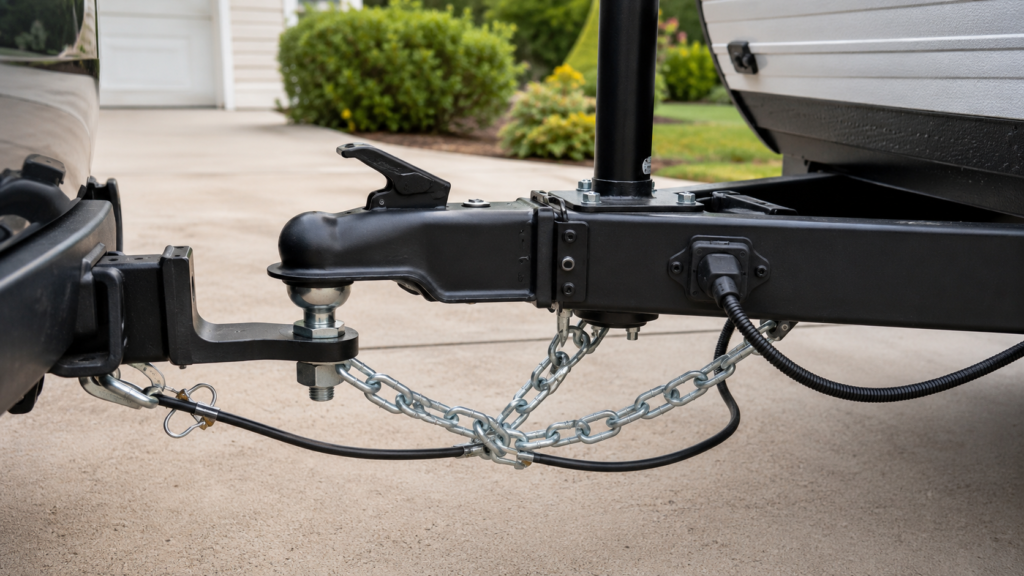
Use this table as a beginner-friendly hitching checklist, but always follow your owner’s manuals and hitch manufacturer instructions first.
| Step | What to Do | Beginner Tip |
|---|---|---|
| Line up | Back the tow vehicle slowly until the hitch ball is under the coupler. | Use a spotter or backup camera if you have one. |
| Lower coupler | Lower the trailer coupler fully onto the correct-size hitch ball. | The coupler should be seated, not just resting on top. |
| Latch and pin | Close the coupler latch and secure it with the correct pin or lock. | Do not tow with an unpinned coupler latch. |
| Attach chains | Connect safety chains with enough slack for turns, but not enough to drag. | Many setups use crossed chains under the tongue. |
| Connect breakaway cable | Attach the breakaway cable to the tow vehicle as directed by the manufacturer. | Do not wrap it around the safety chains unless your instructions say to. |
| Plug in wiring | Connect the trailer wiring plug and make sure it is secure. | Keep the cable off the road and loose enough for turns. |
| Raise jack | Raise and secure the tongue jack and any stabilizers before driving. | Stabilizers are for camping, not towing. |
| Set hitch system | Install weight distribution bars or sway control if your setup uses them. | Follow the hitch instructions exactly. |
| Test lights | Check brake lights, turn signals, running lights, and hazards. | Have another person stand behind the trailer if possible. |
| Test brakes | Confirm the trailer brakes and brake controller are working if equipped. | Practice low-speed stops before entering traffic. |
Travel Trailer Towing Checklist Before You Drive
A simple travel trailer towing checklist is one of the best tools for beginners. Use it before every trip, even after you have more experience. The point is not to be nervous. The point is to make towing repeatable.
| Item | What to Check | Why It Matters |
|---|---|---|
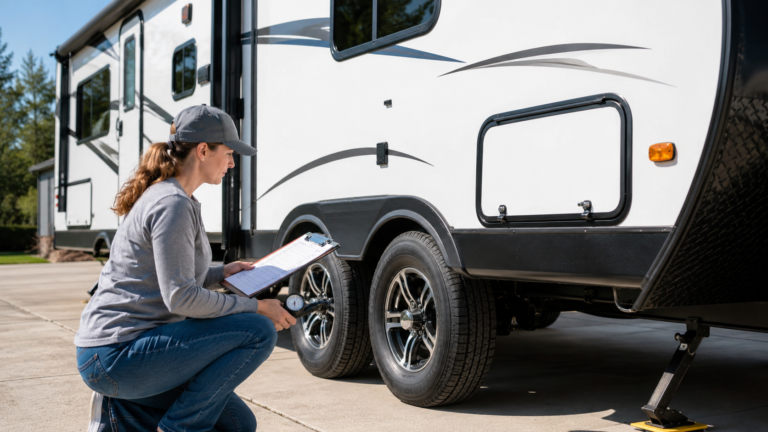
| Tires | Check tow vehicle and trailer tire pressure when cold, plus visible damage or uneven wear. | Improper tire pressure can affect handling and tire safety. |
| Lug nuts | Confirm lug nuts are tightened according to the manufacturer’s torque instructions. | Loose wheels are dangerous and preventable. |
| Hitch connection | Check coupler, latch pin, hitch pin, ball mount, and weight distribution parts. | The trailer must be fully secured to the tow vehicle. |
| Safety chains | Chains connected, not dragging, with enough slack for turns. | They help keep the trailer tongue from dropping if separation occurs. |
| Breakaway cable | Connected to the tow vehicle and routed correctly. | It activates trailer brakes if the trailer separates on equipped trailers. |
| Wiring | Plug secure, cable clear of road, and enough slack for turns. | Damaged wiring can disable lights or brakes. |
| Lights | Brake lights, running lights, turn signals, and hazard lights working. | Other drivers need to see what you are doing. |
| Brakes | Brake controller connected and adjusted if your trailer has electric brakes. | The trailer should help stop the combination smoothly. |
| Mirrors | Side mirrors adjusted so you can see along both sides of the trailer. | You need extra visibility for merging and turning. |
| Cargo | Cabinets latched, loose items secured, steps in, doors locked, and vents closed. | Shifting cargo can affect balance and cause damage. |
| Jacks and chocks | Tongue jack raised, stabilizers up, wheel chocks removed and stored. | Camping gear should never be left deployed while towing. |
| Route | Check road restrictions, fuel stops, campground arrival route, and low-clearance concerns. | Planning reduces last-minute lane changes and stressful turns. |
Do one final walkaround before pulling away. Look under the trailer, around the tires, at the hitch, and along both sides of the camper. This quick habit can catch a missed chock, loose cord, open compartment, or forgotten stabilizer.
Beginner Towing Tips for Your First Drive
Your first drive with a travel trailer should not be a long highway trip through heavy traffic. Start with a short practice drive in a quiet area. An empty parking lot is ideal because you can learn how the trailer responds without pressure from other drivers.
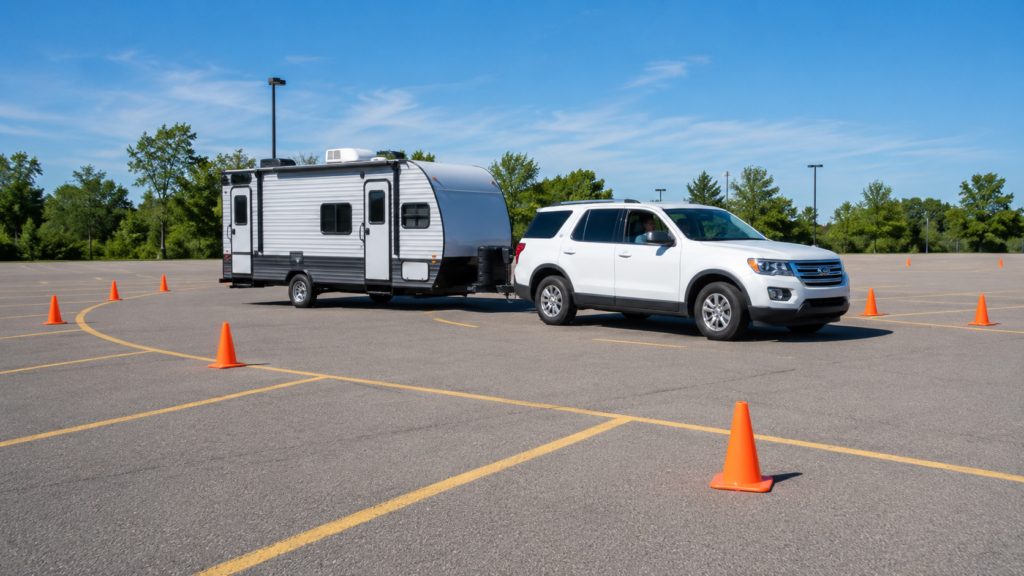
- Start slowly and avoid sudden steering, braking, or acceleration.
- Leave much more stopping distance than you would in a regular vehicle.
- Signal earlier than normal so other drivers have time to react.
- Make wider turns because the trailer tires track inside the tow vehicle’s path.
- Use your mirrors often and make sure you can see traffic beside the trailer.
- Keep a steady pace and avoid rushing through lane changes.
- Slow down before rough roads, railroad crossings, potholes, and campground entrances.
- Pull over safely if something feels wrong instead of hoping it improves.
When you are towing a travel trailer for the first time, calm driving is safer than confident-looking driving. Smooth inputs help the trailer stay settled behind you.
Practice These Skills Before Your First Camping Trip
- Drive in a straight line and feel how the trailer follows.
- Make slow left and right turns in a wide area.
- Practice stopping from low speeds using gentle braking.
- Adjust mirrors and learn what you can and cannot see.
- Back up a short distance in a straight line.
- Pull forward and realign when the trailer gets crooked.
- Practice parking where you have room to correct mistakes.
What to Do in Common Towing Situations
Travel trailer towing feels different because your vehicle is longer, heavier, and slower to respond. Use this quick guide to handle common beginner towing situations with less stress.
| Situation | What to Do | Beginner Tip |
|---|---|---|
| Trailer sway | Ease off the accelerator, keep steering steady, and slow down gradually. | If you have an electric brake controller and sway is excessive, use the manual trailer brake control as instructed. |
| Crosswinds | Reduce speed, hold the wheel firmly, and avoid sudden lane changes. | Stop somewhere safe if wind makes the trailer feel unstable. |
| Passing vehicles | Expect a push-pull feeling from large trucks and keep a steady path. | Do not overcorrect when air pressure changes around you. |
| Downhill grades | Slow down early and use the gear or tow mode recommended by your vehicle manufacturer. | Avoid riding the brakes for long periods. |
| Uphill grades | Let the vehicle work steadily and avoid forcing aggressive acceleration. | Watch temperature gauges and follow your owner’s manual. |
| Fuel stops | Choose stations with easy entry, wide turns, and clear exits. | Beginner RVers should avoid tight pumps when possible. |
| Wrong turn | Stay calm and look for a safe place to continue forward, turn around, or pull off. | Do not force a tight turn or back up in traffic. |
If sway happens more than once, do not ignore it. Stop in a safe place and recheck speed, tire pressure, cargo balance, hitch setup, and weight distribution. If you cannot find the cause, get professional help before continuing.
Backing Up and Parking at the Campsite
Backing up is often the most stressful part of first time towing a camper. That is normal. The trailer reacts differently than a car, and small steering movements can make a big difference.
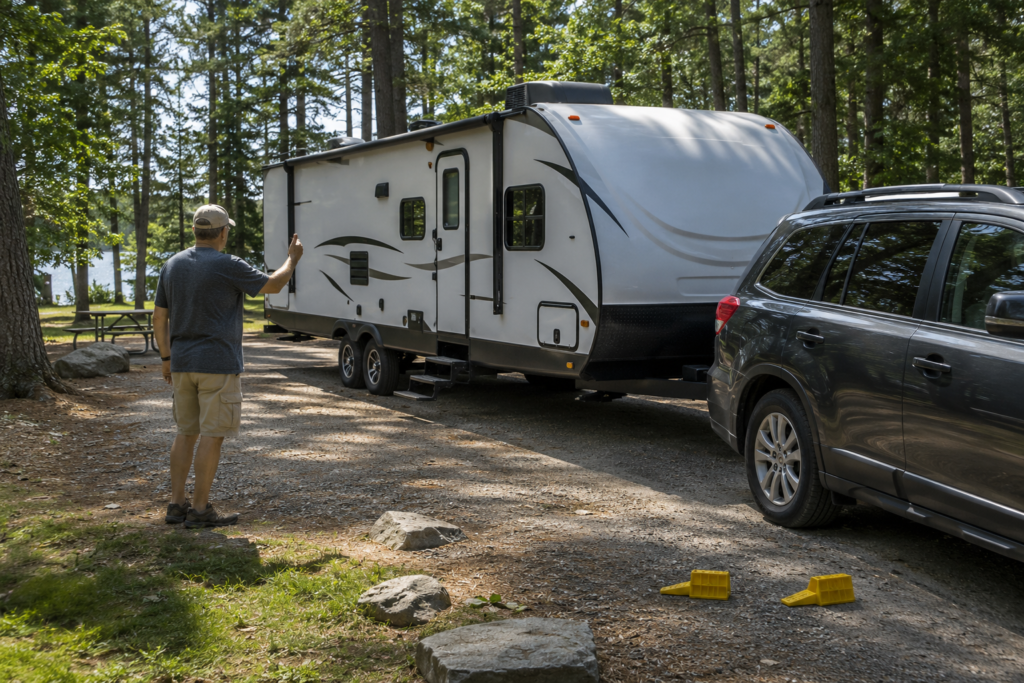
- Use a spotter whenever possible, and agree on hand signals before you start.
- Ask the spotter to stand where you can see them, never directly behind the trailer.
- Back up slowly and make small steering corrections.
- Put your hand at the bottom of the steering wheel to make steering feel more intuitive.
- If the trailer angle gets too sharp, stop, pull forward, and reset.
- Do not let other campers rush you. Taking your time is safer.
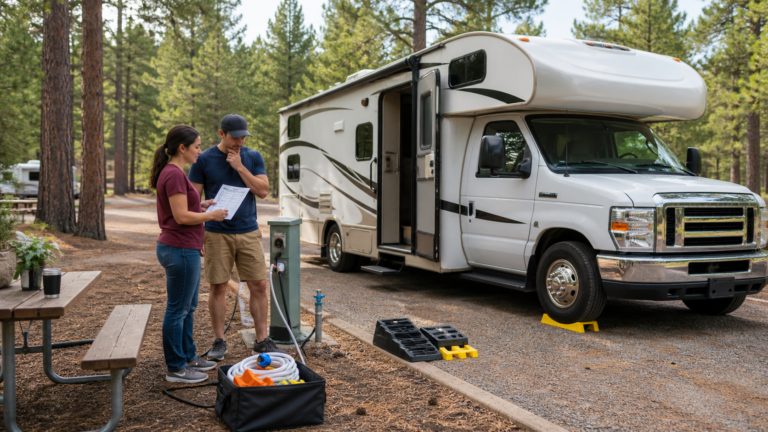
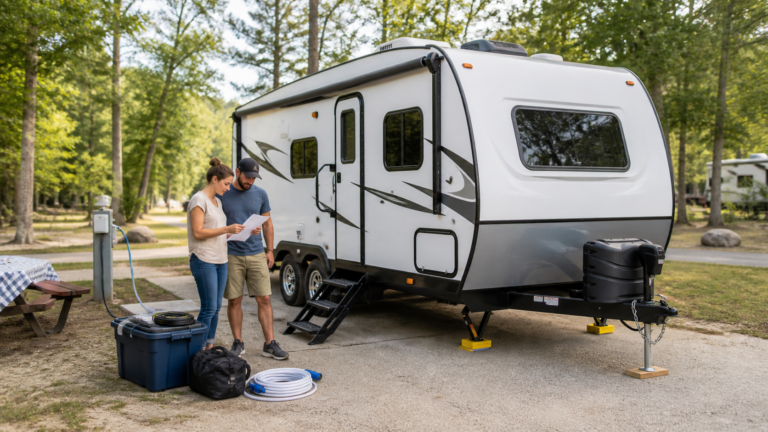
Once you are parked, chock the trailer wheels before unhitching. If the campsite is sloped, take extra care and follow your RV setup process in the correct order. Stabilizer jacks are not a substitute for wheel chocks, and they are not designed to hold the trailer in place while you unhitch.
Common Beginner Towing Mistakes to Avoid
Most beginner towing mistakes come from rushing, guessing, or skipping small checks. Use this table as a quick reminder before your first few trips.
| Mistake | Better Beginner Habit |
|---|---|
| Assuming dry weight is the real towing weight. | Plan around the loaded trailer weight and verify with a scale when possible. |
| Ignoring payload. | Count passengers, cargo, hitch equipment, and tongue weight against payload. |
| Skipping the light check. | Test brake lights, turn signals, running lights, and hazards before every drive. |
| Loading heavy items in the rear of the trailer. | Keep heavy items low and secured, and follow trailer loading guidance. |
| Driving too fast for conditions. | Use moderate speeds and slow down for wind, rough roads, traffic, and curves. |
| Making sharp last-minute turns. | Plan turns early and give the trailer room to track behind you. |
| Trying to save a bad backing angle. | Pull forward, straighten out, and try again. |
| Unhitching before chocking the wheels. | Chock the trailer wheels first, especially on any slope. |
| Continuing when the trailer feels unstable. | Pull over safely and check the setup before going farther. |
A Simple First-Time Towing Practice Plan
Before your first real camping trip, plan a short shakedown tow. This is a low-pressure practice trip where the goal is not distance. The goal is learning how your tow vehicle and trailer feel together.
Day Before Practice
- Read the towing sections of your tow vehicle and trailer manuals.
- Check tire pressures, hitch parts, lights, brakes, and cargo.
- Confirm your route has wide roads and easy places to stop.
- Pack only what you need so you can focus on towing.
Practice Drive
- Start in a quiet parking lot.
- Practice wide turns, gentle braking, and mirror checks.
- Drive a short loop on calm roads.
- Stop and inspect the hitch, tires, lights, and cargo.
- Return home before you feel tired or rushed.
First Camping Trip
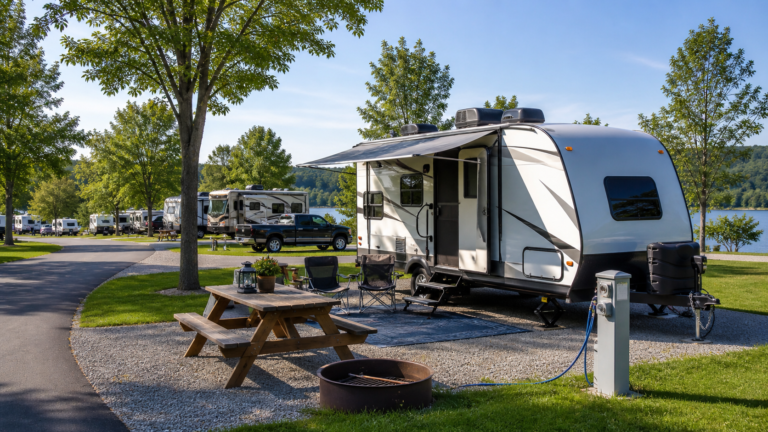
- Choose a campground close to home.
- Arrive during daylight.
- Pick a site with easy access if possible.
- Give yourself extra time for fuel stops, turns, backing, and setup.
- Write down anything you want to adjust before the next trip.
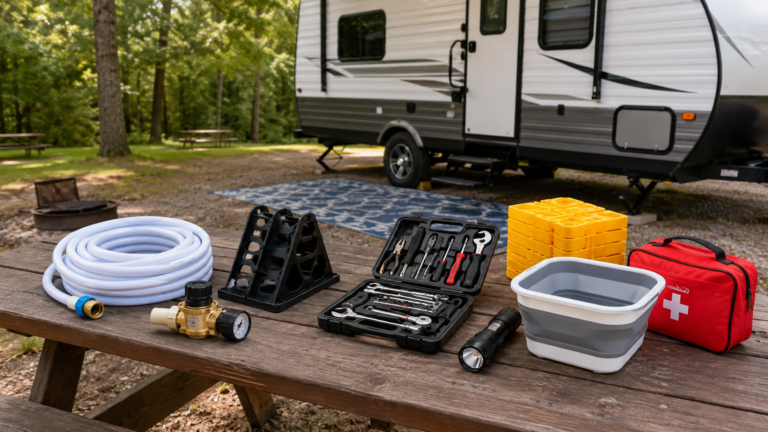
What Gear Helps New Travel Trailer Owners Tow More Confidently?
You do not need to buy every RV accessory before your first trip, but a few towing-related items can make the experience easier and safer. Match all gear to your specific tow vehicle, trailer, and manufacturer instructions.
- Proper hitch equipment: Use the hitch type, ball size, receiver rating, and weight distribution setup required for your trailer.
- Extended towing mirrors: Helpful when the trailer is wider than the tow vehicle or blocks your side visibility.
- Tire pressure gauge: Use it before trips to check tow vehicle and trailer tires when cold.
- Wheel chocks: Essential for parking, campsite setup, and unhitching.
- Torque wrench: Useful if your trailer manual calls for checking lug nut torque.
- Backup camera or spotter plan: A camera can help, but it does not replace careful backing and clear communication.
- Roadside kit: Include items appropriate for your rig, route, weather, and comfort level.
For safety-related gear like hitches, brake controllers, tires, and weight distribution systems, avoid guessing. Use manufacturer instructions or professional installation when needed.
FAQ About Towing a Travel Trailer for the First Time
Is towing a travel trailer hard for beginners?
Towing a travel trailer is not impossible for beginners, but it does require patience and preparation. The hardest parts are usually understanding weight limits, making wider turns, backing up, and staying calm in traffic. A short practice drive helps a lot.
How fast should I drive when towing a travel trailer?
Drive at a moderate speed that matches your owner’s manual, tire ratings, road conditions, posted limits, and your comfort level. Trailer sway is more likely as speed increases, so beginners should avoid rushing and slow down in wind, rain, traffic, construction, and rough roads.
Do I need a weight distribution hitch?
Maybe. It depends on your tow vehicle, trailer weight, tongue weight, hitch rating, and manufacturer recommendations. Many travel trailer setups use a weight distribution hitch to improve the way weight is shared across the tow vehicle and trailer axles, but you should follow the requirements for your specific setup.
What should I do if my trailer starts to sway?
Stay calm, hold the steering wheel steady, ease off the accelerator, and slow down gradually. Avoid sudden steering or hard braking with the tow vehicle. If your trailer has electric brakes and sway is excessive, use the manual trailer brake control according to your brake controller instructions. Then stop somewhere safe and check your speed, tire pressure, hitch setup, and load balance before continuing.
Can I tow with full fresh water tanks?
Only if your trailer and tow vehicle ratings allow it. Water adds weight quickly, and it counts toward your trailer’s loaded weight and cargo capacity. Check your owner’s manual and weight labels before traveling with full tanks.
Do I need a special license for towing a camper?
Many beginner travel trailer setups can be towed with a regular driver’s license, but rules vary by location, weight, length, and trailer type. Check your state or province requirements, and check the rules for any states you plan to drive through.
What is the best first trip after buying a travel trailer?
The best first trip is close to home, easy to reach, and not rushed. Choose a campground with wide roads, daylight arrival, and a simple route. A one- or two-night shakedown trip is better than a long first trip through heavy traffic or mountain roads.
Related Beginner RV Articles
- RV Driving Tips for Beginners
- RV Safety Checklist Before Hitting the Road
- How to Back an RV Into a Campsite
- RV Campsite Setup Checklist for Beginners
- Essential RV Gear for Beginners
Final Thoughts on Towing a Travel Trailer for the First Time
Towing a travel trailer for the first time is much less intimidating when you treat it as a step-by-step process. Learn your numbers, hitch carefully, use a travel trailer towing checklist, practice slowly, and give yourself more room than you think you need.
The goal is not to look like a professional on your first trip. The goal is to be prepared, cautious, and willing to stop and recheck anything that does not feel right. With a short practice drive and a calm first camping trip, beginner towing starts to feel much more manageable.