What Not to Pack for Your First RV Trip: A Beginner RV Essentials Checklist That Keeps It Simple
If you are wondering what to pack for your first RV trip, the easiest answer is this: start with the essentials, then stop before your cabinets are full of “just in case” items. Many first-time RV campers overpack because an RV feels like a tiny house on wheels. In reality, the best first RV trip essentials are the ones you will actually use, store safely, and reach without digging through clutter.
This guide is built to help you pack smarter, not heavier. You will learn what you can usually leave at home, what belongs on a beginner RV essentials checklist, and how to use a practical RV camping checklist without stuffing your rig with gear you do not need. The goal is simple: less stress, less clutter, and a more comfortable first trip.
Start With Essentials, Not “What If” Gear
The fastest way to overpack is to prepare for every possible situation. For a first RV trip, you do not need to build the perfect long-term setup. You need enough to sleep comfortably, cook a few simple meals, stay clean, handle basic campsite tasks, and travel safely. Everything else can wait until you know your habits.
A good beginner rule is to pack for the trip you planned, not the one you might take someday. A weekend at a full-hookup campground calls for a very different loadout than a long off-grid trip. If you rented your RV, also check the rental inventory and walkthrough notes before buying or packing duplicates.
| Bring Now | Leave Home for Later | Why |
|---|---|---|
| Bedding, toiletries, medications, weather-appropriate clothes | Extra décor, duplicate blankets, backup pillows for every bed | Comfort matters, but bulky extras fill storage fast |
| Basic cookware, plates, cups, utensils | Specialty gadgets and duplicate kitchen tools | Simple meals need less gear than most beginners expect |
| Important documents, keys, chargers, flashlight | Every cable, adapter, and gadget you own | You only need what you will actually use |
| RV-specific hookup items your rig requires | Duplicate hoses, cords, and accessories you have not confirmed you need | RV gear should match your setup, not guesswork |
| A short first-trip food plan | A fully stocked pantry | Food is easy to restock, but hard to store in a small RV |
What You Can Usually Leave at Home
When beginners ask for an RV camping checklist, they often expect a giant list. A better checklist helps you avoid bringing things that make the RV crowded, heavy, and harder to use. These are the items most first-time campers can usually skip.
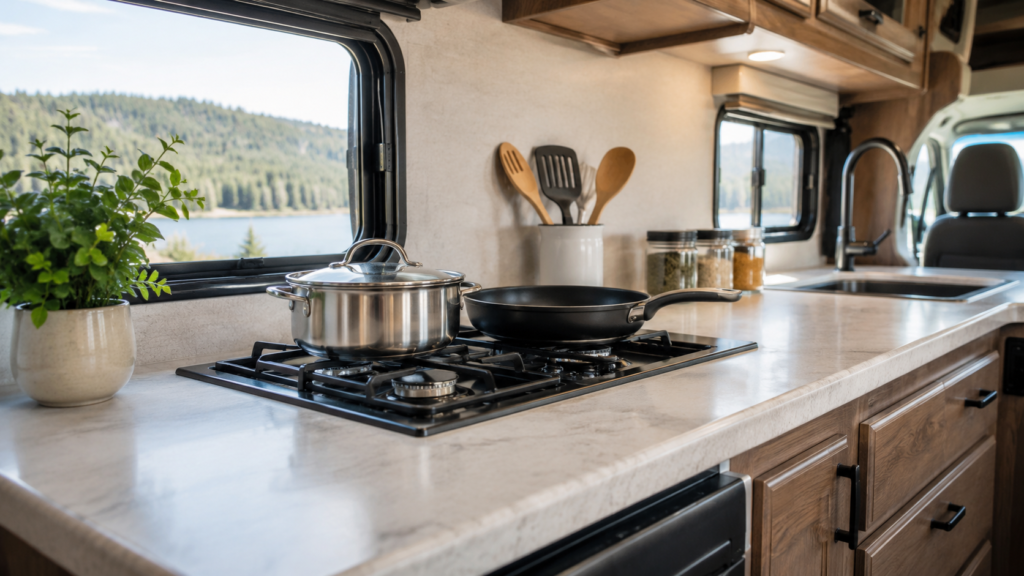
Duplicate Kitchen Gadgets
You usually do not need a blender, toaster, air fryer, coffee machine, slow cooker, and specialty tools on your first trip. Bring one pot, one pan, a cutting board, a sharp knife, a stirring utensil, and basic dishes. If you already know you will use a favorite small appliance every day and have room for it, pack it. Otherwise, leave it home for now.
Too Many Clothes and Shoes
First-time campers often pack like they are leaving for two separate vacations. Instead, choose layers and rewear-friendly clothes. For a weekend trip, you usually need a few tops, a couple of bottoms, sleepwear, undergarments, one warm layer, rain gear if needed, and one or two pairs of shoes that actually fit your plans.
A Full Pantry
It is easy to overfill the fridge and cabinets with food “just in case.” For your first trip, plan a few easy meals, simple snacks, and breakfast basics. This leaves space for groceries you buy on the road and keeps cleanup easier in a small kitchen.
Extra Water Containers for a Standard Campground Trip
If you are staying at a campground with potable water and your RV has a freshwater tank, you usually do not need multiple large backup water containers. Bring what your RV setup actually calls for. If you are boondocking or camping where water access is limited, that is different, so check your campground details and your owner’s manual first.
Backup Everything
A spare flashlight and extra batteries make sense. Packing duplicates of every toiletry, tool, towel, and kitchen item does not. A compact first-aid kit, your regular medications, and a few well-chosen backups cover most beginner needs without taking over your storage.
Large Hobby Gear You Have Not Planned to Use
If the trip is mostly about getting comfortable with the RV, do not let large hobby items take over your cargo space. Bikes, large grills, paddleboards, and extra outdoor furniture can wait unless they are already part of your plan and you know where they will be stored securely while driving.
What to Pack for Your First RV Trip Instead
The best first RV trip essentials are practical, compact, and easy to store. Think in categories instead of random items. That makes your beginner RV essentials checklist easier to use and much easier to customize later.
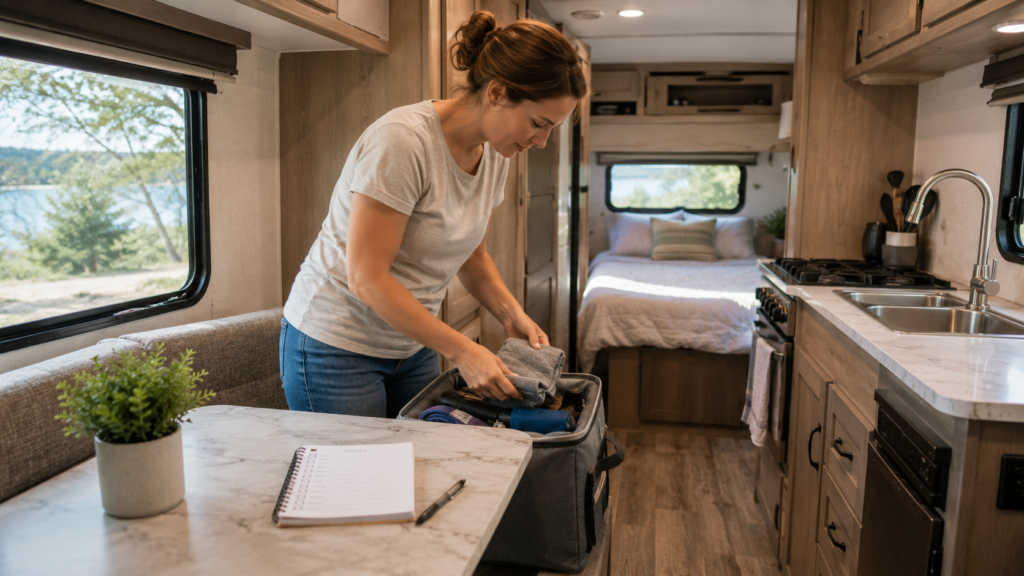
| Essential Category | Why You Need It | Beginner Note |
|---|---|---|
| Documents, keys, phone, charger | These are easy to forget and hard to replace mid-trip | Keep them in one grab-and-go pouch |
| Bedding and towels | Comfort affects sleep, and sleep affects the whole trip | Check bed sizes before packing sheets |
| Basic toiletries and medications | Daily-use items matter more than extra gear | Use small containers to save space |
| Simple cookware and dishes | You need enough to make basic meals and wash up easily | A few multi-use items are better than a full kitchen set |
| Weather-appropriate clothing | Layers handle changing mornings, evenings, and rain | Pack outfits that mix and match |
| Flashlight and basic first-aid kit | Useful for routine needs and minor problems | Store where you can reach them quickly |
| Camp chairs and outdoor basics | Most RV trips include time outside the rig | Only bring what you will actually set up |
| RV hookup and setup gear | Needed to connect your RV safely and correctly | Confirm what is included with your RV before buying duplicates |
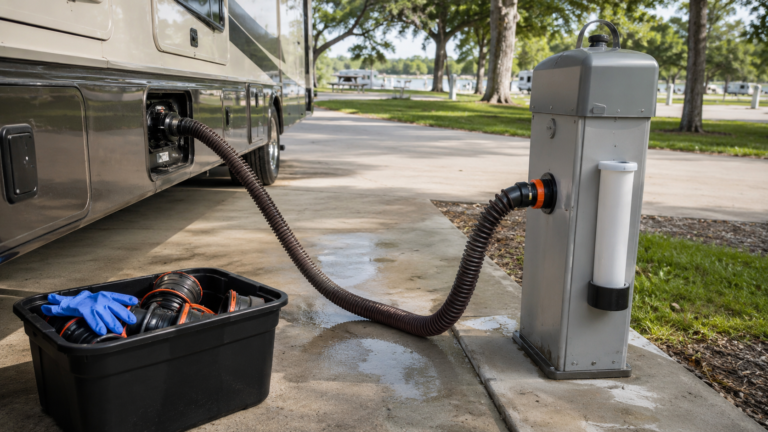
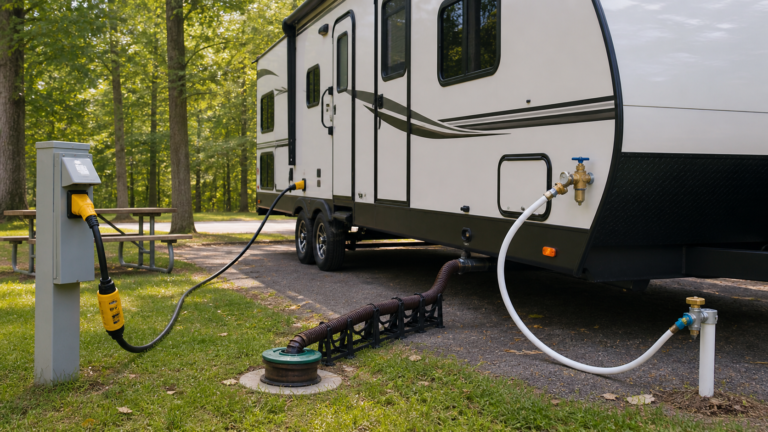
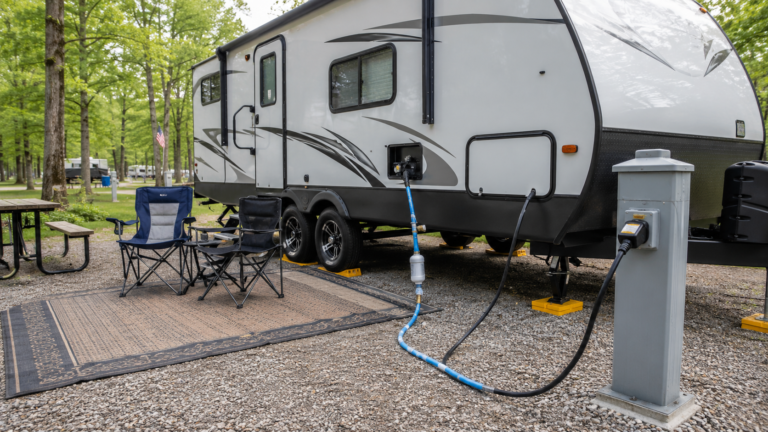
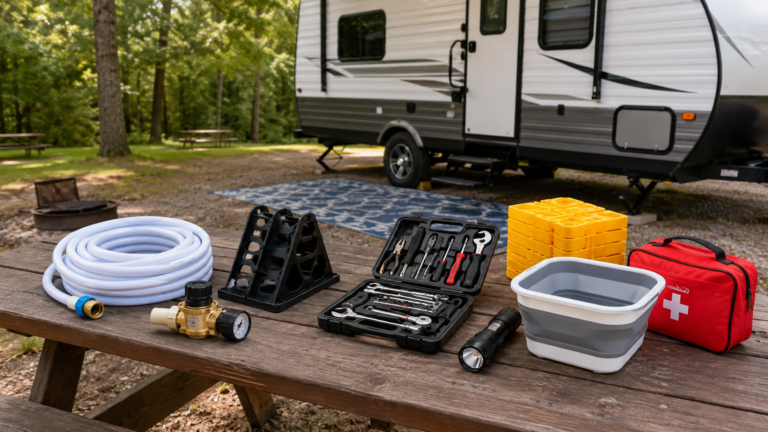
For owned RVs, hookup items may include a drinking-water-safe hose, a water pressure regulator if your setup requires one, sewer equipment that matches your RV, leveling gear if needed, and an RV-rated surge protector or electrical management system for campground power. For rentals, many of these items may already be provided, so verify before you pack.
Beginner RV Essentials Checklist for a Simple First Trip
Use this beginner RV essentials checklist as your practical starting point. It covers what to pack for your first RV trip without turning your storage bays into a catch-all.
Personal and Daily-Use Items
- Wallet, ID, reservation details, keys, and campground information
- Phone, charging cable, and power bank
- Toothbrush, toothpaste, soap, shampoo, and other regular toiletries
- Prescription medications and basic over-the-counter items you normally use
- Weather-appropriate clothes, sleepwear, socks, and undergarments
- One warm layer and rain gear if the forecast calls for it
Sleeping and Comfort Basics
- Sheets or sleeping bags sized for your RV beds
- Pillows and one extra blanket per bed if needed
- Bath towels, hand towels, and washcloths
- Earplugs or a white-noise solution if you are a light sleeper
Kitchen and Food Basics
- One pot, one pan, cooking utensil, can opener, knife, and cutting board
- Plates, bowls, cups, mugs, and silverware for each traveler
- Dish soap, sponge, trash bags, paper towels, and food storage containers
- Easy first-trip foods such as sandwich ingredients, pasta, eggs, fruit, snacks, and coffee or tea supplies
- Reusable water bottles
RV and Campsite Basics
- Hookup gear that matches your RV and campsite type
- Leveling items or wheel chocks if your RV setup requires them
- Flashlight or headlamp
- Basic tool kit for small adjustments
- Camp chairs and a simple outdoor mat only if you know you will use them
Cleaning and Safety Basics
- Compact first-aid kit
- Small broom or handheld vacuum
- Multi-surface cleaner and disinfecting wipes in travel-size amounts
- Laundry bag for dirty clothes
- Owner’s manual or rental instructions for your specific RV
This RV camping checklist is intentionally simple. After your first trip, you can add items based on what you actually missed instead of what you guessed you might need.
Common Overpacking Mistakes and Better Beginner Habits
| Mistake | Better Beginner Habit | Why It Helps |
|---|---|---|
| Packing for every weather scenario | Bring layers and check the forecast close to departure | You stay prepared without hauling extra outfits |
| Stocking the RV like a full-time home | Plan simple meals for the exact number of days | Less food means less clutter and less waste |
| Buying gear before learning your RV | Read the manual and confirm what your rig already includes | You avoid duplicates and wrong-size accessories |
| Bringing multiple “backup” versions of everything | Choose a few small, high-use backups only | Storage stays manageable |
| Loading heavy items anywhere they fit | Store gear low, secure loose items, and respect your RV’s limits | Travel is safer and the RV feels more stable |
How to Decide Whether an Item Earns a Spot
When you are unsure about an item, use this quick filter before it goes into the RV.
- Will I use this every day or almost every day on this trip?
- Does it solve a real problem, or am I packing it because I am nervous?
- Is there a smaller or multi-use version I already own?
- Can it be stored safely while the RV is moving?
- Could I buy, borrow, or do without it if I truly needed it later?
If an item fails most of those questions, it probably does not belong on your first-trip packing list. This one habit alone can keep your RV lighter and much easier to live in.
Packing Tips That Save Space and Stress
A well-packed RV feels larger, calmer, and easier to clean. These small habits make a big difference, especially on your first trip.
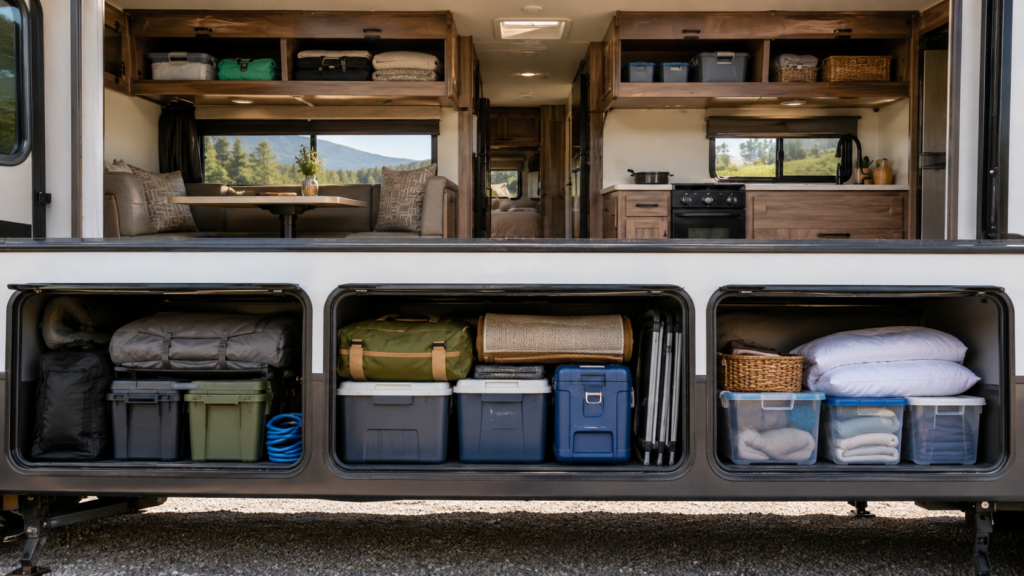
- Pack soft bags instead of hard suitcases when possible because they store more easily.
- Use small bins or pouches to group bathroom items, chargers, and kitchen basics.
- Keep your first-night items easy to reach so setup feels simpler after arrival.
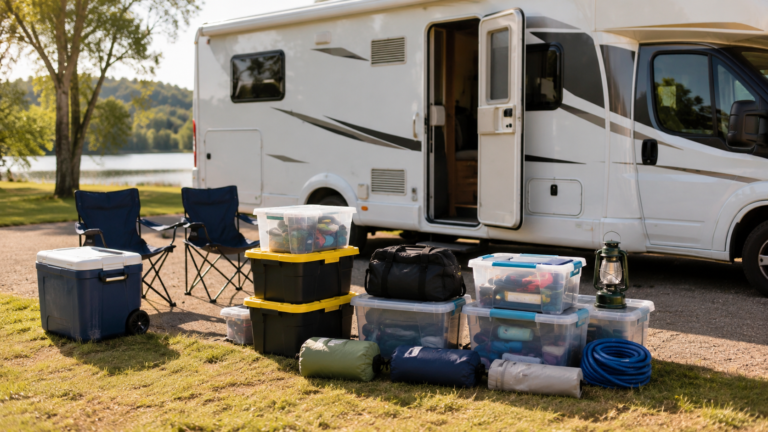
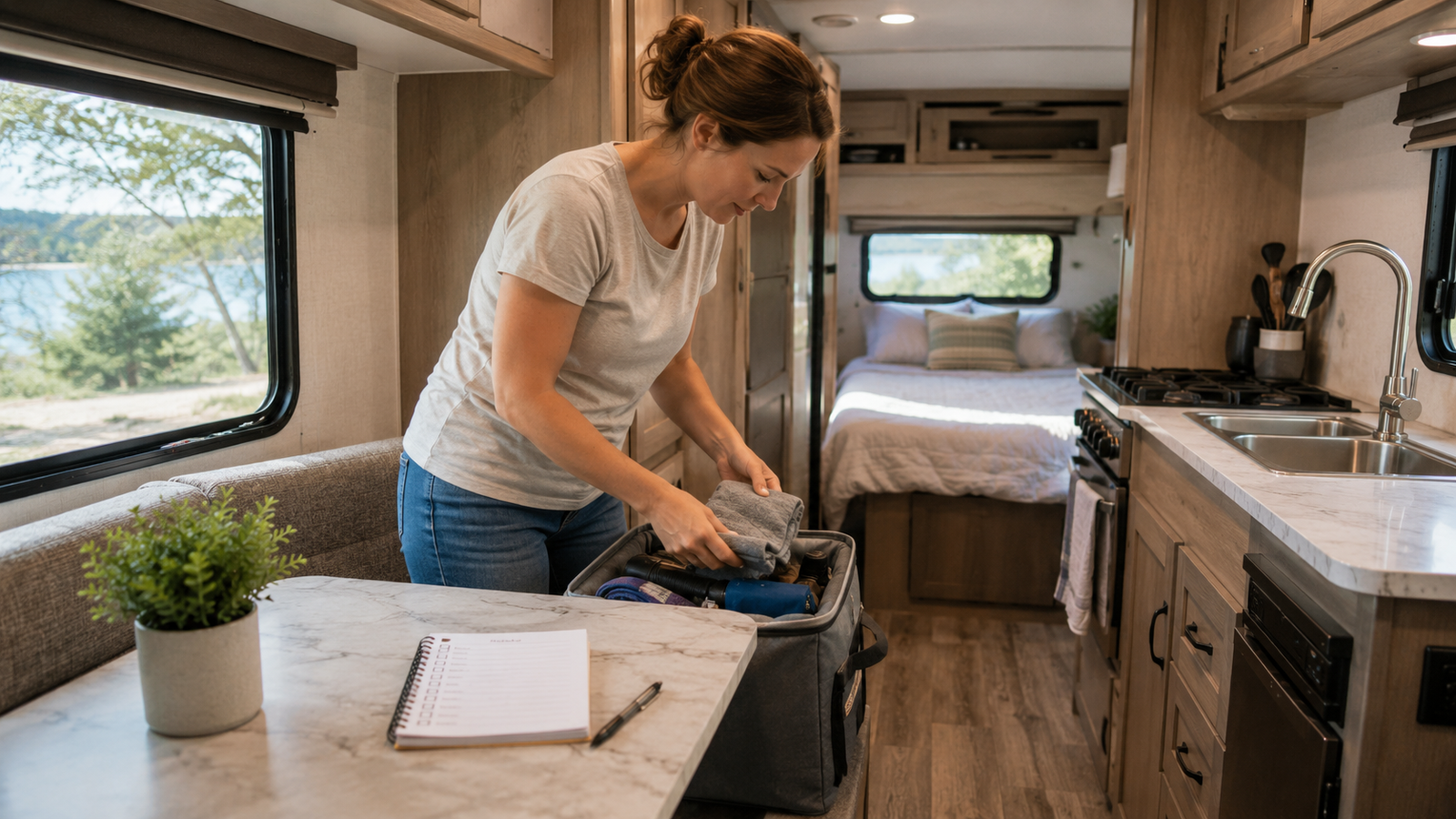
- Do a short driveway or parking-lot test pack before departure if you can.
- Leave some empty space for groceries, jackets, and everyday mess.
- Secure loose items before driving so drawers, counters, and floors stay safer.
- Check your owner’s manual or cargo label if you are unsure about loading limits.
FAQ: First RV Trip Packing Questions
Do I need every RV accessory before my first trip?
No. You need the items required for your specific RV, campsite, and trip length. Start with true first RV trip essentials, learn how your rig works, and add specialty gear later as your needs become clearer.
How many clothes should I pack for a weekend RV trip?
For most weekend trips, a few mix-and-match outfits, sleepwear, undergarments, socks, and one extra layer are enough. The goal is flexibility, not a new outfit for every possible activity.
Is a printed RV camping checklist worth it?
Yes. A printed or saved checklist helps you remember the basics and keeps you from repacking the same unnecessary items every trip. It is one of the easiest ways to reduce first-trip stress.
Related Beginner RV Articles
- RV Packing List for Beginners
- How to Plan Your First RV Camping Trip Step by Step
- Essential RV Gear for Beginners
- What to Expect at an RV Campground
- First-Time RV Camping Mistakes to Avoid
You do not need to bring everything you own to have a good first RV trip. A thoughtful beginner RV essentials checklist will always beat a crowded cabinet full of maybe-someday gear. Start with the basics, use this RV camping checklist to trim the extras, and let your first trip teach you what deserves a permanent place in your RV.