Best Beginner RV Sewer, Water, and Power Accessories You Actually Need
Shopping for RV hookup gear for beginners can feel confusing fast. There are dozens of hoses, adapters, filters, fittings, and power add-ons marketed as “must-haves,” but new RV campers usually need a simple, reliable starter setup instead of a giant pile of gear.
This guide breaks down the best beginner RV sewer accessories, practical RV water accessories, and essential RV power accessories to help you set up safely and confidently. You will also see what each item does, what matters most when buying it, and which mistakes beginners should avoid on their first few trips.
What hookup gear beginners usually need first
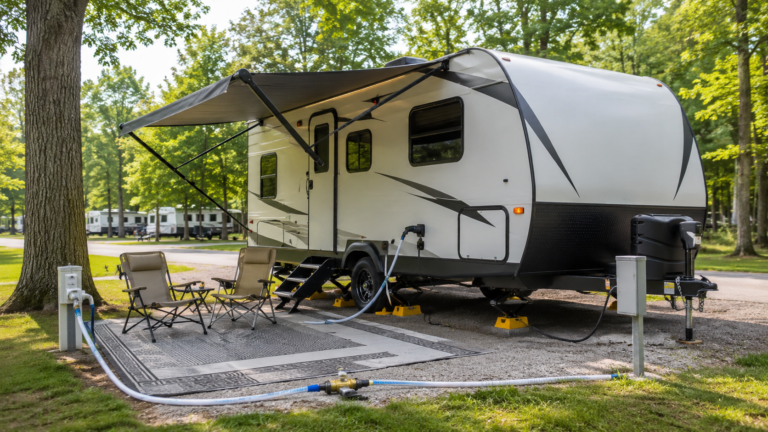
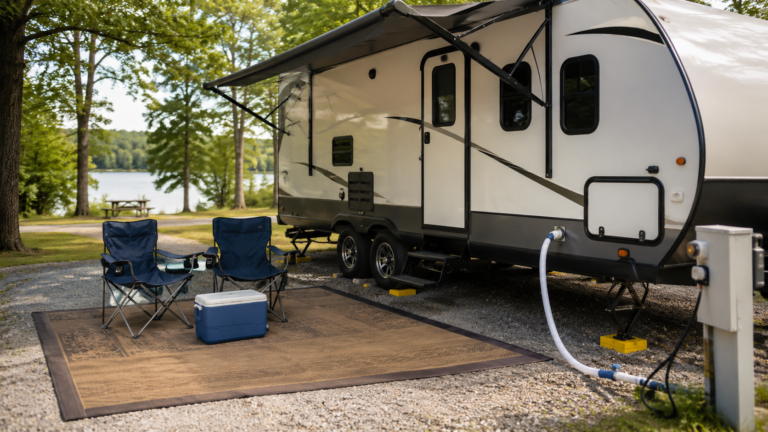
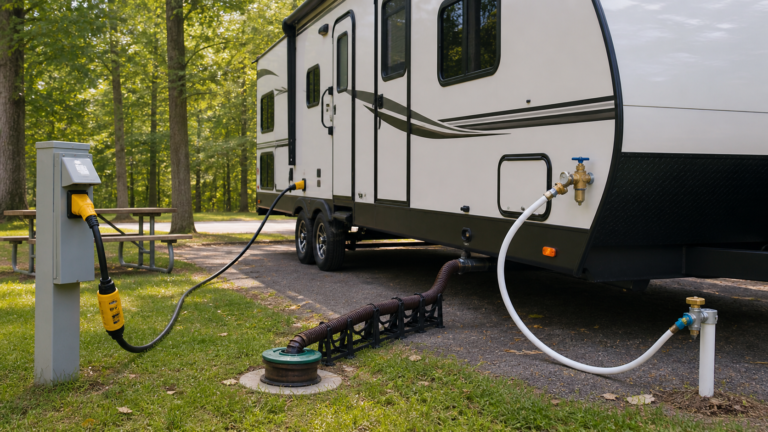
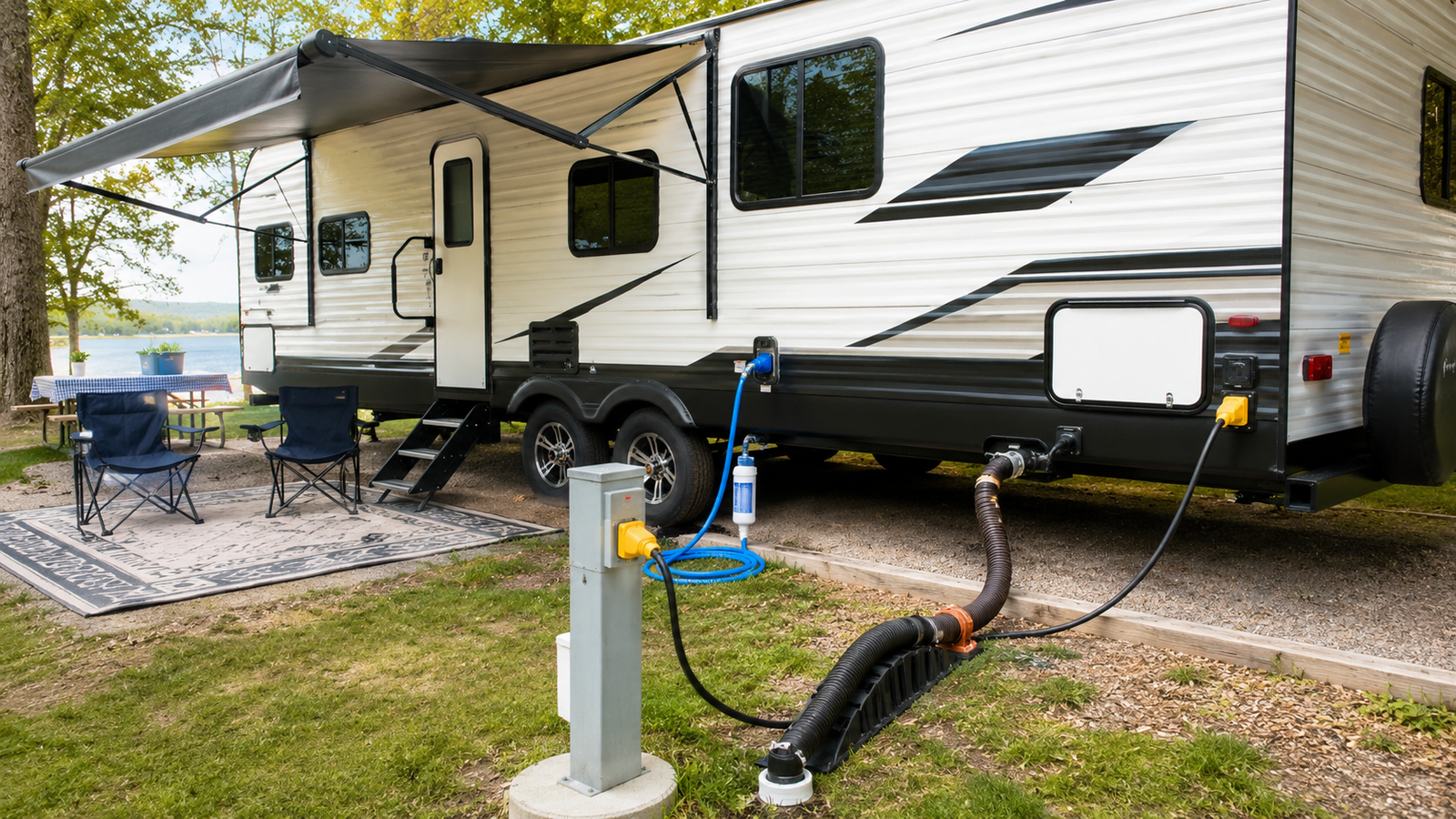
Most RVs use the same three campground systems: sewer, fresh water, and electricity. Your starter kit should help you connect to those systems cleanly, safely, and without guesswork. That usually means focusing on dependable basics rather than buying every accessory at once.
| System | What You Need | Why It Matters |
|---|---|---|
| Sewer | Sewer hose kit, clear elbow, hose support, gloves | Makes dumping cleaner and easier |
| Water | Drinking-water-safe hose, pressure regulator, inline filter | Helps protect your plumbing and water quality |
| Power | Shore power cord, surge protector, correct adapter | Helps you connect safely to campground electricity |
If your RV came with some of these items, inspect them carefully before using them. Beginners should replace cracked hoses, worn seals, damaged cords, or mystery accessories from a previous owner rather than hoping they will still work.
Best beginner RV sewer accessories
Sewer gear is the part many new RV campers worry about most, but it gets much easier once you have a simple system. The best beginner RV sewer accessories help you dump tanks with less mess, less stress, and fewer surprises.
1. RV sewer hose kit
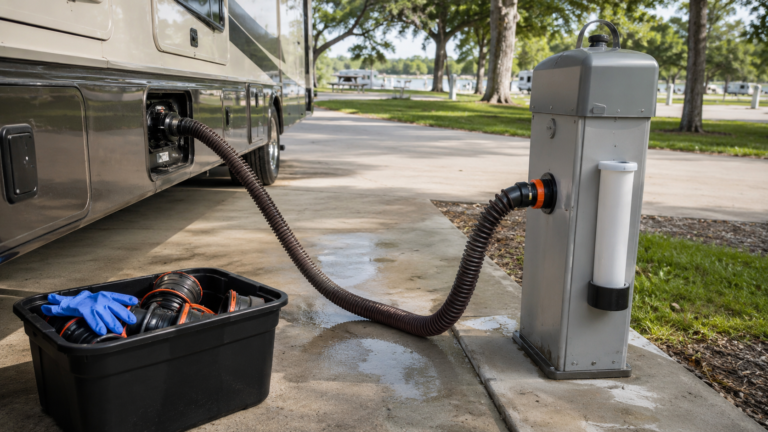
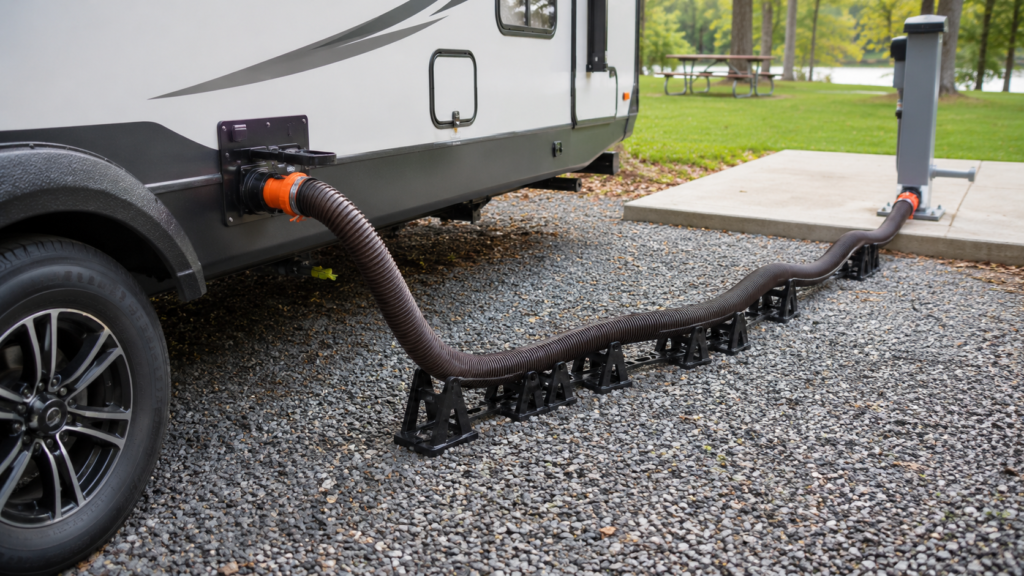
A sewer hose kit is the foundation of your waste setup. Look for a sturdy hose designed for RV use, with fittings that connect securely to both your RV outlet and the dump station inlet. Many beginners find a kit with multiple sections useful because it gives more flexibility at different campsites.
Longer is not always better. You want enough reach for awkward site layouts, but not so much hose that storage becomes a hassle. A kit that stores compactly is often the easiest choice for a first RV.
2. Clear sewer elbow or transparent fitting
A clear elbow lets you see when tank flushing is running clear, which helps beginners know what is happening without guessing. It also makes it easier to confirm that the hose is connected properly at the dump inlet.
3. Sewer hose support
A sewer hose support keeps the hose sloped downward so waste flows more easily toward the sewer connection. This is especially helpful on longer runs or uneven sites. It also helps keep the hose off the ground where campground rules require support.
4. Disposable gloves and dedicated storage bin
These are simple but important. Gloves help keep tank dumping more sanitary, and a separate storage bin keeps sewer gear away from fresh water gear. Beginners should never store sewer items together with drinking-water hoses or fittings.
5. Tank treatment for odor control
Tank treatment can help with odors and normal waste breakdown, but it is not a substitute for proper dumping and rinsing. Use products according to the label and your RV manufacturer’s guidance, especially if your plumbing or tank system has specific requirements.
Best beginner RV water accessories
Your fresh water setup affects both convenience and peace of mind. Good RV water accessories help protect your plumbing, improve water quality, and make campground hookups easier to manage.
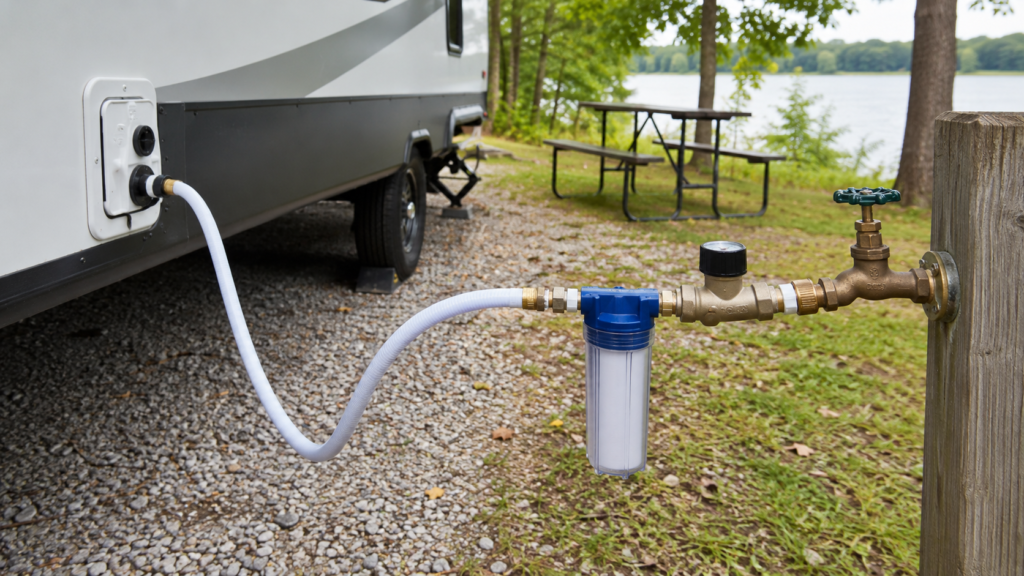
1. Drinking-water-safe fresh water hose
This is one of the most important RV water accessories to buy first. Use a hose made for potable water rather than a general garden hose. A drinking-water-safe hose is intended for fresh water systems and helps keep your setup cleaner and more appropriate for filling your RV’s fresh water tank or connecting to city water.
2. Water pressure regulator
Campground water pressure can vary a lot from site to site. A pressure regulator helps protect your RV plumbing from excessive pressure that could lead to leaks or damaged fittings. For beginners, this is one of the smartest small purchases because it adds protection every time you hook up.
Check your owner’s manual for the pressure range your RV plumbing is designed to handle. If details vary by RV or accessory, follow the manufacturer instructions.
3. Inline water filter
An inline filter is a helpful add-on for many campground hookups. It can reduce sediment and improve taste depending on the filter type. Beginners often like them because they are easy to attach and remove without changing the rest of the setup.
4. Extra washers and quick-connect fittings
Small water accessories are easy to overlook until something leaks. Spare hose washers take up almost no space and can save a trip to the camp store. Quick-connect fittings can also make setup faster, especially if you move often, but they should still be checked for secure connections and drips.
5. Fresh water hose storage bag or bin
Fresh water gear should stay clean and separate from sewer gear. A simple storage bag, tote, or small bin helps protect hoses and fittings between trips and makes your campsite setup feel much more organized.
Best beginner RV power accessories
Power can feel intimidating at first, but beginner RV electrical setups are usually straightforward. The right RV power accessories help you connect safely to shore power and avoid a few common campground problems.
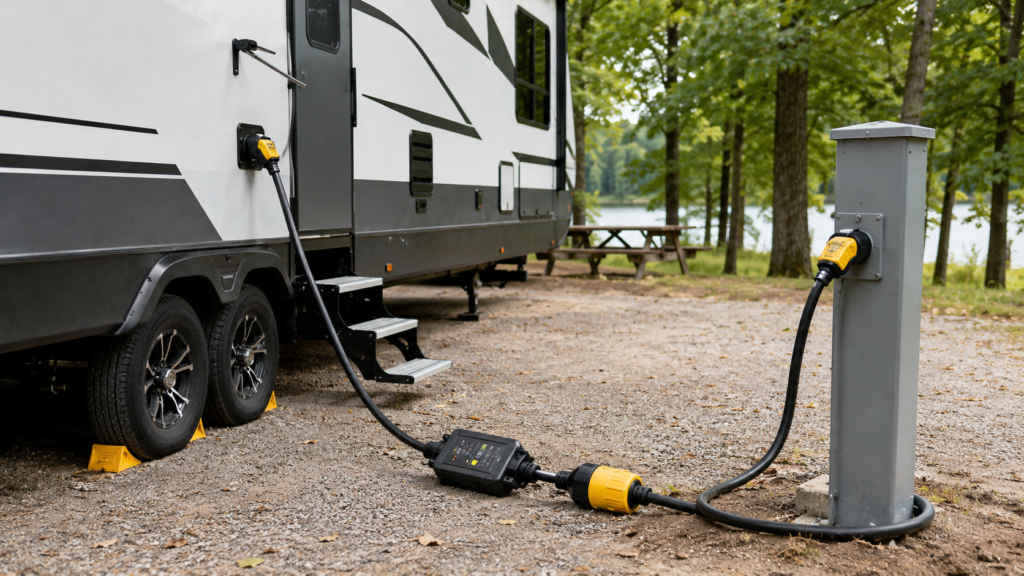
1. Correct shore power cord for your RV
Your RV will be designed for a specific electrical service, commonly 30-amp or 50-amp. Use the correct shore power cord for your rig, and inspect it before every trip for heat damage, loose ends, or worn connectors. If you are unsure what your RV uses, check the owner’s manual before buying accessories.
2. RV surge protector or electrical protection device
This is one of the most valuable RV power accessories for beginners. A surge protector or electrical management device can help protect your RV from wiring problems or unhealthy campground power conditions. Some units also alert you to wiring faults before you plug in fully.
3. Power adapters
Adapters help when the campground pedestal does not match your RV plug exactly. For example, some beginners keep a dogbone-style adapter for occasional site differences. Buy only the adapters that match your RV and expected camping style, rather than collecting every option at once.
4. Cord organizer or storage strap
Power cords are bulky, and beginners quickly learn that neat storage makes setup and breakdown easier. A cord strap or storage method helps prevent tangles, keeps the cord easier to inspect, and saves space in your storage compartment.
5. Extension cord only if it is appropriate for your setup
Not every beginner needs an extension cord right away. If you buy one, make sure it is designed for RV use and matches your service requirements. Using the wrong cord can create problems, so it is important to follow your RV manufacturer’s instructions and the cord manufacturer’s rating information.
A simple starter kit for most beginners
If you want to keep things simple, start with a short list of dependable basics. This kind of starter kit covers what most new RV campers need at full-hookup or partial-hookup campgrounds.
| Gear Item | Why You Need It | Beginner Note |
|---|---|---|
| Sewer hose kit | Handles tank dumping | Choose a kit that stores easily |
| Clear elbow | Helps you see tank flow | Makes rinsing less confusing |
| Hose support | Improves sewer hose slope | Helpful on uneven sites |
| Drinking-water-safe hose | Connects fresh water safely | Keep it separate from sewer gear |
| Pressure regulator | Protects RV plumbing | Use it every time you hook up |
| Inline water filter | Helps with sediment and taste | Replace as recommended |
| Shore power cord | Connects RV to pedestal | Match your RV service type |
| Surge protector | Adds electrical protection | One of the best early upgrades |
| Adapter | Helps with outlet differences | Buy only the ones you are likely to use |
How to choose RV hookup gear for beginners
The best RV hookup gear for beginners is not always the most expensive option. It is the gear that fits your RV, your style of camping, and your comfort level with setup and maintenance.
- Start with your RV’s actual hookups. Know whether your RV uses 30-amp or 50-amp service, and check how your fresh water and sewer connections are configured.
- Buy for the camping you will really do. Weekend campground stays usually need a simpler setup than long trips, boondocking, or frequent travel.
- Choose easy-to-store gear. Compact storage matters more than many beginners expect.
- Prioritize reliability over extras. A good regulator or surge protector is usually more useful than a gimmicky accessory.
- Keep sewer and fresh water gear separate. Separate bins, bags, or compartments make your setup more sanitary and easier to manage.
Common beginner mistakes and better habits
Many RV setup problems come from small mistakes, not major failures. A few better habits can make your first trips smoother.
| Mistake | Better Beginner Habit | Why It Helps |
|---|---|---|
| Using any garden hose for fresh water | Use a drinking-water-safe hose | Better fit for potable water use |
| Skipping the water regulator | Attach it before turning on water | Helps protect plumbing |
| Storing sewer and water gear together | Use separate bins or bags | Keeps fresh water gear cleaner |
| Plugging in without electrical protection | Use a surge protector first | Adds a layer of safety |
| Buying too much gear immediately | Start with core essentials | Saves money and reduces clutter |
First campsite hookup order for beginners
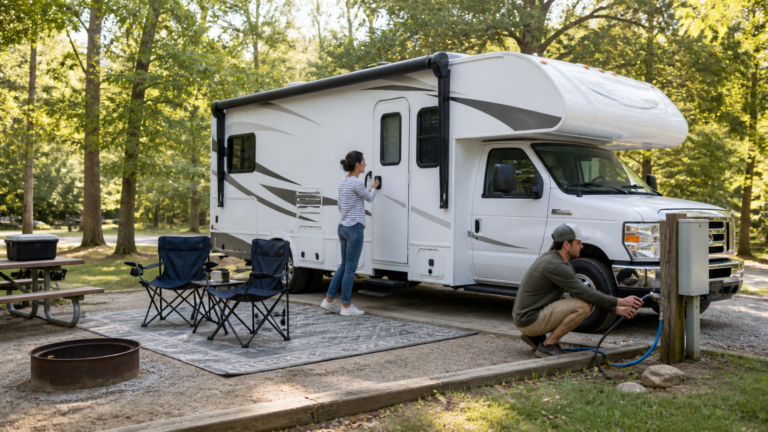
Every RVer develops their own routine, but a simple order can help beginners stay organized and reduce missed steps.
| Step | What to Do | Beginner Tip |
|---|---|---|
| 1 | Park and level the RV | Set up utilities after the RV is stable |
| 2 | Connect power with surge protection | Check the pedestal and your cord first |
| 3 | Connect fresh water with regulator and filter | Turn water on slowly and check for leaks |
| 4 | Set up sewer hose if needed | Keep valves closed until you are ready to dump |
| 5 | Store extra slack neatly | Reduce trip hazards and clutter |
FAQ about beginner RV sewer, water, and power accessories
Do I need every accessory before my first RV trip?
No. Most beginners only need a dependable starter set: sewer hose kit, clear elbow, hose support, fresh water hose, pressure regulator, inline filter, shore power cord, surge protector, and any adapter their RV is likely to need.
What is the most important RV water accessory for beginners?
A pressure regulator is one of the most important because it helps protect your RV plumbing at unfamiliar campgrounds. A drinking-water-safe hose is also essential for a basic fresh water setup.
What is the most important RV power accessory for beginners?
A surge protector or other RV electrical protection device is one of the best early purchases. It can help you identify power issues and adds protection when connecting to campground electricity.
Should beginners leave the black tank valve open at a full-hookup site?
Many RVers keep the black tank valve closed until it is time to dump so solids do not build up improperly in the tank. Because tank systems and campground practices can vary, check your owner’s manual and follow the guidance for your specific RV.
How should I store RV hookup gear?
Store sewer gear separately from fresh water gear, and keep electrical cords dry, neat, and easy to inspect. Dedicated bins or storage bags make beginner setups much easier to manage.
Final thoughts on the best beginner RV hookup gear
The best beginner RV sewer accessories, RV water accessories, and RV power accessories are the ones that help you camp with less confusion and more confidence. Start with the basics, choose gear that matches your RV, and build a clean, simple setup you can repeat on every trip.
You do not need the biggest gear collection to enjoy RV camping. A well-chosen starter kit, a few good habits, and careful attention to your owner’s manual will take you much further than a pile of random accessories ever will.
Related Beginner RV Articles
- RV Hookups for Beginners: Water, Electric, and Sewer Explained
- How to Set Up an RV at a Campsite for the First Time
- How RV Fresh Water, Gray Water, and Black Water Tanks Work
- First-Time RV Camping Mistakes to Avoid
- Essential RV Gear for Beginners