RV Campsite Setup Checklist for Beginners: A Quick Start Guide
Setting up your RV at a campsite for the first time can feel like a lot, but it gets much easier when you follow the same simple routine every time. This beginner-friendly guide walks you through a practical campsite setup checklist so you can park, level, connect utilities, and get comfortable without unnecessary stress.
What This Checklist Covers and Why It Matters
A good RV campsite setup is about more than parking and plugging in. When you follow a clear setup order, you reduce mistakes, protect your RV systems, and make the campsite safer and more comfortable from the start. This quick-start guide helps beginners focus on the essentials without feeling overwhelmed.
1. Arrive, Inspect the Site, and Park Carefully
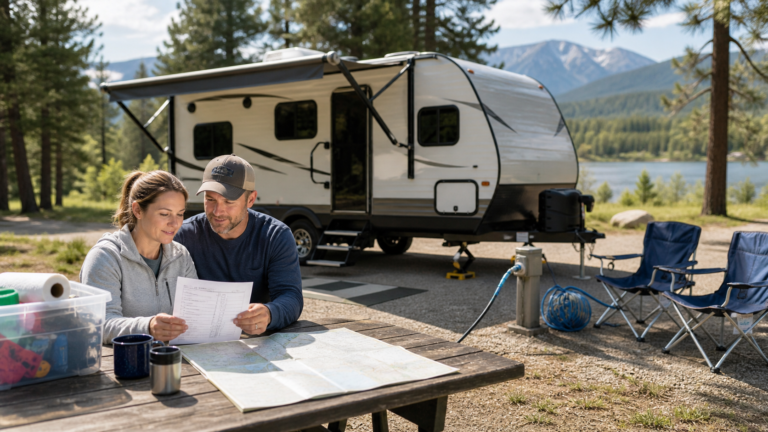
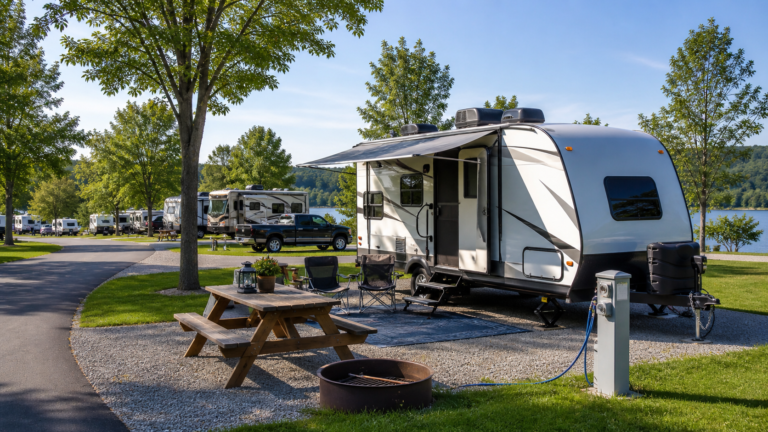
Your first few minutes at the campsite set the tone for the entire setup. Slow down, check the site, and make sure your RV is positioned correctly before moving on.
- Check the site layout first: Look for the location of power, water, and sewer hookups, and check for low branches, rocks, posts, picnic tables, or fire rings.
- Confirm clearance: Make sure there is enough room for slide-outs, awnings, entry steps, and safe walking space.
- Park on the best available surface: A more level site makes the rest of the setup easier.
- Use a spotter if possible: A second set of eyes can help you avoid backing in too far or clipping obstacles.
- Set the parking brake: Once parked, secure the RV before doing anything else.
Getting parked correctly before setup saves time and prevents you from having to reposition later.
2. Level and Stabilize the RV
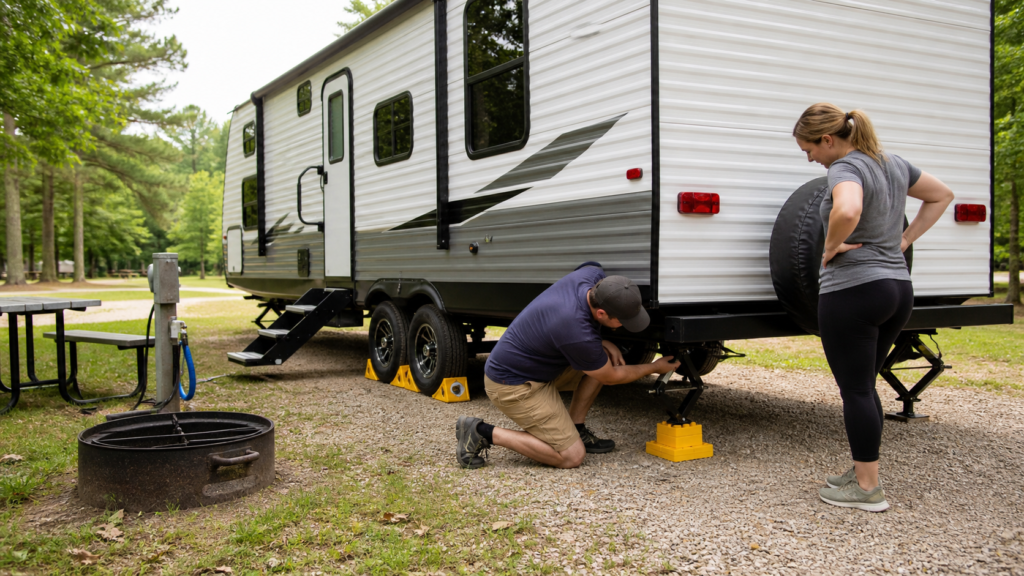
Once the RV is parked, level it before you connect utilities or settle in. This is one of the most important parts of the setup process.
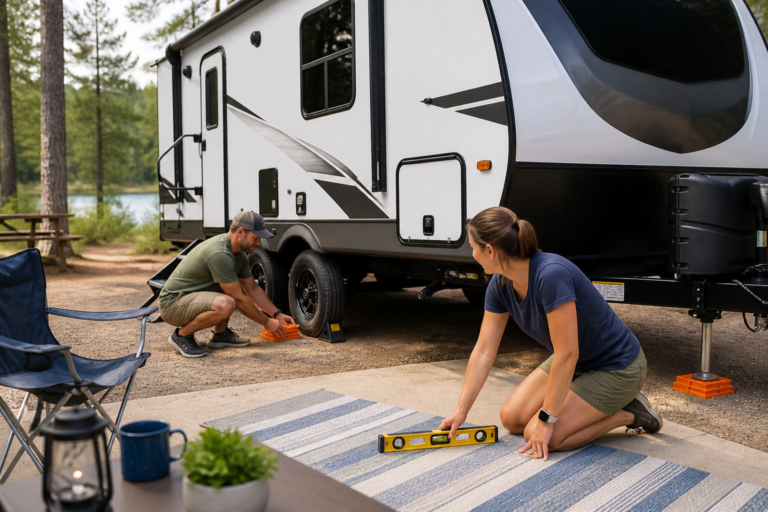
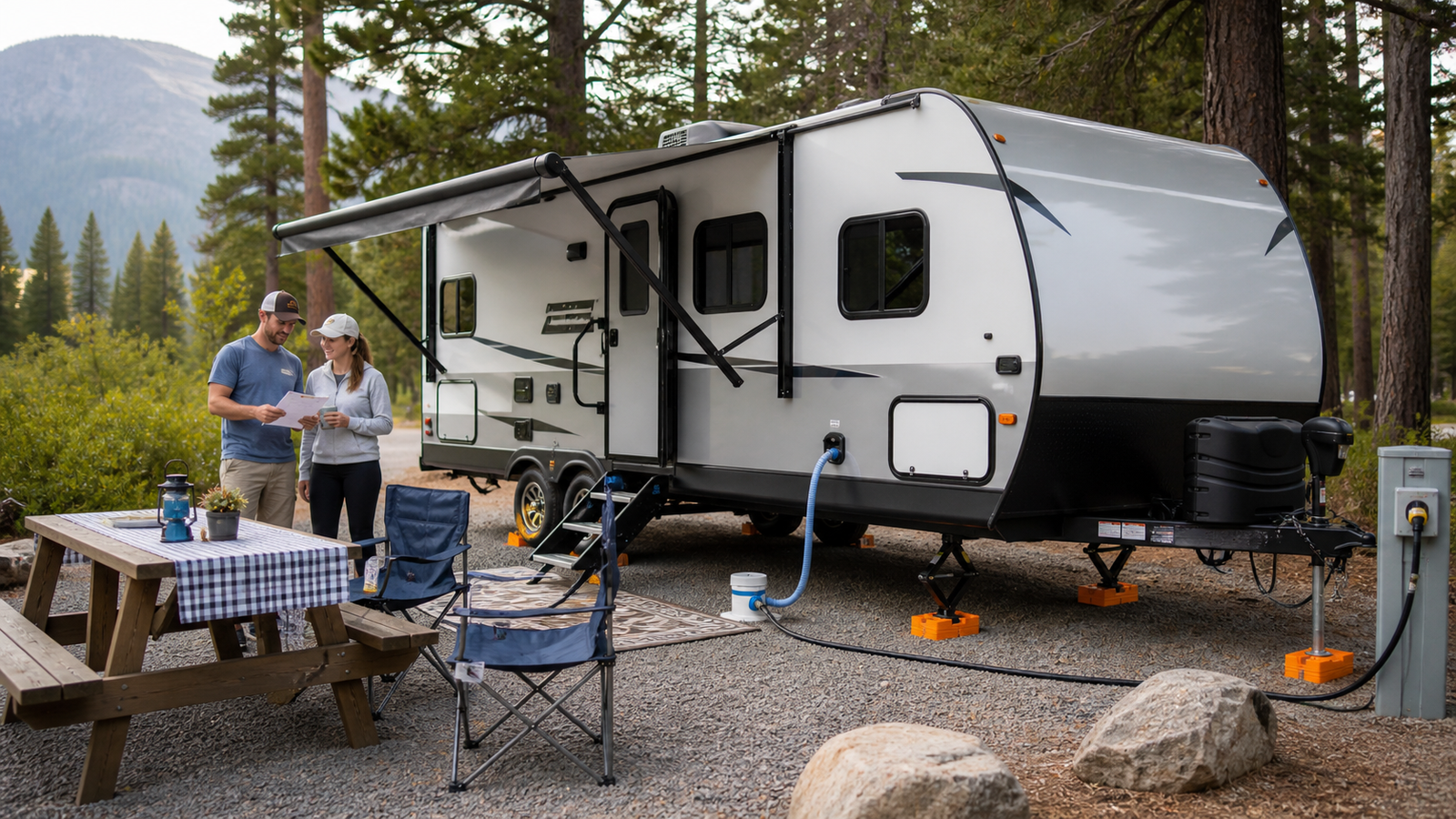
- Level front to back first: Use your tongue jack, leveling system, or other setup method based on your RV type.
- Level side to side next: Use leveling blocks or ramps if needed.
- Chock the wheels: Do this before the RV can shift, especially if the site is not perfectly flat.
- Lower stabilizers after leveling: Stabilizers help reduce movement, but they are not meant to do the main leveling work.
A level RV helps with comfort, drainage, appliance performance, and overall stability.
3. Connect Electrical Power Safely
Power is usually one of the first utilities beginners want working, especially in hot or cold weather. Take a few extra seconds here and do it carefully.
- Check the pedestal rating: Make sure it matches your RV’s power needs, usually 30-amp or 50-amp service.
- Use a surge protector or EMS: This helps protect your RV from electrical problems at the campground pedestal.
- Plug in securely: Make sure the connection is firm and protected from obvious water exposure.
- Confirm power inside the RV: Check that your outlets, air conditioner, or other systems are working normally.
Do not rush electrical hookups. A calm, careful connection is better than troubleshooting later.
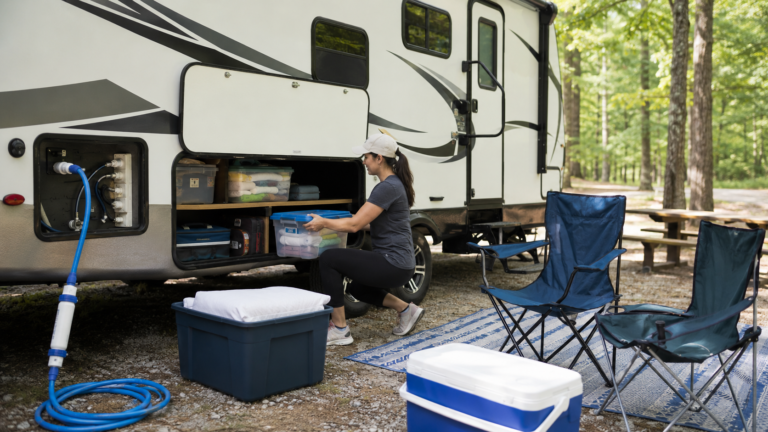
4. Connect Fresh Water and Wastewater
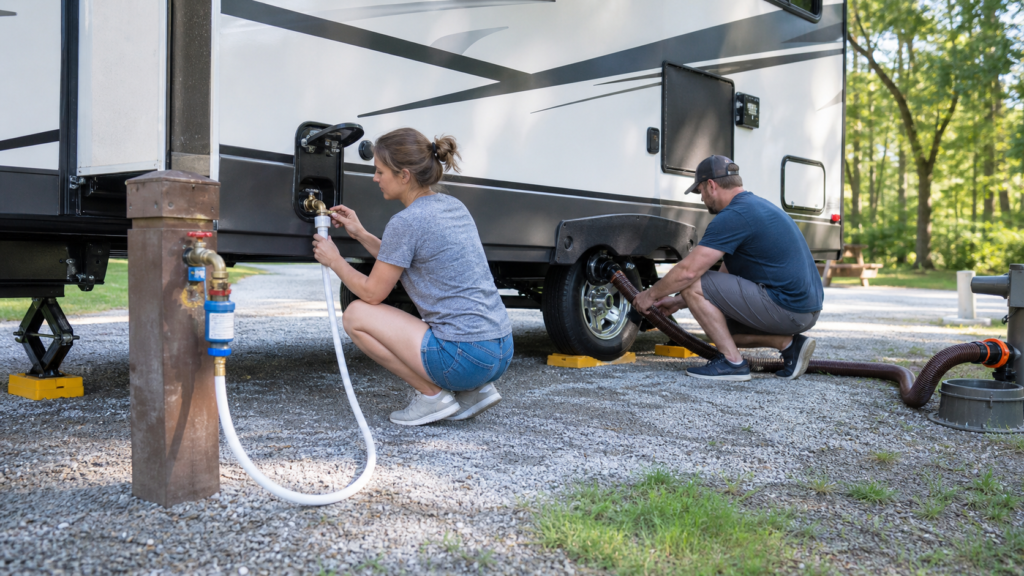
Water and sewer connections are simple once you follow the same order each time.
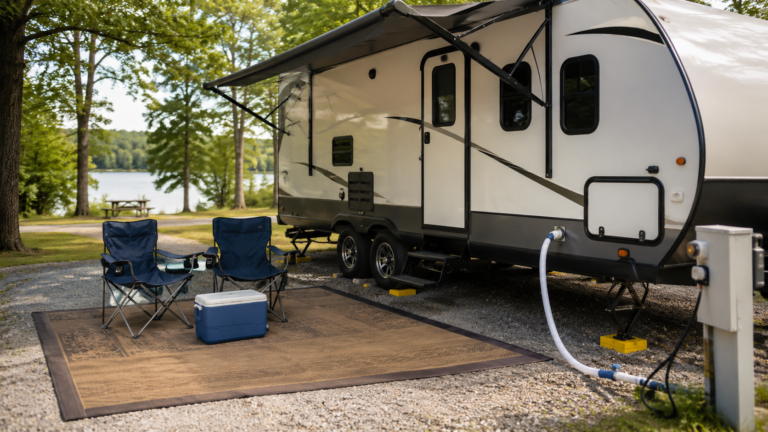
- Connect the fresh water hose: Attach it to the campground spigot and your RV water inlet.
- Use a water pressure regulator: This helps protect your RV plumbing from campground water pressure that may be too high.
- Use a water filter if desired: Many RVers prefer one for cleaner water and added protection from sediment.
- Turn water on slowly: Check for leaks at the spigot, hose ends, and RV connection point.
- Connect the sewer hose if needed: Attach it securely to the RV outlet and site connection.
- Keep tank valves closed until dumping: This is especially important for black tank management.
Fresh water and sewer setup gets easier fast once you stop treating it like something complicated.
5. Finish the Main Setup Inside and Outside
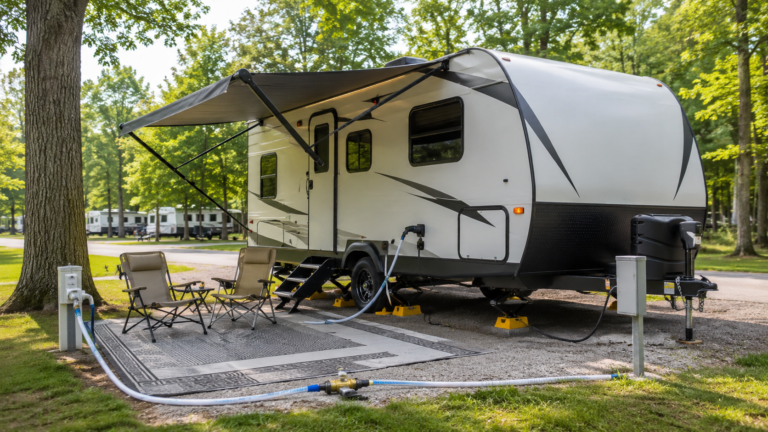
Once the RV is parked, level, and connected, you can start making the campsite comfortable and usable.
- Extend slide-outs if applicable: Make sure you have enough clearance first.
- Open the awning only in suitable weather: Do not leave it out in strong wind.
- Set out only what you need: A couple of chairs, an outdoor mat, and a few essentials are enough to start.
- Adjust interior comfort items: Set lights, climate control, and anything needed for a comfortable first evening.
- Keep the site organized: Avoid creating trip hazards with gear, hoses, or extra items scattered around.
Beginners often overdo this part. You do not need a perfect campsite. You just need a functional one.
6. Do Not Skip the Safety Basics
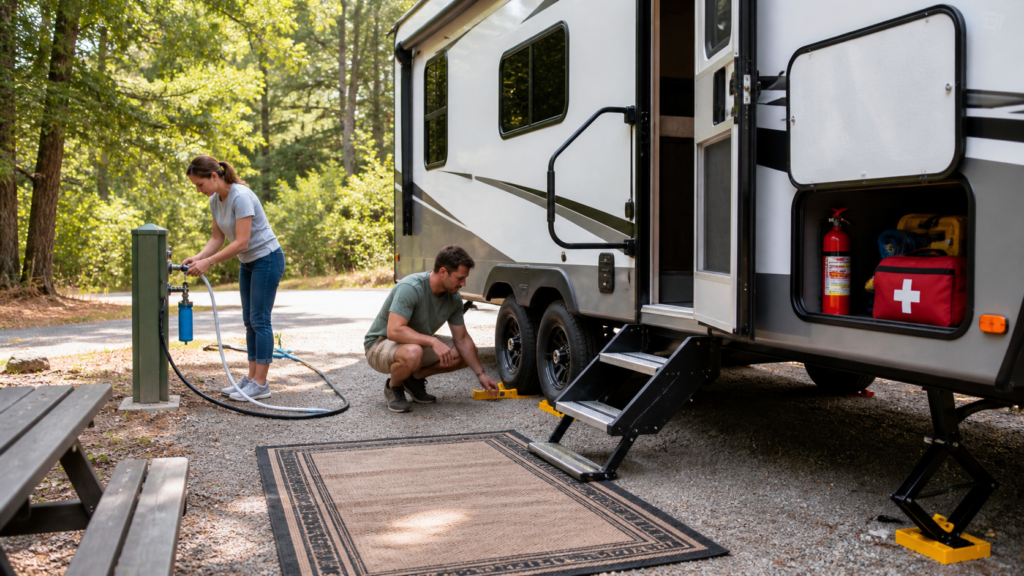
Before you relax, take a minute to check the campsite for simple safety issues that are easy to miss during setup.
- Keep walkways clear: Make sure cords, hoses, and loose gear are not creating trip hazards.
- Check your entry steps: Make sure they feel stable and safe before heavy use.
- Know where your fire extinguisher is: It should be easy to reach, not buried in storage.
- Keep a first-aid kit accessible: Small problems are easier to handle when basics are nearby.
- Check propane and utility areas visually: Make sure everything looks secure and normal.
- Secure loose outdoor items: Wind and foot traffic can turn small items into bigger problems.
Safety checks do not need to be dramatic. They just need to be done.
7. Common Beginner Mistakes to Avoid
Most campsite setup mistakes happen because beginners move too fast or do steps out of order.
- Skipping leveling: Even a small tilt can affect comfort and appliance function.
- Forgetting wheel chocks: This can allow unwanted movement, especially on uneven sites.
- Rushing hookups: Loose water or sewer connections can create avoidable problems.
- Overloading electrical service: Too many high-draw appliances at once can trip breakers.
- Opening the awning in windy conditions: Awnings can be damaged very quickly.
- Leaving the campsite cluttered: A messy setup makes everything harder and less safe.
The simplest way to avoid most mistakes is to use the same checklist every time you arrive.
Quick RV Campsite Setup Checklist for Beginners
- Inspect the campsite before parking
- Park carefully and set the parking brake
- Level the RV
- Chock the wheels
- Lower stabilizers
- Connect shore power
- Connect fresh water
- Connect sewer if needed
- Extend slide-outs if applicable
- Open the awning if weather allows
- Set out only the gear you need
- Do a final safety check
Frequently Asked Questions
What should I do first when I arrive at a campsite?
Start by inspecting the site and parking carefully. Once the RV is in position, level it and secure it before moving on to hookups.
What order should I set up my RV campsite?
A simple order is: inspect the site, park, level, chock the wheels, lower stabilizers, connect power, connect water, connect sewer if needed, then finish the comfort and safety setup.
Do I really need wheel chocks if the site looks flat?
Yes. Even a slight slope can allow movement, and wheel chocks are a simple way to improve safety and stability.
Should I connect power or water first?
Many RVers connect power early in the process, especially if climate control is needed. The main thing is to connect everything carefully and follow a repeatable setup routine.
What should I keep handy for basic campsite setup?
Keep your leveling blocks, wheel chocks, power cord, surge protector, freshwater hose, pressure regulator, sewer hose, flashlight, and a small toolkit easy to reach.
Conclusion
RV campsite setup gets much easier once you stop trying to remember everything on the fly and start following a simple checklist. Park carefully, level the RV, connect utilities in a steady order, and finish with a few comfort and safety checks. That routine will help you feel more confident every time you arrive.
Your first setup does not need to be perfect. It just needs to be safe, organized, and repeatable.