Best Types of RVs for Beginners and How to Choose the Right One
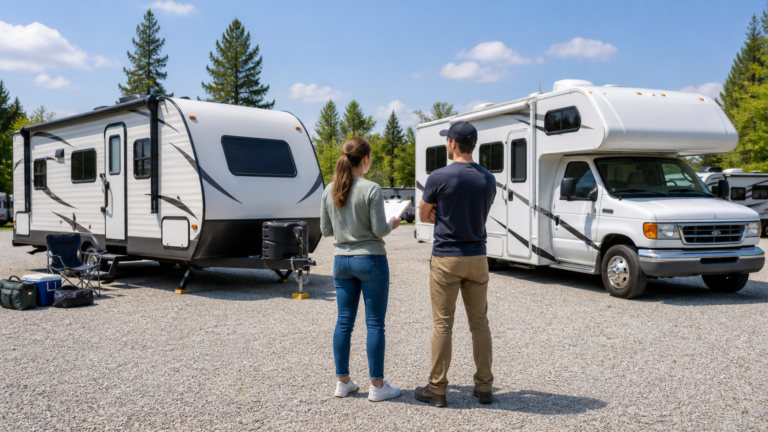
Thinking about your first RV and wondering which type actually makes sense for a beginner? You are not alone. The best RV for beginners is not always the biggest, newest, or most expensive option. It is the RV that feels manageable, fits your travel style, and helps you build confidence instead of making every trip harder than it needs to be.
This guide breaks down the best types of RVs for beginners, including Class B camper vans, Class C motorhomes, travel trailers, fifth wheels, and pop-up campers. You will also learn how to compare driving, towing, setup, storage, comfort, budget, and long-term usability before choosing your first RV.
Quick answer: For most beginners, the best first RV is usually a Class B camper van, a smaller Class C motorhome, or a manageable travel trailer. Class B RVs are easiest to drive and park, Class C RVs offer more comfort while staying beginner-friendly, and smaller travel trailers can be a smart budget-friendly choice if you are comfortable towing.
What Makes an RV Beginner-Friendly?
For beginners, the best RV is usually the one that is easiest to drive or tow, simple to set up, realistic to maintain, and comfortable enough for the trips you actually plan to take. More space can sound appealing, but extra size often brings more cost, more maintenance, more storage challenges, and a steeper learning curve.
A beginner-friendly RV should make your first few trips easier, not more stressful. Before you compare floorplans or features, think about how confident you feel handling the RV on the road, parking it, setting it up at a campground, and caring for it between trips.
- Easy to handle: It should feel manageable on roads, in fuel stations, and inside campgrounds.
- Simple to set up: Your first trips should not feel like a long technical lesson every time you arrive.
- Comfortable enough: It should fit your sleeping, bathroom, kitchen, and storage needs without being oversized.
- Realistic to own: The cost of insurance, maintenance, storage, fuel, and accessories should fit your budget.
- Matched to your travel style: A weekend camper, family road tripper, and full-time traveler do not need the same RV.
For most beginners, “best” does not mean biggest. It means easiest to learn with while still giving you enough comfort to enjoy the trip.
Class A, Class B, and Class C: What’s the Difference?
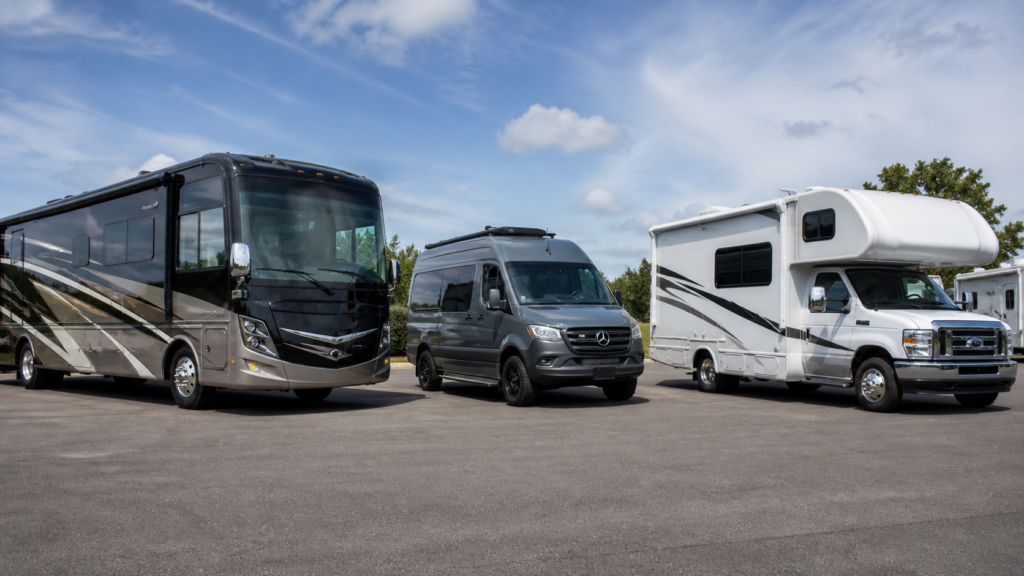
Motorhomes are RVs with their own engine. You drive the RV itself instead of towing it behind another vehicle. The three main motorhome classes are Class A, Class B, and Class C. Understanding the difference between them is one of the easiest ways to narrow down your first RV choice.
Class A Motorhomes
Class A RVs are the large, bus-style motorhomes many people picture when they think of luxury RV travel. They usually offer the most space, larger living areas, bigger storage bays, and more residential-style comfort.
The downside is that Class A motorhomes can be intimidating for beginners. They are larger to drive, harder to park, more expensive to maintain, and less forgiving in tight campgrounds or fuel stations. A Class A can work for some new RVers, but it usually comes with a steeper learning curve.
Class B Motorhomes
Class B RVs, often called camper vans, are the smallest motorized RV option. They are usually the easiest motorhomes to drive, park, store, and maneuver. For solo travelers, couples, and short-trip campers, a Class B can be one of the least intimidating ways to start RVing.
The trade-off is space. You get less sleeping room, kitchen space, bathroom comfort, storage, and water capacity than you would in a larger RV. Still, if your top priority is confidence behind the wheel, a Class B is often one of the best RVs for beginners.
Class C Motorhomes
Class C RVs sit between Class B camper vans and large Class A motorhomes. They often have a familiar cab-over bunk, more interior space than a van, and layouts that feel comfortable without jumping all the way into full-size motorhome territory.
For many beginners, Class C motorhomes hit the sweet spot. They provide more room for families, storage, and longer trips while still feeling more approachable than a large Class A.
Why Class B and Class C Are Usually the Best Fit for Beginners
When new RVers ask which motorhome type is easiest to start with, Class B and Class C are usually the strongest beginner options. They offer two different paths: maximum simplicity or a better balance of space and comfort.
- Class B: Best if you want easier driving, easier parking, lower stress, and shorter setup time.
- Class C: Best if you want more living space while still keeping the RV manageable for a first-time owner.
A Class B works well for solo travelers, couples, and people taking shorter trips. A Class C often makes more sense for families, people who want more storage, or anyone who wants a stronger balance of comfort and usability.
If you are nervous about driving a large RV, Class B is the gentler starting point. If you want more room without feeling like you are driving a bus, Class C is often the better fit.
What About Travel Trailers, Fifth Wheels, and Pop-Up Campers?
Not every beginner wants a motorized RV. Towable RVs can make a lot of sense, especially if you already own a suitable tow vehicle or want a lower purchase price than many motorhomes.
The key difference is that towable RVs require you to learn hitching, towing, backing up, weight ratings, brake controllers, and campsite positioning. That does not mean they are bad for beginners. It just means you need to be honest about your comfort level.
Travel Trailers
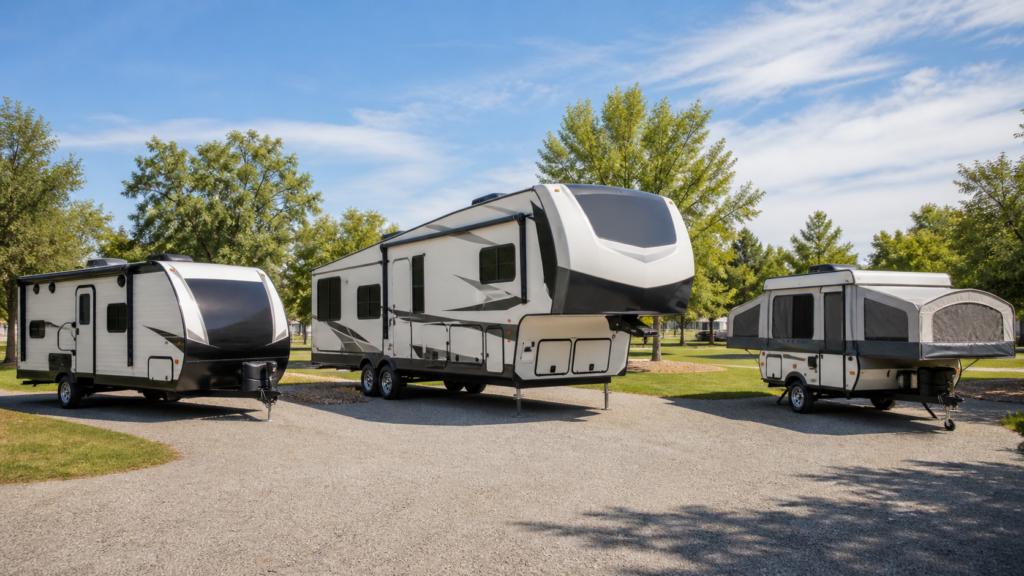
Travel trailers are one of the most common beginner-friendly towable options. They come in many sizes, often cost less than motorhomes, and let you use your tow vehicle separately once you are parked at the campsite.
The challenge is towing confidence. Backing up, turning, weight distribution, hitching, and campground maneuvering all take practice. Still, for many beginners, a smaller travel trailer is one of the smartest first RV choices because it can offer a good mix of affordability, comfort, and flexibility.
Fifth Wheels
Fifth wheels offer more space and often tow more steadily than many larger travel trailers. They can feel roomy, comfortable, and stable once properly matched to the right truck.
For most beginners, though, fifth wheels are usually a bigger step. They require a properly equipped pickup truck, more towing knowledge, and more confidence with size and weight. They are better for experienced towers or buyers who already understand RV towing basics.
Pop-Up Campers
Pop-up campers are lighter, more affordable, and easier to tow than many larger RVs. They can be a practical entry point if you want something simple, budget-friendly, and closer to traditional camping.
The downside is comfort. Pop-up campers usually offer less insulation, fewer amenities, smaller storage capacity, and less convenience than hard-sided RVs. They work best if you want a lighter step into camping rather than a full RV-living experience.
Quick Comparison: Which Beginner RV Type Fits Best?
| RV Type | Best For | Main Advantage | Main Drawback |
|---|---|---|---|
| Class B Camper Van | Solo travelers, couples, short trips | Easiest to drive and park | Less living space and storage |
| Class C Motorhome | Families, longer trips, more comfort | Strong balance of space and usability | Larger than a van and more expensive |
| Small Travel Trailer | Budget-minded beginners comfortable towing | Flexible and often more affordable | Towing and backing up take practice |
| Fifth Wheel | Experienced towers wanting more room | Spacious and stable towing | Usually too advanced for most beginners |
| Pop-Up Camper | Light camping and lower budgets | Lighter and easier to tow | Less comfort and convenience |
If you want the shortest learning curve, Class B usually comes first. If you want the best balance of comfort and beginner usability, Class C is often the sweet spot. If your budget matters most and you are comfortable towing, a smaller travel trailer can be a very smart first RV.
How to Choose the Right First RV for Your Travel Style
Think About How You Will Actually Use It
Start with your real-life trips, not fantasy trips. Are you planning short weekend escapes, long road trips, family campground stays, national park visits, or a few test runs close to home? The right RV for quick weekend trips may not be the same RV you would want for long multi-state travel.
If you are still unsure how often you will use it, stay conservative. A smaller, easier RV is usually a better first choice than a large RV that feels stressful every time you take it out.
Match the RV to Your Comfort Level
Be honest about what feels manageable. Some beginners like the idea of a large RV until they picture driving through fuel stations, narrow roads, or tight campground loops. Others like the flexibility of a trailer but feel nervous about towing and backing up.
There is no perfect answer for everyone. The right answer is the RV you can learn safely and confidently.
Know Your Space Needs
Think about who will travel with you, how much gear you need, and what comforts matter most. A couple taking weekend trips can usually live with less space than a family managing kids, meals, pets, clothes, outdoor gear, and bad-weather days inside the RV.
Do not only look at sleeping capacity. Look at storage, seating, bathroom usability, kitchen space, and whether everyone has enough room to function comfortably.
Set a Realistic Budget
The purchase price is only part of the cost. Insurance, maintenance, registration, storage, fuel, campground fees, upgrades, accessories, and repairs all add up. A more affordable RV that feels easy to use is often a better beginner choice than a larger RV that stretches the budget too far.
Leave room in your budget for beginner essentials like hoses, wheel chocks, leveling blocks, surge protection, sewer gear, basic tools, and safety equipment.
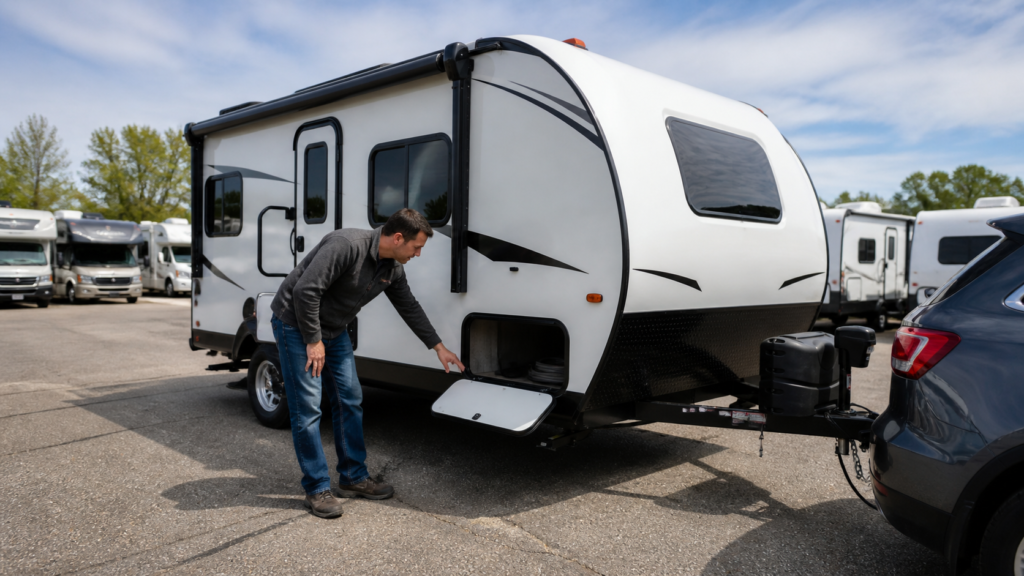
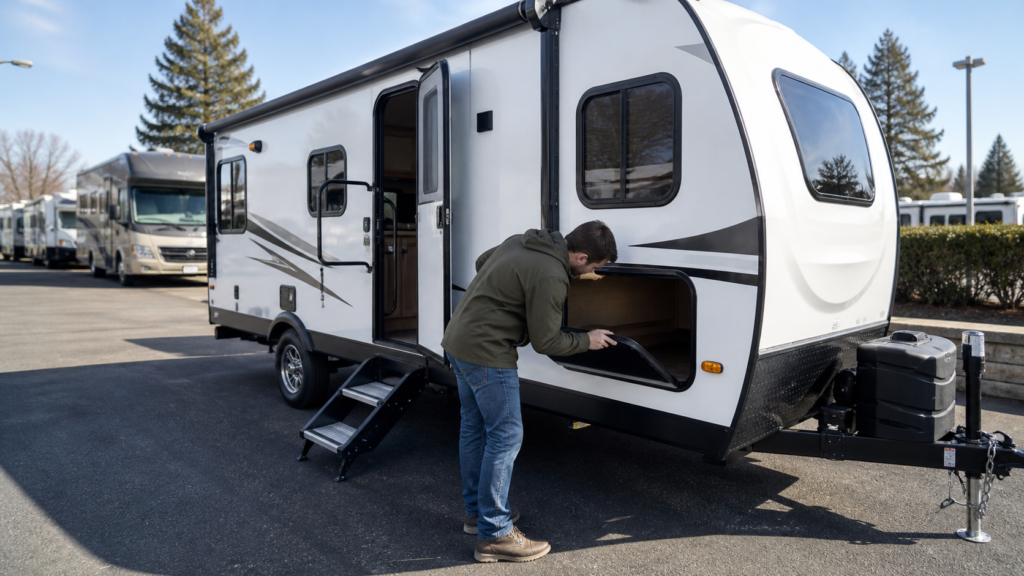
Image Prompt: Realistic, high-quality horizontal blog image of a beginner RV buyer inspecting a small travel trailer or compact motorhome at an RV dealership or campground, checking exterior storage, size, and practical usability with a tow vehicle or parked vehicle nearby, natural daylight, realistic proportions, thoughtful decision-making scene, clean practical composition, no text overlay, no logos, no watermark.
Common Beginner Mistakes When Choosing an RV
A lot of first-time RV disappointment comes from choosing an RV that looks impressive instead of one that fits the way you really camp. Avoid these common mistakes before you buy.
- Choosing too much RV too soon: Bigger does not automatically mean better. It usually means more cost, more maintenance, and more complexity.
- Ignoring towing or driving limits: What looks good online can feel very different in a parking lot, gas station, or campground loop.
- Focusing only on the floorplan: A great layout does not help if the RV is too hard to drive, tow, store, or maintain.
- Forgetting ownership costs: Insurance, repairs, storage, accessories, tires, and maintenance can change the true cost quickly.
- Buying before testing: Renting or walking through several RV types can prevent an expensive mismatch.
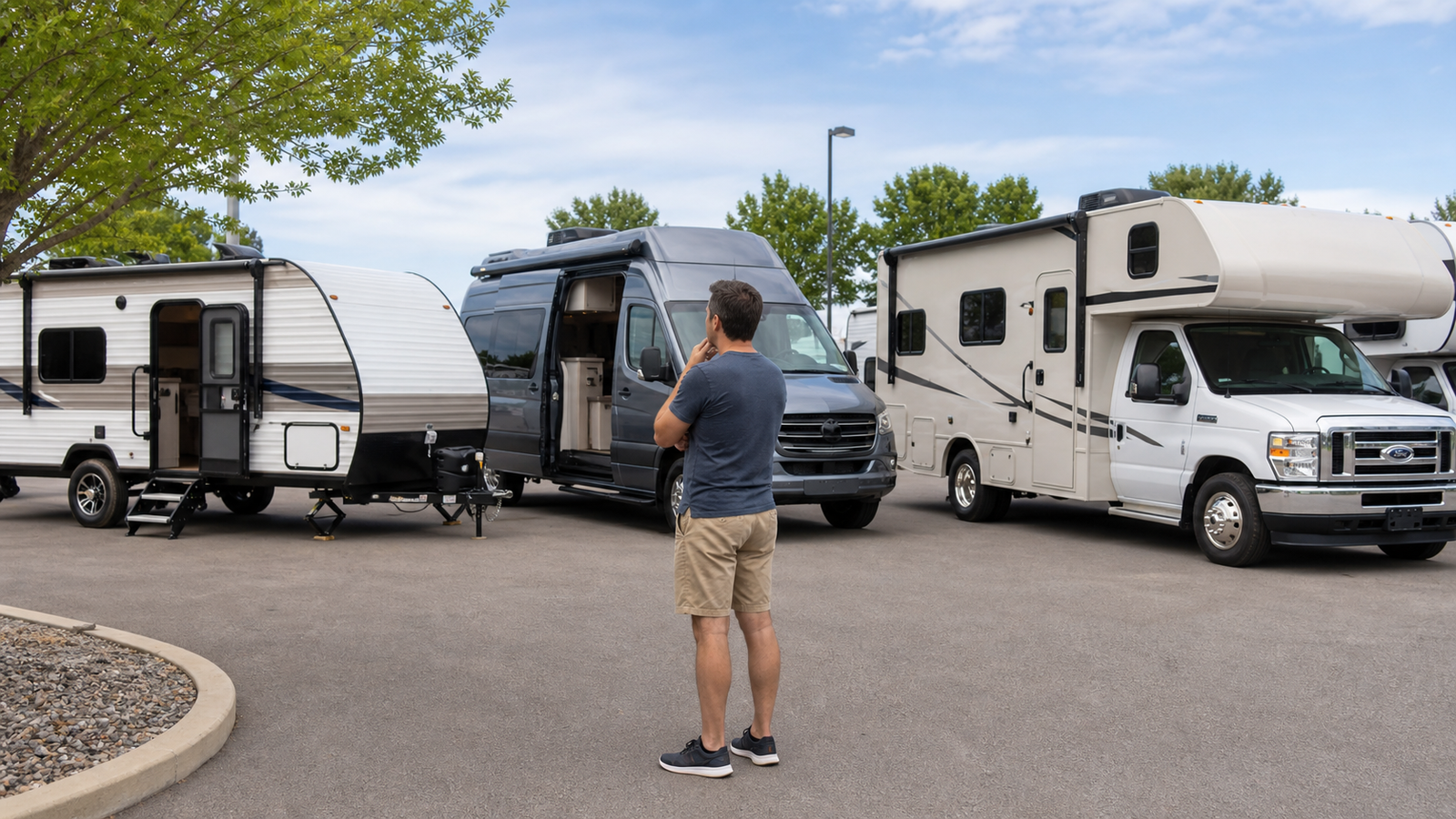
Image Placeholder: Beginner comparing RV sizes in person to avoid choosing too much RV.
Image Prompt: Realistic, high-quality horizontal blog image of a beginner RV shopper standing near two different RV sizes, such as a compact camper van and a larger motorhome or travel trailer, comparing scale and ease of handling in a clean RV lot, natural daylight, practical educational scene, realistic proportions, no text overlay, no labels, no logos, no watermark.
A Simple Decision Framework for First-Time Buyers
If you are stuck between several RV types, use a simple decision process. The goal is to narrow the choice based on comfort, confidence, and actual use instead of getting pulled in by features you may not need yet.
- List your top priorities. Focus on ease of driving, sleeping capacity, bathroom needs, kitchen needs, storage, and budget.
- Decide whether you prefer driving or towing. This quickly separates motorhomes from towable RVs.
- Choose the smallest RV that comfortably fits your real trips. Smaller usually means easier learning, parking, storage, and maintenance.
- Walk through multiple RV types in person. Online photos rarely tell the full story.
- Rent before buying if possible. A weekend rental can reveal what you like and what annoys you before you spend serious money.
- Think beyond the first trip. Make sure the RV still fits after the excitement of buying wears off.
This framework keeps the decision practical. You are not trying to find the perfect RV forever. You are trying to choose a first RV that helps you learn, travel, and enjoy the process without taking on more than you are ready for.
Frequently Asked Questions
What is the easiest type of RV for a beginner?
For many beginners, the easiest options are a Class B camper van, a small Class C motorhome, or a smaller travel trailer. The best one depends on whether you feel more comfortable driving the RV itself or towing it.
Is a travel trailer better than a motorhome for beginners?
It depends on your comfort level. A travel trailer can be more affordable and flexible, but towing takes practice. A motorhome is easier for some beginners because there is no trailer to tow, though driving a larger vehicle can still feel like a big adjustment.
Should beginners buy new or used?
Either can work. Used can save money, but you need to inspect carefully for leaks, water damage, tire age, roof condition, and maintenance history. New may feel simpler at first, but it usually comes with a higher price tag.
Is renting before buying a good idea?
Yes. Renting is one of the smartest beginner moves because it lets you test the driving or towing experience, sleeping space, setup routine, storage, kitchen usability, and daily comfort before committing to ownership.
Is Class A too much for a first RV?
For many beginners, yes. A Class A can be done, but it usually brings a bigger learning curve in driving, parking, storage, maintenance, and ownership costs. Most first-timers find Class B, Class C, or a smaller travel trailer easier to start with.
What matters more: size or ease of use?
Ease of use matters more for most beginners. An RV that feels manageable will help you enjoy the experience faster. An RV that feels oversized or stressful can make every trip harder than it needs to be.
Helpful Next Steps for Beginners
Once you narrow down the RV type that fits you best, the next step is learning what early RV ownership and first trips actually look like. These related beginner guides can help you keep moving in the right order:
- RV Camping for Beginners: Everything You Need to Know Before Your First Trip
- Travel Trailer vs Motorhome for Beginners: Which One Is Easier to Start With?
- First-Time RV Camping Mistakes to Avoid
- What to Expect at an RV Campground for the First Time
- 5-Step RV Campsite Setup Checklist for Beginners
Conclusion
The best type of RV for a beginner is usually not the biggest or the fanciest. It is the one that feels manageable, fits your travel style, and helps you build confidence quickly. For many new RVers, that means starting with a Class B camper van, a Class C motorhome, or a smaller travel trailer.
Keep your first RV choice practical. Choose something you can drive or tow with confidence, afford comfortably, set up without constant stress, and use often enough to learn from it. A simple first RV that gets used is better than an impressive RV that feels too intimidating to enjoy.