Travel Trailer vs Motorhome for Beginners: Which One Is Easier to Start With?
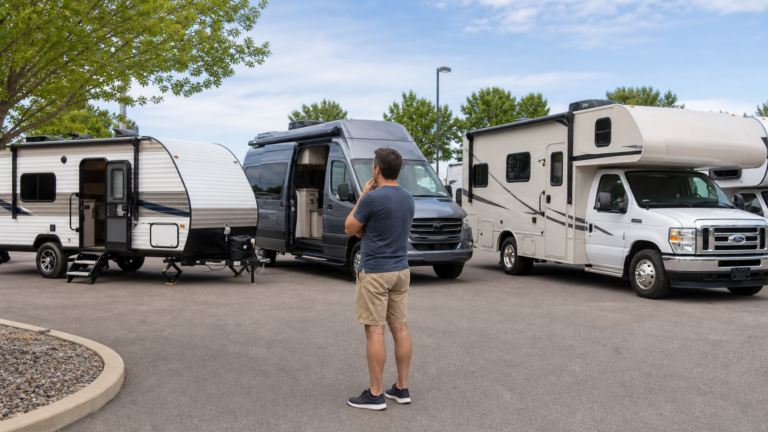
If you are new to RV life, choosing between a travel trailer and a motorhome can feel like choosing between two very different ways to travel. Both can get you to the campground, but they start to feel very different once you think about driving, setup, cost, maintenance, and how you will use the RV day to day.
This beginner-friendly guide breaks down the real-world differences in a simple way so you can choose the option that fits your budget, comfort level, and travel style without making the decision harder than it needs to be.
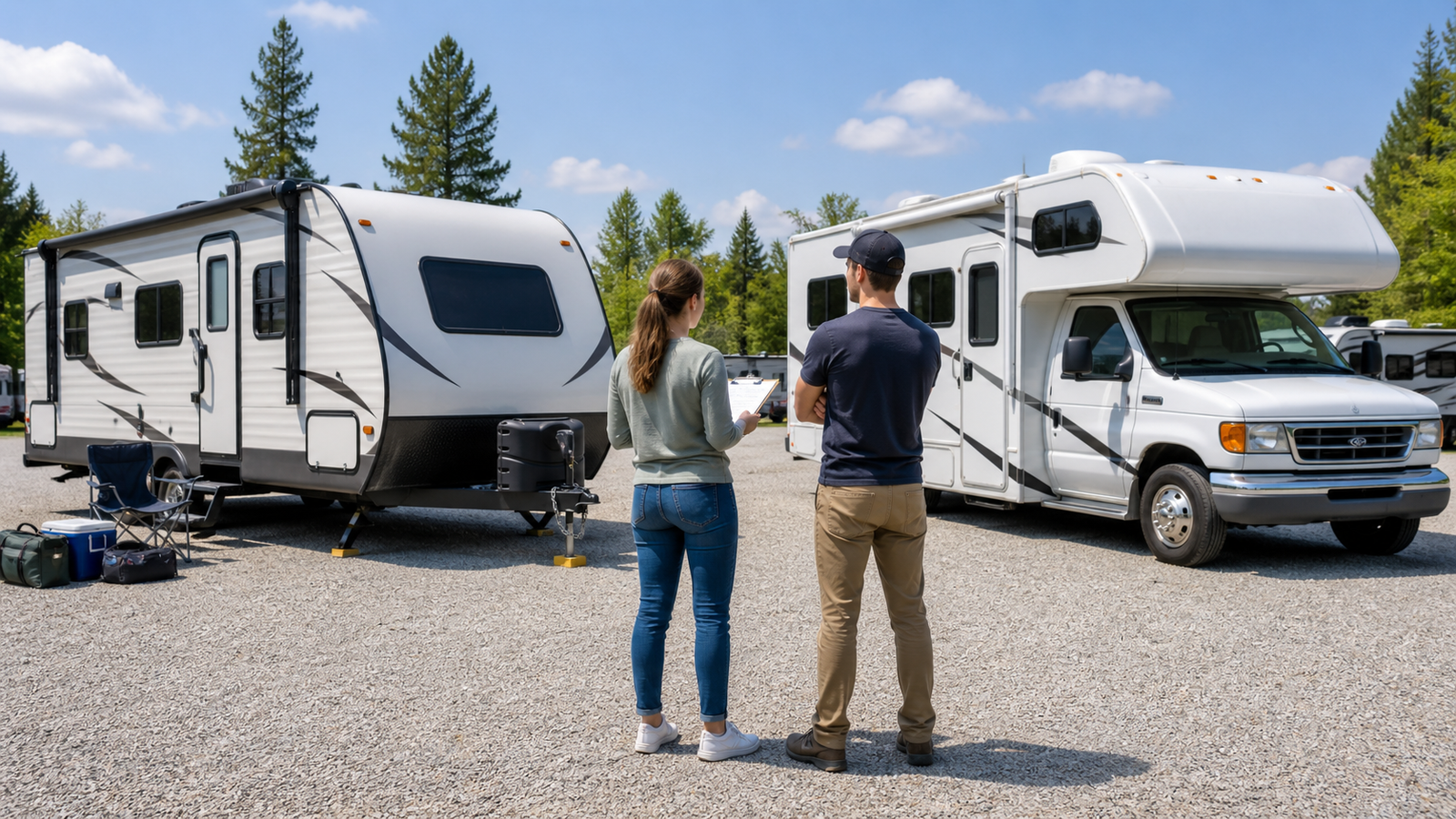
For many first-timers, a motorhome often feels easier to start with because it removes the towing learning curve. A travel trailer often makes more sense financially and can be the better long-term fit if you want more flexibility at camp. The better choice is the one that feels easier for you to actually use.
What This Guide Will Help You Figure Out
This is a practical beginner’s guide, not a sales pitch. You will learn what a travel trailer and a motorhome actually are, how each option works in real life, which one tends to feel easier for beginners, and what mistakes to avoid before your first trip.
The goal is simple: help you choose the option that makes RV travel feel more manageable from the start.
What a Travel Trailer and a Motorhome Actually Are
A travel trailer is a towable RV. It does not have its own engine, so you pull it with a separate vehicle. Once you arrive at the campsite, you unhitch it and use the trailer as your living space.
A motorhome is an all-in-one RV with both the living area and engine built into the same unit. You drive it to the campground and live in the same vehicle once you arrive.
- Travel trailer: tow it with another vehicle, then unhook it at camp.
- Motorhome: drive it directly and camp in the same unit.
- Main trade-off: towing flexibility versus all-in-one convenience.
That one difference affects almost everything else, including total cost, parking, practice, maintenance, campground routine, and how confident you feel on travel day.
How to Decide What Fits Your Trips Best
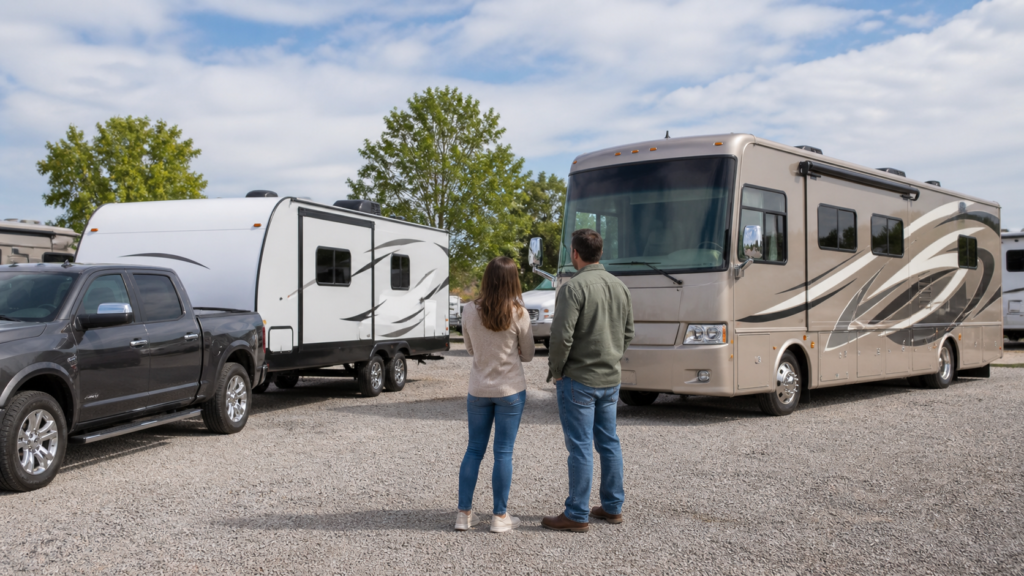
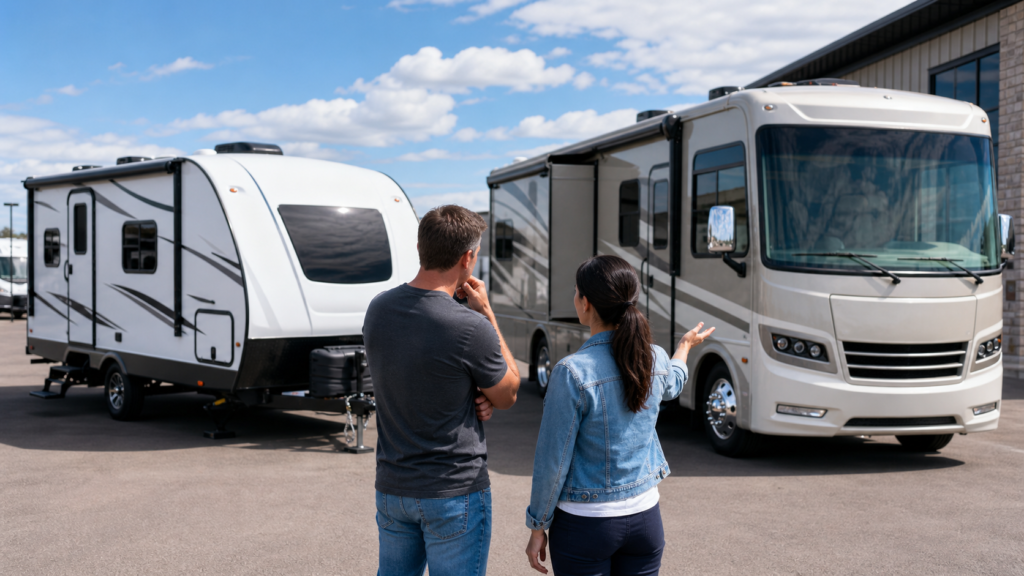
The right choice depends less on what looks better online and more on how you plan to use it. A weekend camper may want something very different from someone taking longer road trips or moving to a new campsite every few days.
Think About Your Typical Travel Days
If you plan to cover longer distances often, a motorhome may feel simpler because you just drive and go. If you prefer setting up once and using a separate vehicle for errands, a travel trailer may be more practical.
Look at What You Already Own
If you already have a properly equipped tow vehicle, a travel trailer may make more financial sense. If not, the total cost of getting into towing can change the equation quickly.
Picture Your Campsite Routine
Do you want to park, level, and settle in quickly? A motorhome often wins there. Do you like the idea of leaving the campsite in your everyday vehicle without packing everything up? That is where a travel trailer often feels more convenient.
Beginners usually make a better decision when they picture the full routine, not just the RV itself.
Travel Trailer vs Motorhome: The Real Beginner Pros and Cons
Travel Trailer Pros
- Usually lower entry cost than a motorhome of similar size.
- You can use the tow vehicle separately once camp is set up.
- Often easier to upgrade the trailer later without replacing the vehicle too.
- Can be a smart option for people who camp in one place for several days at a time.
Travel Trailer Cons
- You need a vehicle that can safely tow it.
- Hitching, unhitching, and leveling take practice.
- Backing into campsites can feel stressful at first.
- Towing in wind, traffic, or on steep grades can feel intimidating for beginners.
Motorhome Pros
- Everything is in one unit, which feels simpler to many beginners.
- No trailer hitching or towing learning curve.
- Setup can be faster once you arrive at the campsite.
- Passengers may like the more connected travel feel on road trips.
Motorhome Cons
- Higher upfront cost in many cases.
- Fuel, maintenance, and storage can cost more.
- Driving a large motorized RV can still feel intimidating.
- If you want to run errands after setup, local transportation can be less convenient unless you bring another vehicle.
For many beginners, the travel trailer looks cheaper on paper while the motorhome looks easier in practice. That tension is usually what makes this decision hard.
What You Need to Get Started Without Feeling Overwhelmed
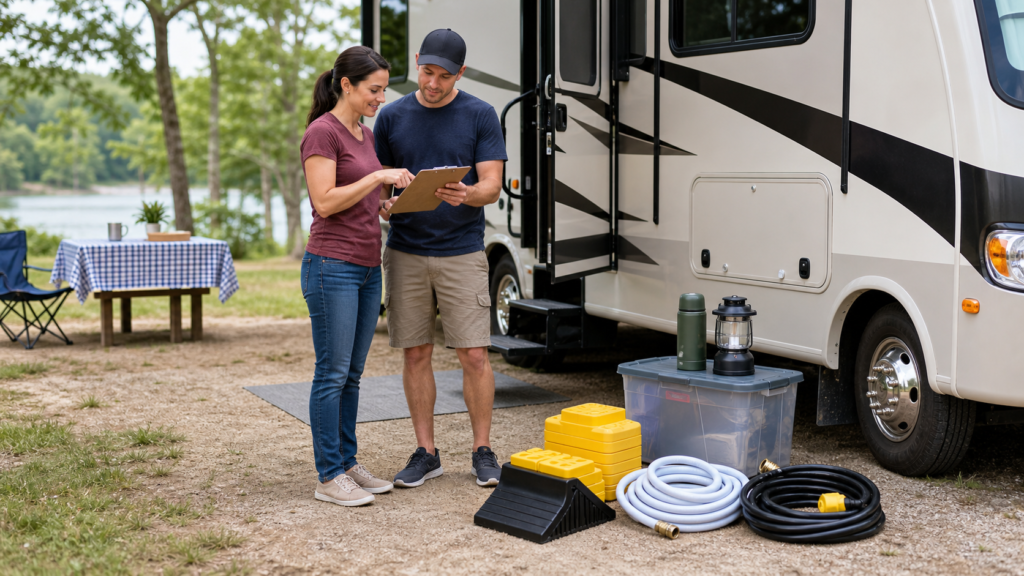
The easiest way to reduce stress is to break the decision into a few clear steps instead of trying to figure out everything at once.
- Set a real budget. Include the RV itself, insurance, maintenance, campground fees, fuel, storage, and starter gear.
- Check your capabilities. For a travel trailer, confirm your vehicle’s towing ability and comfort level. For a motorhome, think honestly about driving size and visibility.
- Rent before buying if possible. A short rental can teach you more than hours of online research.
- Start smaller and simpler. Bigger is not always better when you are still learning the routine.
- Focus on ease of use. The best beginner RV is the one you feel comfortable driving, parking, and setting up.
Beginners usually do better when they test the routine, not just the floor plan. How you drive, park, hook up, and move around matters just as much as how the RV looks inside.
Common Beginner Mistakes and How to Avoid Them
A lot of early RV frustration comes from bad assumptions, not bad intentions. The good news is that most beginner mistakes are predictable and easy to avoid once you know what to watch for.
- Underestimating towing or driving difficulty: Practice before your trip, not during campground check-in.
- Choosing based only on price or appearance: What matters more is how the RV fits your actual travel style.
- Skipping a rental or walkthrough: Seeing the layout is not the same as using the RV in real life.
- Buying too much RV too early: Bigger rigs can add stress, especially for first-timers.
- Ignoring total ownership cost: Fuel, storage, maintenance, and gear add up fast.
The smartest beginner move is usually not picking the biggest or most impressive option. It is picking the one that gives you the lowest-stress path to actually using it.
Quick Setup and Daily-Use Checklists
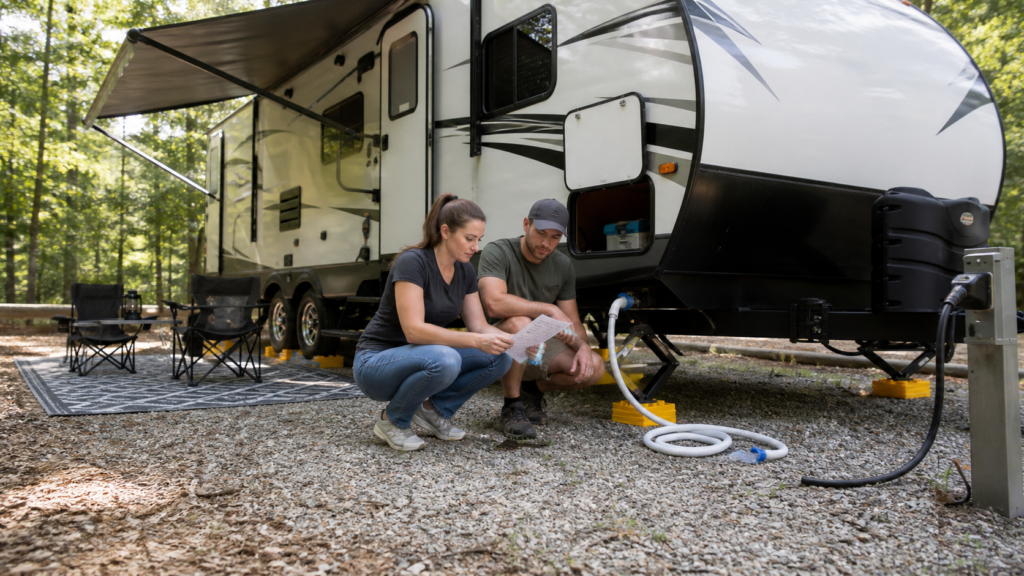
Simple checklists make beginner RVing much easier. They help you avoid missed steps and build confidence faster.
Travel Trailer Setup Checklist
- Park on level ground as best you can.
- Chock the wheels before unhitching.
- Unhook from the tow vehicle carefully.
- Level front to back and side to side.
- Connect power and water.
- Hook up sewer only when needed and where appropriate.
- Check stabilizers, steps, and entry clearance.
Motorhome Setup Checklist
- Park on a level site.
- Set the parking brake and use wheel chocks if needed.
- Level the RV with jacks if equipped.
- Connect power and water.
- Hook up sewer if staying long enough to need it.
- Extend slide-outs only when you have enough clearance.
- Confirm safe walking space around the RV.
Neither option stays hard forever. Both just feel awkward at first because the routine is new.
How to Handle Your First Trip With Confidence
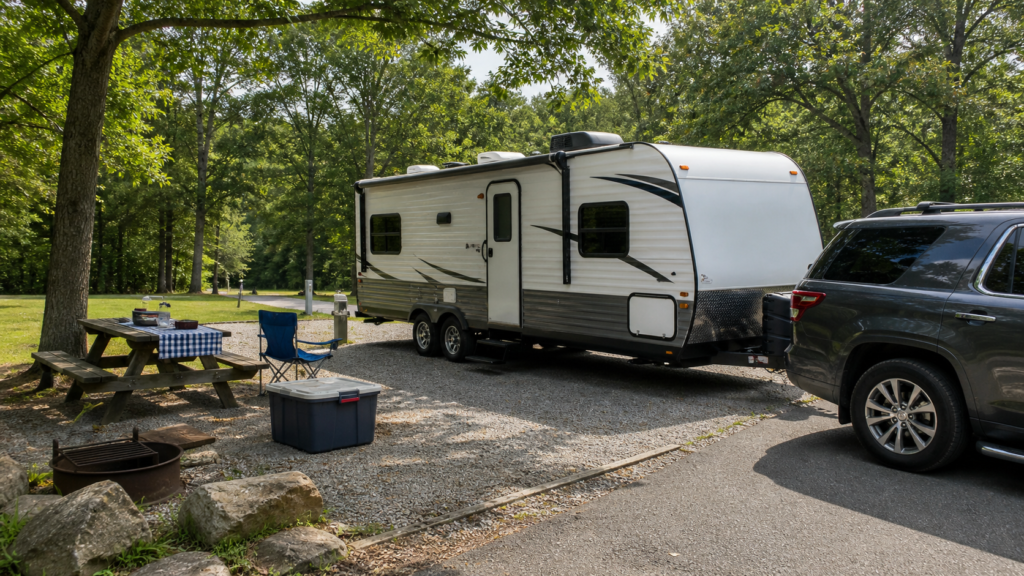
Keep your first trip simple. Choose a nearby campground, arrive early, and give yourself more time than you think you need. That alone removes a lot of avoidable stress.
- Pick an easy campground with roomy sites and clear access.
- Avoid an aggressive first-day driving schedule.
- Use a checklist instead of trying to remember everything.
- Expect the first setup to be slower than you imagined.
- Treat the first trip like a learning trip, not a performance test.
The goal of your first trip is not to look like a seasoned RV traveler. The goal is to learn the process without turning it into a stressful mess.
Frequently Asked Questions
Is a travel trailer cheaper to own than a motorhome?
Usually, yes. Travel trailers often cost less upfront and can cost less to maintain, but only if you already have a suitable tow vehicle. If you need to buy a tow vehicle too, the difference may be smaller than you expect.
Which is easier for a first-timer to handle on the road?
Many beginners find a motorhome easier because they are driving one unit instead of towing one behind them. Others prefer a smaller travel trailer because they already feel comfortable with their tow vehicle. Ease depends a lot on your driving confidence and the size of the RV.
Do I need a special license for a travel trailer?
In many areas, no, at least for smaller to mid-size trailers. But rules vary depending on weight and location, so check your local requirements before towing.
What should I test if I rent first?
Test driving or towing, parking, hookups, sleeping comfort, bathroom use, kitchen workflow, and how stressful setup feels. Those everyday details tell you more than a quick walk-through ever will.
What is usually the better beginner choice overall?
There is no universal winner. A motorhome often wins for simplicity and ease of use. A travel trailer often wins for flexibility and lower cost. The better beginner choice is the one that matches your comfort level, budget, and camping routine.
Conclusion
Choosing between a travel trailer and a motorhome comes down to how you want to travel, what you can comfortably handle, and which option fits your real budget and routine.
A motorhome can feel simpler because everything is in one unit. A travel trailer can feel smarter if you want lower cost and the flexibility of a separate vehicle at camp. Start with the option that lowers your stress, practice the basics before your first trip, and you will have a much better chance of actually enjoying RV life from the beginning.