5-Step RV Campsite Setup Checklist for Beginners
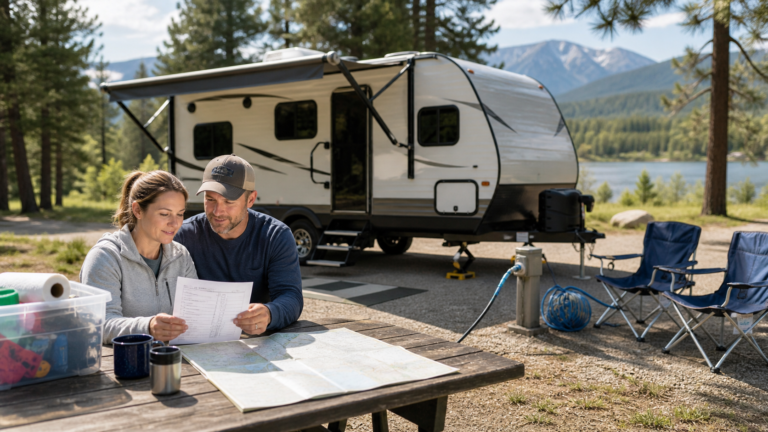
Getting your first RV campsite dialed in should feel exciting, not stressful. When you follow the same setup order every time, it gets much easier to park, connect, organize, and relax without wondering what you forgot.
This beginner-friendly checklist walks you through five practical steps for setting up your RV campsite. Use it as a simple routine so you can spend less time fumbling with gear and more time enjoying the trip.
1. Pack Your Essential RV Setup Gear
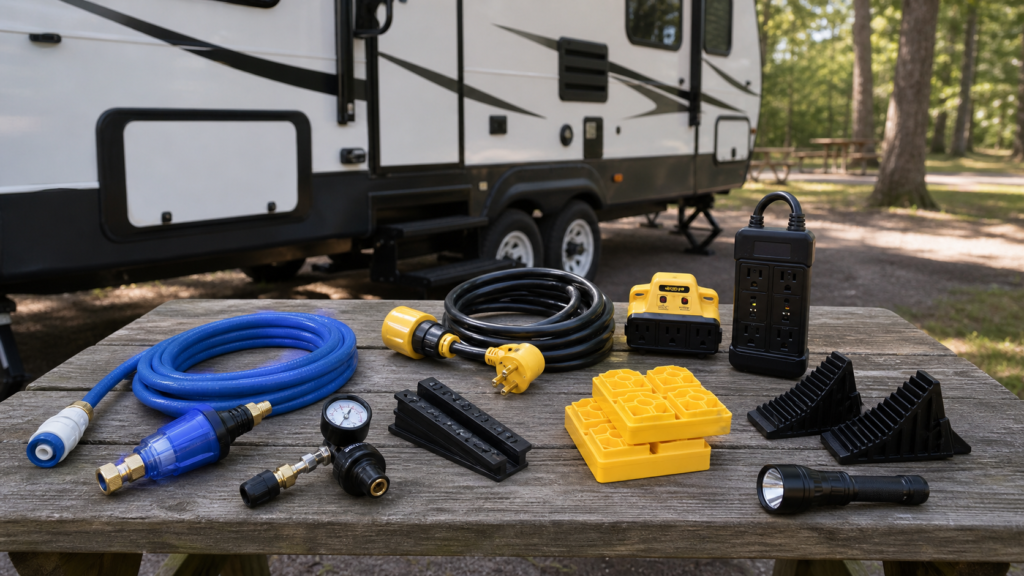
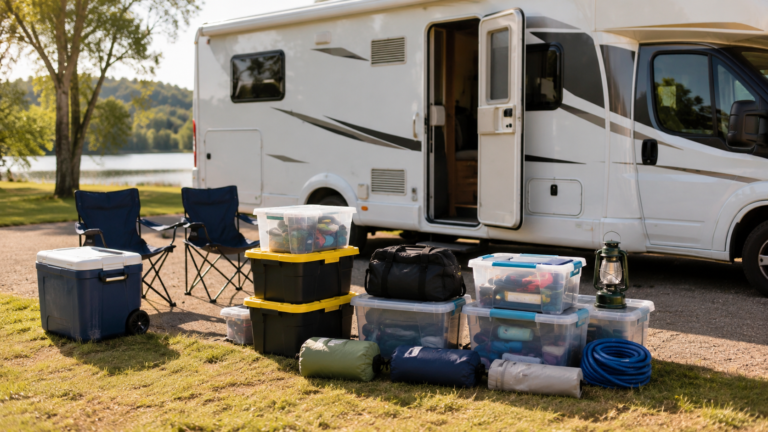
The easiest campsite setups start before you arrive. Keeping your core setup gear together in one tote or storage bin saves time and helps you avoid those frustrating moments when you realize a small but important item is missing.
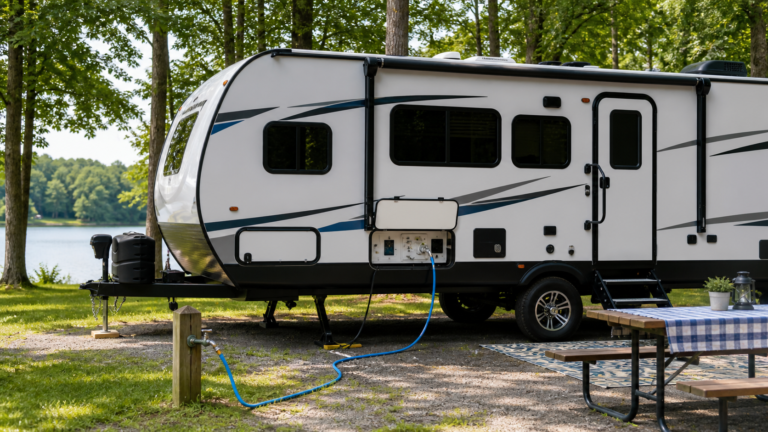
- Drinking-water hose rated for camping
- Water pressure regulator
- Rinse wand or hose attachment for cleanup
- Electrical adapter and surge protector
- Leveling blocks or a small ramp set
- Wheel chocks
- Flashlight or headlamp for late arrivals
Before you leave home, do a quick check that your setup tote is complete and easy to reach. That small habit can make your arrival feel calm instead of rushed.
2. Park, Level, and Position Your RV
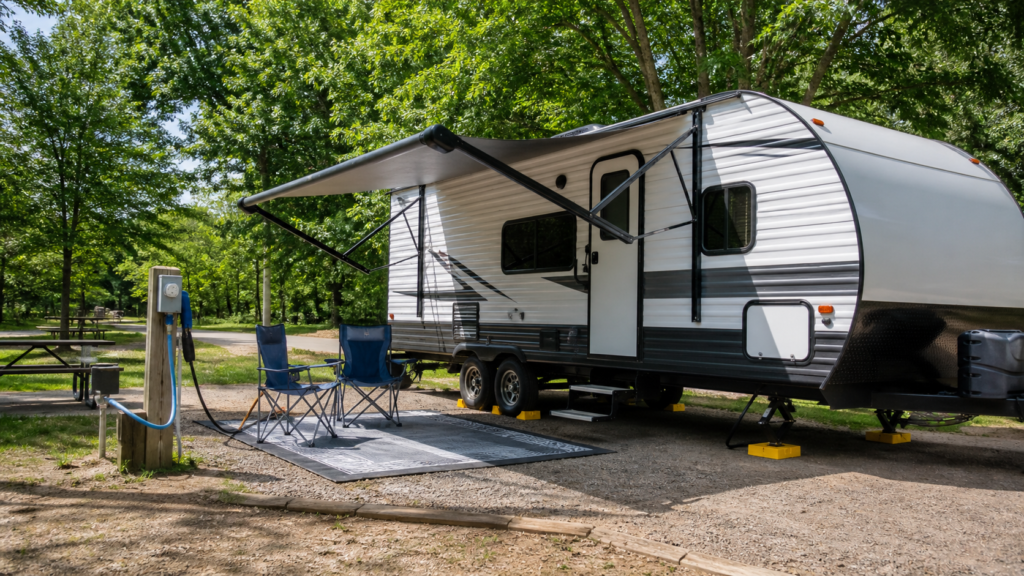
Once you arrive, take a minute to look over the site before you start opening slides or unloading gear. A little planning up front helps you avoid awkward parking, blocked hookups, and uneven positioning.
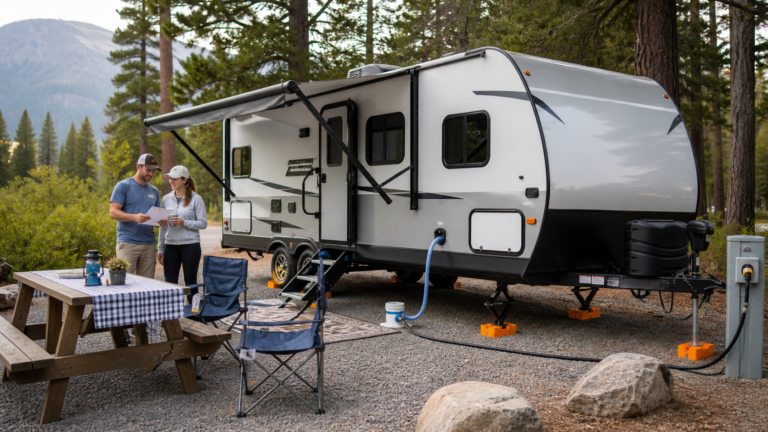
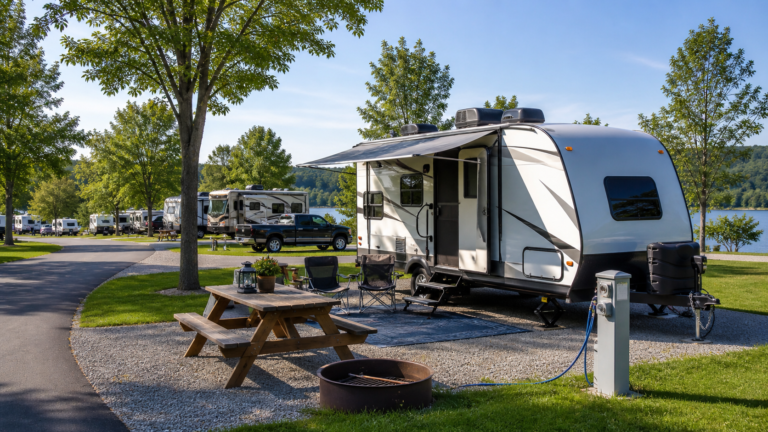
- Check the site for the most level ground available
- Position the RV so you can reach hookups comfortably
- Leave enough room for slide-outs, steps, and walking space
- Use leveling blocks if needed
- Secure the RV with wheel chocks before moving on
- Set the awning only after checking for clearance and wind conditions
A small mat by the door also helps right away by catching dirt before it gets tracked inside. When the RV is parked well and feels stable, the rest of your setup goes much more smoothly.
3. Set Up a Comfortable Outdoor Space
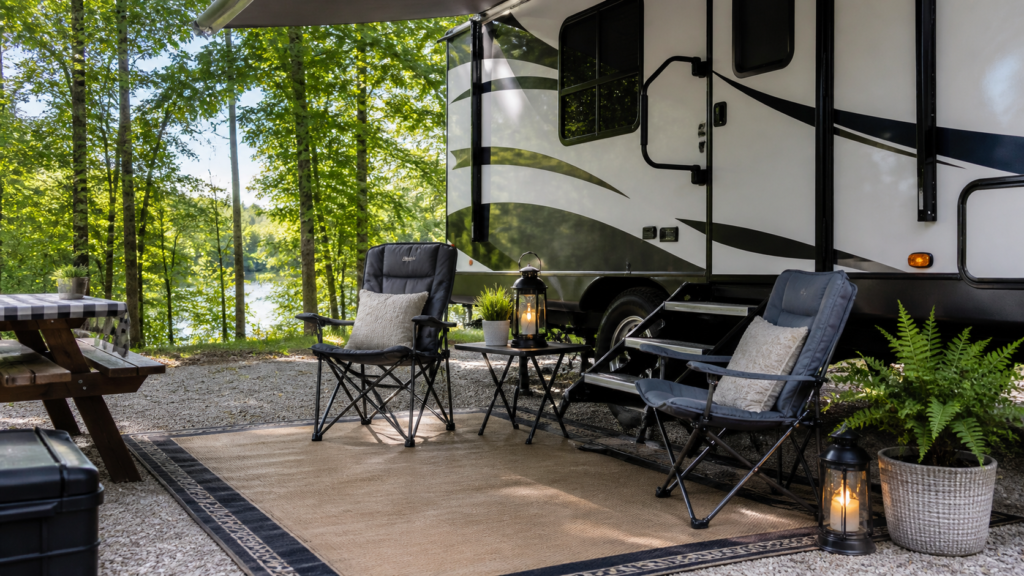
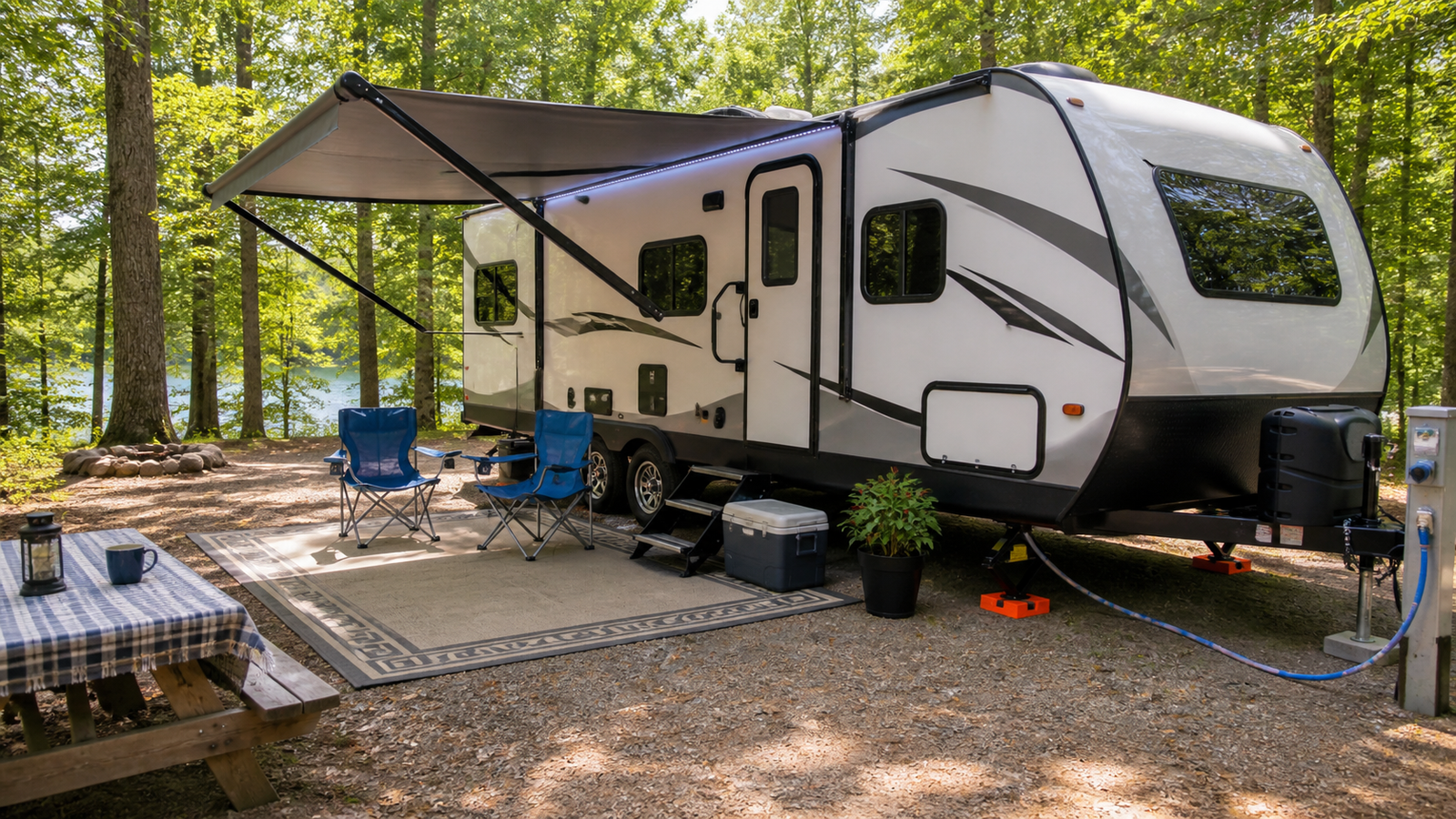
After the RV is parked and stable, you can turn the site into a place you actually want to spend time in. A simple outdoor setup makes meals, downtime, and evenings at camp much more enjoyable.
- Outdoor rug or doormat near the entry
- Foldable camping chairs
- Small outdoor table
- Portable grill or camp stove with fuel
- Lantern or simple outdoor lighting
- Rug ties or low-profile stakes if it is breezy
You do not need an elaborate patio setup to make your site feel welcoming. A clean, organized outdoor area helps your campsite feel settled from the start.
4. Organize the Inside of Your RV
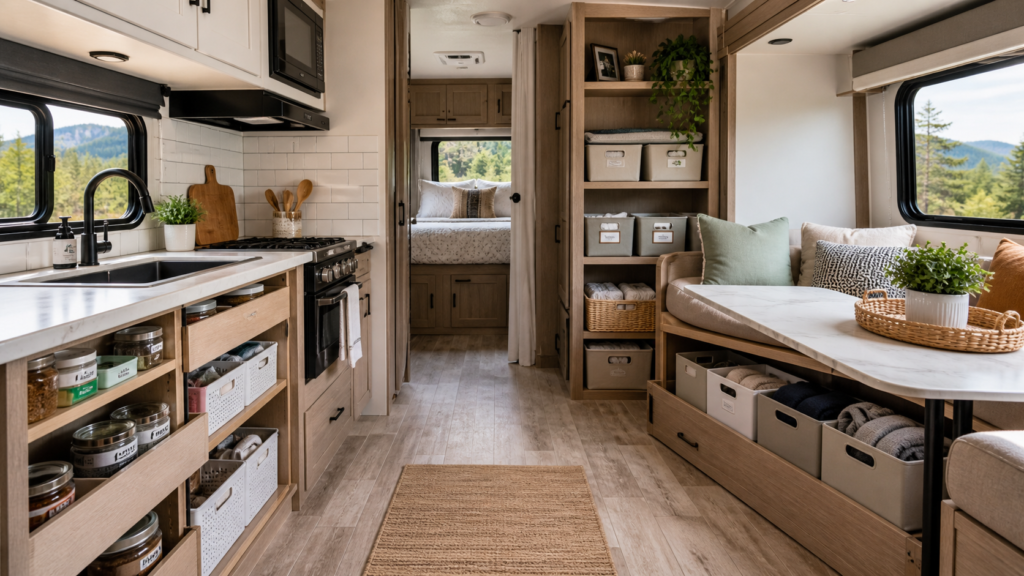
Once the outside is handled, spend a few minutes getting the inside of the RV in order. Good organization makes cooking, sleeping, and moving around much easier, especially in a small space.
- Non-slip shelf liners to keep items from shifting
- Labeled bins for snacks, dishes, and daily essentials
- Compact cookware you will actually use
- Pillows or extra bedding for comfort
- Under-bed or tucked-away storage for less-used items
- A dedicated spot for cords, adapters, and small loose items
Keep the things you use most within easy reach. That one change makes your RV feel more functional and helps you avoid constant digging through cabinets.
5. Keep Safety and Quick-Fix Supplies Ready
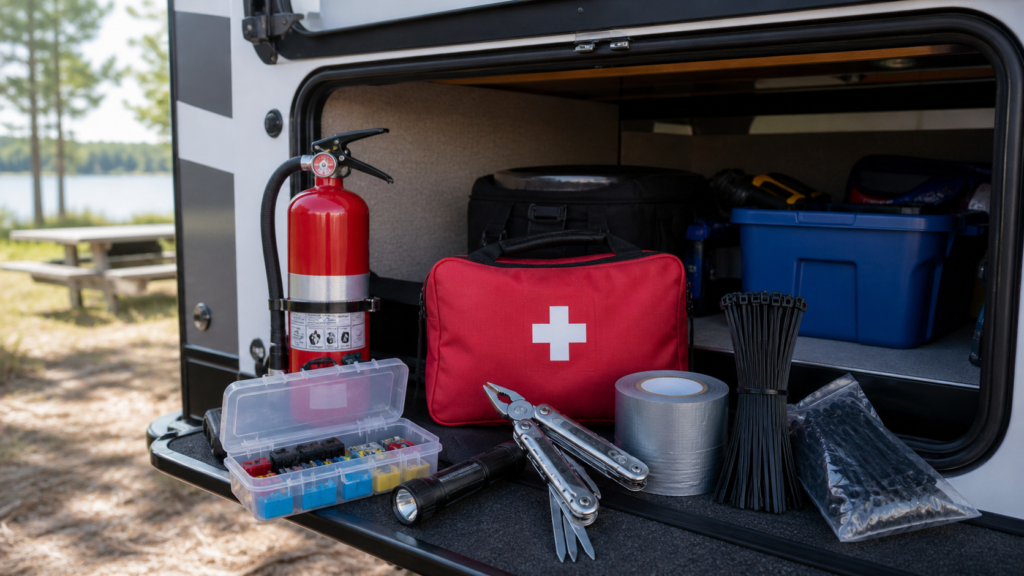
Even a simple weekend trip goes better when you are prepared for small problems. You do not need a giant repair kit, but you should have a few basics ready in case something needs attention.
- Accessible fire extinguisher
- Compact first aid kit
- Multi-tool
- Duct tape and zip ties
- Spare fuses
- Flashlight with fresh batteries
These items help you handle common campsite issues without panic. A minor problem is much easier to manage when the supplies you need are already within reach.
With these five steps, your campsite setup becomes a repeatable routine instead of a guessing game. Each trip gives you a little more confidence, and before long the whole process starts to feel natural.
Save this checklist, use it on your next arrival day, and adjust it to fit your RV and camping style. The goal is not a perfect setup. It is a simple one that helps you settle in quickly and enjoy the experience.